
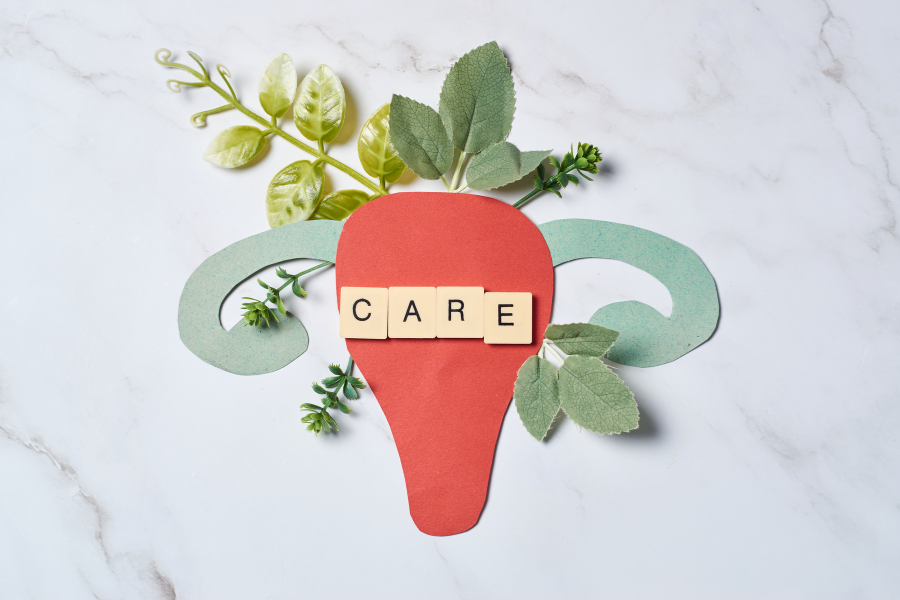
Fertility and Inflammation: Galen’s Two Seeds and the Couple at the Table
Fertility and inflammation are usually written about as a woman’s problem, with a separate, shorter article for the man. Galen would not have split them. For him a child began with two seeds, and both had to be sound.
Two Seeds, Not One
Aristotle taught that the father supplies the form of a child and the mother only the matter. Galen disagreed. In On Semen he argued, with the Hippocratic writers and against the Aristotelians of his own day, that the woman also makes seed, and that conception happens when the two seeds meet and mix.1 His argument for the woman’s part carried weight in European medical thought until the seventeenth century.
On the main point Galen was right. Every child is made from two contributions, an egg and a sperm, each carrying half of what the child will be. A couple trying for a baby is one project, and the health of both partners counts.
Warmth, and Where Galen Was Wrong
Galen thought in qualities, and for generation the quality that mattered most was heat. In On the Usefulness of the Parts he explains the differences between male and female by warmth: the woman is the colder of the two, and so her seed, he says, is scantier, colder and wetter.2 We need not keep his ranking of women as the less perfect sex. But the idea underneath it, that conception asks for the right temperament, is one an herbalist still recognizes.
Modern biology turns him on his head for men. Sperm are made best a few degrees below body temperature, which is why the testes hang outside the body. Heat from fever, hot tubs, long hours sitting, a laptop on the lap or tight clothing can lower both the number and the quality of sperm.3 For the man, the Galenic question is not “Is he warm enough?” but “Is he kept cool enough?”
Inflammation at the Door of Conception
In the woman, the first meeting of embryo and womb is an inflammatory event. Nava Dekel and her colleagues found that implantation depends on a controlled inflammatory response in the lining of the womb, a response so like wound repair that a small injury to the lining in the preceding cycle seemed to make implantation more likely in women going through IVF.4 Gil Mor’s group showed the same thing from the other side: cells of the early placenta call immune cells to the implantation site and put them to work.5
So the question for fertility is not how to shut inflammation down. It is whether the body’s inflammation comes at the right time and in the right measure. I followed that thread through the rest of pregnancy in Pregnancy and Inflammation: What Galen’s Womb Already Knew.
| Galen’s teaching | What we know now |
|---|---|
| Both partners make seed | Egg and sperm each carry half of the child’s inheritance |
| The woman is colder; generation needs warmth | Implantation needs well-timed inflammation in the womb |
| The male is warmer, and that is his strength | Sperm need the testes kept cooler than the body |
What the Table Can Do, for Both
Audrey Gaskins and Jorge Chavarro of Harvard reviewed the research on diet and fertility in 2018. Their clearest finding is a pattern rather than a single food. Diets rich in vegetables, fruit, whole grains, fish and healthy fats have been linked again and again with better fertility in women and better semen quality in men, and diets heavy in processed food with the opposite. They also found good evidence for folic acid in women.6
For men, antioxidant pills are the supplement most often sold. A 2022 Cochrane review of 90 trials found that they may raise the chance of a live birth in couples with a male fertility problem, but the evidence was of very low certainty, and when the weaker studies were set aside the benefit disappeared.7 Good food is the surer ground.
A Galenic cook would add moderation. Regular meals, nothing to excess, and enough rest are the old way of keeping the body’s own faculties working. They cost nothing and harm no one.
Safety Notes
- Once a pregnancy is possible, keep kitchen herbs to food amounts. The European Medicines Agency’s monographs for sage, rosemary and thyme state that their safety in pregnancy has not been established.8
- If either partner is taking fertility drugs or any prescription medication, talk with the doctor before adding herbs or supplements. See Herb-Drug Interactions.
- Antioxidant supplements for men can cause mild stomach upset.
- For the man, avoid long, regular exposure to heat around the groin: hot tubs, saunas and a laptop resting on the lap.
It Takes Two
Galen’s two seeds were a better guess than Aristotle’s single one, and they still make the best starting place. A child is the work of two bodies, and the Wise Woman tradition always knew that care for one meant care for both.
© 2024 Carolyn Smith-Kizer
If this work is useful to you, you can buy me a coffee — buymeacoffee.com/cskizer

Notes
- Galen, On Semen, ed. and trans. Phillip De Lacy, Corpus Medicorum Graecorum 5.3.1 (Berlin: Akademie Verlag, 1992).
- Galen, On the Usefulness of the Parts of the Body, trans. Margaret Tallmadge May, 2 vols. (Ithaca, NY: Cornell University Press, 1968), bk. 14, chaps. 6–7.
- Damayanthi Durairajanayagam, Ashok Agarwal, and Chloe Ong, “Causes, Effects and Molecular Mechanisms of Testicular Heat Stress,” Reproductive BioMedicine Online 30, no. 1 (2015): 14–27, https://doi.org/10.1016/j.rbmo.2014.09.018.
- Nava Dekel, Yulia Gnainsky, Irit Granot, and Gil Mor, “Inflammation and Implantation,” American Journal of Reproductive Immunology 63, no. 1 (2010): 17–21, https://doi.org/10.1111/j.1600-0897.2009.00792.x.
- Gil Mor, Ingrid Cardenas, Vikki Abrahams, and Seth Guller, “Inflammation and Pregnancy: The Role of the Immune System at the Implantation Site,” Annals of the New York Academy of Sciences 1221 (2011): 80–87, https://doi.org/10.1111/j.1749-6632.2010.05938.x.
- Audrey J. Gaskins and Jorge E. Chavarro, “Diet and Fertility: A Review,” American Journal of Obstetrics and Gynecology 218, no. 4 (2018): 379–89, https://doi.org/10.1016/j.ajog.2017.08.010.
- Wiep de Ligny et al., “Antioxidants for Male Subfertility,” Cochrane Database of Systematic Reviews, no. 5 (2022): CD007411, https://doi.org/10.1002/14651858.CD007411.pub5.
- European Medicines Agency, Committee on Herbal Medicinal Products, European Union Herbal Monograph on Salvia officinalis L., folium, EMA/HMPC/277152/2015 (2016), sec. 4.6; Community Herbal Monograph on Rosmarinus officinalis L., folium, EMA/HMPC/13633/2009 (2010), sec. 4.6; Community Herbal Monograph on Thymus vulgaris L., Thymus zygis Loefl. ex L., aetheroleum, EMA/HMPC/131901/2009, sec. 4.6.
Bibliography
de Ligny, Wiep, Roos M. Smits, Rebecca Mackenzie-Proctor, Vanessa Jordan, Kathrin Fleischer, Jan Peter de Bruin, and Marian G. Showell. “Antioxidants for Male Subfertility.” Cochrane Database of Systematic Reviews, no. 5 (2022): CD007411.
Dekel, Nava, Yulia Gnainsky, Irit Granot, and Gil Mor. “Inflammation and Implantation.” American Journal of Reproductive Immunology 63, no. 1 (2010): 17–21.
Durairajanayagam, Damayanthi, Ashok Agarwal, and Chloe Ong. “Causes, Effects and Molecular Mechanisms of Testicular Heat Stress.” Reproductive BioMedicine Online 30, no. 1 (2015): 14–27.
European Medicines Agency, Committee on Herbal Medicinal Products. Community Herbal Monograph on Rosmarinus officinalis L., folium. EMA/HMPC/13633/2009. London: EMA, 2010.
European Medicines Agency, Committee on Herbal Medicinal Products. Community Herbal Monograph on Thymus vulgaris L., Thymus zygis Loefl. ex L., aetheroleum. EMA/HMPC/131901/2009. London: EMA.
European Medicines Agency, Committee on Herbal Medicinal Products. European Union Herbal Monograph on Salvia officinalis L., folium. EMA/HMPC/277152/2015. London: EMA, 2016.
Galen. On Semen. Edited and translated by Phillip De Lacy. Corpus Medicorum Graecorum 5.3.1. Berlin: Akademie Verlag, 1992.
Galen. On the Usefulness of the Parts of the Body. Translated by Margaret Tallmadge May. 2 vols. Ithaca, NY: Cornell University Press, 1968.
Gaskins, Audrey J., and Jorge E. Chavarro. “Diet and Fertility: A Review.” American Journal of Obstetrics and Gynecology 218, no. 4 (2018): 379–89.
Mor, Gil, Ingrid Cardenas, Vikki Abrahams, and Seth Guller. “Inflammation and Pregnancy: The Role of the Immune System at the Implantation Site.” Annals of the New York Academy of Sciences 1221 (2011): 80–87.