
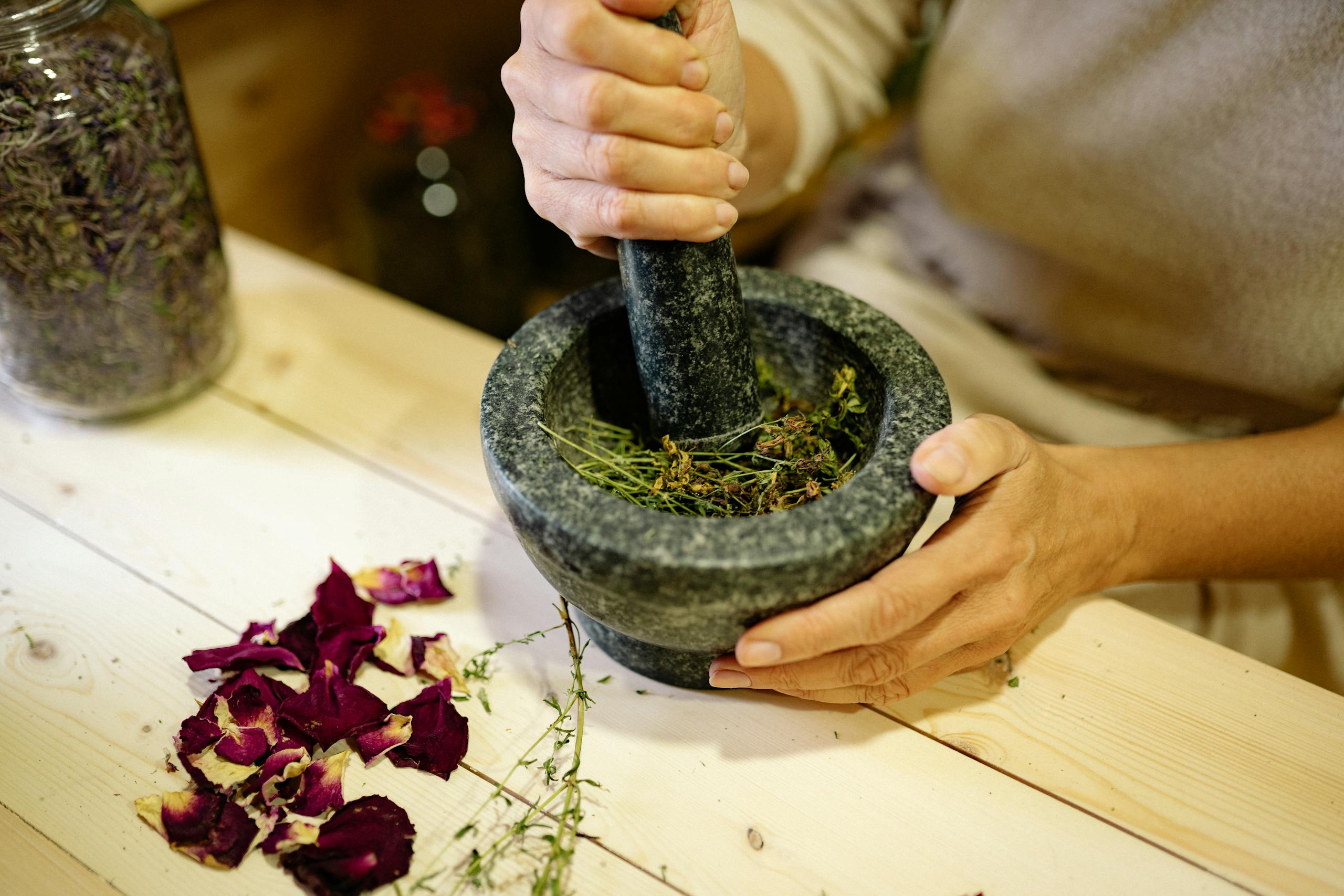
What the Stillroom Knew: Herbs, Blood Pressure, and the Body That Is Not Making a Mistake
A Note on Sources
This interstitial post takes a modern conversation as its departure point — a discussion between health researcher Ari Whitten and Dr. Christopher Pickard on the functional medicine approach to blood pressure — and reads it through the lens of Galenic medicine and the stillroom tradition. Where modern research and ancient practice converge, the Galenic framework makes that convergence visible. The primary sources that ground this series — the Capitulare de Villis, Galen’s De Methodo Medendi, Hildegard von Bingen’s Physica, and the great Arabic commentators — speak to these same mechanisms. The podcast is a modern door into an ancient room.
The Body Is Not Making a Mistake
There is a principle embedded in every Galenic text worth reading: the body is not making mistakes. When symptoms arise, the physician’s first question is not how to suppress them, but what the body is trying to accomplish, and what is preventing it from succeeding.
Herbs for Blood Pressure
Blood pressure is an elegant case in point. It does not simply rise randomly. The vessel walls tighten, the heart works harder, and pressure builds because the body has determined that tissues are not being adequately supplied. Something upstream has failed — whether that is vascular tone, the quality of the blood itself, the state of inflammation in the tissues, or the nervous system’s chronic alarm state.
The pharmaceutical approach suppresses the symptom. The Galenic approach asks the prior question. And the prior question, it turns out, almost always leads us back to the garden.
“To suppress a symptom without understanding its cause was not medicine. It was the appearance of medicine.” — Galen, De Methodo Medendi
Galen’s framework for the causes of illness centred on what he called the six non-naturals — those aspects of daily life that, when disordered, disturb the humoral balance and set the stage for disease. They were: air and environment; food and drink; sleep and waking; motion and rest; evacuation and repletion; and what the tradition called the passions of the soul. It is a framework that maps almost precisely onto what modern functional medicine identifies as the root causes of vascular dysregulation — and it is a framework that the stillroom, the physic garden, and the apothecary cupboard were designed to address.
Charlemagne’s Capitulare de Villis (ca. 812 AD) did not list herbs for their ability to suppress numbers on a diagnostic instrument. It listed herbs because the gardens of the royal estates were expected to support the health of the body — by addressing the conditions under which the body either thrived or failed. The list is, in its deepest logic, a Galenic formulary in horticultural form. Several of the herbs listed in the Capitulare appear in this post. None of their appearances is coincidental.
Nitric Oxide and the Kitchen Garden: Herbs For Blood Pressure
Nitric oxide is the body’s primary endogenous vascular relaxant. It is produced in the inner lining of the blood vessels — the endothelium — and it signals smooth muscle to relax, allowing vessels to dilate and blood to flow with less resistance. When nitric oxide production fails, pressure builds.
The plants that support nitric oxide production are not exotic. They are the ordinary vegetables of the kitchen garden, and several of them appear in the oldest European plant lists.
Rocket (Eruca vesicaria ssp. sativa)
Called roquette in French and rucola in Italian, rocket is among the highest dietary sources of nitrates available from the salad garden. The body converts these nitrates — via the bacteria of the oral cavity and gut — into nitric oxide. Rocket is peppery, bitter, and warming in the Galenic scheme. It was cultivated in monastery gardens throughout the medieval period, appears in Arabic medical texts as a stimulant and digestive, and was well known to Dioscorides. Eat it fresh and often.
Beetroot (Beta vulgaris)
Beetroot’s deep crimson colour signals its betacyanin content, and its earthy sweetness masks a substantial medicinal action. It is among the richest food sources of dietary nitrates available to the European kitchen, and clinical trials have confirmed what the garden always suggested: regular beetroot consumption produces measurable reductions in blood pressure in hypertensive individuals.
Beetroot is moistening and cooling in Galenic terms — appropriate for the phlegmatic or choleric constitution when used in moderation. Taken as a juice or eaten whole, it delivers nitrates that the body can convert directly into nitric oxide.
Spinach, Watermelon, and Walnut
Spinach (Spinacia oleracea) mirrors beetroot’s nitrate content and adds magnesium — making it doubly useful in the context of vascular health (see below). Watermelon (Citrullus lanatus) supplies citrulline, an amino acid the body uses as a precursor to arginine, which is the direct precursor to nitric oxide. The walnut (Juglans regia) — which appears in Charlemagne’s Capitulare de Villis as nux — supplies arginine itself. It has a long history in European and Mediterranean medicine, valued for its oils, its mild astringency, and its affinity for the head and the vessels.
To eat a salad of rocket and spinach dressed with walnut oil and a handful of beetroot is not merely pleasant. It is, in the most literal sense, a vascular medicine — and one that every kitchen garden in France can provide.
The Herb Garden of the Mouth
One of the most striking insights in contemporary functional medicine research on blood pressure is the role of the oral microbiome. The bacteria of the mouth are not merely dental residents. They are active participants in the conversion of dietary nitrates into nitric oxide — and when they are disrupted by antibiotic mouthwashes or poor gum health, the systemic consequences are measurable.
The Galenic tradition has always taken the mouth seriously as a site of medicinal action. Bitter herbs, aromatic herbs, astringents, and resins were used to maintain the health of the gums and the integrity of the oral tissues — because the health of the mouth was understood to reflect and influence the health of the whole body. The stillroom produced tooth powders, mouth rinses, and herbal gum preparations as a matter of course.
From a modern perspective, the herbs that support the oral microbiome without sterilising it are those that are selectively antimicrobial — inhibiting pathogenic bacteria while sparing or supporting the beneficial flora that produce nitric oxide precursors.
Sage (Salvia officinalis)
Astringent, antimicrobial, and anti-inflammatory, sage has been used as a tooth rub and mouth rinse throughout European history. It inhibits bacteria associated with gum disease without the broad-spectrum destruction of the oral flora wrought by modern antiseptic mouthwashes.
Sage appears in the Capitulare de Villis as salvia, and its centrality to the Salernitan tradition — which is to say, the great medieval medical school that transmitted Galenic medicine to the European West — is hard to overstate. The Flos Medicinae Scholae Salerni opens with its praises. It is the herb I examine most fully in this series, and readers familiar with my work will find no surprise in its reappearance here.
Thyme, Clove, and Plantain
Thyme (Thymus vulgaris), rich in thymol, has been used as a mouth rinse in the stillroom tradition for centuries. Clove (Syzygium aromaticum), used in small amounts, supports gum integrity through its eugenol content. Plantain (Plantago major and lanceolata) — applied as a fresh leaf or strong tea — is anti-inflammatory and soothing to irritated oral tissues. Plantain appears in Hildegard von Bingen’s Physica and has never left the European stillroom tradition. It grows, uninvited and entirely welcome, along every gravel path in Creuse.
The principle is simple: support the gums, protect the oral flora, and the nitric oxide pathway will function as it was designed to.
Magnesium from the Table, Not the Pharmacy
Magnesium deficiency is endemic in the modern diet for reasons that would have been incomprehensible to a medieval gardener: industrially depleted soils, refined grains, and an absence of the dark leafy greens that were once the foundation of the European diet. The Galenic tradition does not reach first for supplements. It reaches first for food — because food delivers minerals in their natural matrix, with the co-factors that enable absorption.
Nettles (Urtica dioica)
The nettle is one of the most nutritious plants in the European tradition, and one of the highest plant sources of magnesium available without cultivation. It is also deeply mineralising across the board — iron, calcium, silica, potassium. A nettle infusion made from dried aerial parts is a daily tonic with a documented history stretching back to the earliest European herbals. The nettle that grows at the edge of every French garden wall is not a weed. It is the most nutritious plant on the property, and it wants nothing in return but to be left alone until harvest.
Dark Leafy Brassicas, Pumpkin Seeds, and Cacao
Kale, chard, and the outer leaves of cabbages — the pot herbs of the medieval kitchen — deliver magnesium alongside the nitrates described above. Pumpkin seeds, ground into a meal or eaten whole, are among the richest food sources of magnesium in the temperate European tradition.
And cacao (Theobroma cacao) — a later arrival to the European stillroom, though one I will examine in this series through Jean-Baptiste de Boyer’s seventeenth-century treatise — is high in magnesium and in flavonoids that directly support endothelial function. Unsweetened cacao in warm water, taken in the morning, is both a pleasure and a tonic.
The Stillroom’s Three Great Vascular Herbs
Beyond the dietary herbs that support the nitric oxide pathway and mineral status, three herbs for blood pressure stand out in both the historical tradition and contemporary research as having specific, meaningful effects on vascular health and blood pressure.
Hibiscus (Hibiscus sabdariffa)
The dried calyces of Hibiscus sabdariffa — the deep red sepals used to make the tart crimson tea known variously as karkade, bissap, and agua de jamaica — have been the subject of multiple clinical trials, and the results are consistent: hibiscus tea produces meaningful reductions in blood pressure in hypertensive adults.
Hibiscus is cooling, sour, and deeply red — qualities that associate it, in Galenic thinking, with the cooling of excess heat and the movement of stagnant blood. It is rich in anthocyanins and organic acids that relax the vessel walls and inhibit the angiotensin-converting enzyme (ACE) — a mechanism that mirrors the action of the most commonly prescribed class of blood pressure drugs, but achieved through a whole-plant matrix rather than a synthetic isolate.
Preparation: steep two to three tablespoons of dried calyces in hot water for ten to fifteen minutes. Two cups daily is the dose most studied. Hibiscus can be grown in a pot in a temperate garden and overwintered indoors.
Hawthorn (Crataegus monogyna and laevigata)
Hawthorn is the great heart herb of the European tradition, and it appears in the Capitulare de Villis as spina — the thorn. Its berries, flowers, and leaves have been used for cardiac support for centuries. Hawthorn’s action on blood pressure is gentler and more tonal than hibiscus: it reduces peripheral vascular resistance, improves coronary blood flow, acts as a mild diuretic, and has demonstrated antioxidant effects on the endothelium. In Galenic terms, it is a herb of Venus — warming, softening, and opening — appropriate for conditions of cold constriction and stagnation.
In France, hawthorn grows at every field edge and forest margin. The berries are edible; the flowers make delicious springtime infusions. A simple hawthorn berry tincture or decoction is one of the most traditional of all European heart medicines, and one of the most available. The hedge outside my back gate has never been anything but a pharmacy.
Aged Garlic (Allium sativum)
Fresh garlic has a long history as a vascular herb — warming, stimulating, and deobstruent in Galenic terms. Aged garlic, produced by slow anaerobic fermentation or low-temperature heat processing (as in black garlic), has a different and more nuanced profile. The harsh sulphur compounds that make raw garlic difficult for many constitutions are transformed by aging into milder, more bioavailable organosulphur compounds, particularly S-allylcysteine.
Multiple trials have shown that aged garlic produces meaningful reductions in both systolic and diastolic pressure in hypertensive subjects, without the gastrointestinal irritation of raw garlic. Black garlic is increasingly available in French markets and requires no preparation at all — it is a finished medicine in the form of a condiment.
A Note on Chant
One practical observation from the functional medicine literature deserves mention, even though it involves no herb: humming. Research has found that humming — the sustained nasal resonance produced in chant, in song, in prayer — increases nitric oxide production in the nasal sinuses dramatically. The nasal sinuses are lined with tissue that generates nitric oxide, and vibration amplifies that production.
This connects the herbal garden to the choir stall. The great traditions of monastic chant — Gregorian plainchant, the antiphonal singing of the Benedictine abbeys that surrounded Charlemagne’s realm — were not merely aesthetic or devotional. They were, among other things, a daily practice of resonant breathing that supported the very vascular pathways we have been discussing.
The old ways were rarely doing only one thing at a time. This is what making them new again requires us to understand.
References: Herbs For Blood Pressure
1. Capitulare de Villis vel Curtis Imperialibus. ca. 812 AD. MGH Capitularia regum Francorum, vol. 1, no. 32. (Hawthorn as spina; walnut as nux; sage as salvia)
2. Galen. De Methodo Medendi. (On the Method of Healing.) Trans. R.J. Hankinson. Cambridge University Press, 2011.
3. Hildegard von Bingen. Physica. ca. 1150–1160. Trans. Priscilla Throop. Healing Arts Press, 1998.
4. Houston, M.C. (2011). The role of cellular micronutrient analysis, nutraceuticals, vitamins, antioxidants and minerals in the prevention and treatment of hypertension and cardiovascular disease. Therapeutic Advances in Cardiovascular Disease, 4(3), 165–183.
5. Kapil, V. et al. (2015). Inorganic nitrate supplementation lowers blood pressure in humans: role for nitrite-derived nitric oxide. Free Radical Biology and Medicine, 65, 952–959.
6. McKay, D.L. et al. (2010). Hibiscus sabdariffa L. tea lowers blood pressure in prehypertensive and mildly hypertensive adults. Journal of Nutrition, 140(2), 298–303.
7. Ried, K. (2016). Garlic lowers blood pressure in hypertensive individuals, regulates serum cholesterol, and stimulates immunity: An updated meta-analysis and review. Journal of Nutrition, 146(2), 389S–396S.
8. Rohner, A. et al. (2015). Systematic review and meta-analysis on the effects of hawthorn extracts on clinical outcomes. Evidence-Based Complementary and Alternative Medicine
9. Weitzberg, E. & Lundberg, J.O. (2002). Humming greatly increases nasal nitric oxide. American Journal of Respiratory and Critical Care Medicine, 166(2), 144–145.
10. Whitten, A. & Pickard, C. (2024). 7 Natural Strategies to Normalize Your Blood Pressure and Boost Energy. The Energy Blueprint Podcast. January 2024. [Cited as a modern interlocutor; primary claims cross-referenced against peer-reviewed sources above.]
All content for educational purposes. Not medical advice.
©Carolyn Smith-Kizer | atcharlemagnesbehest.com