
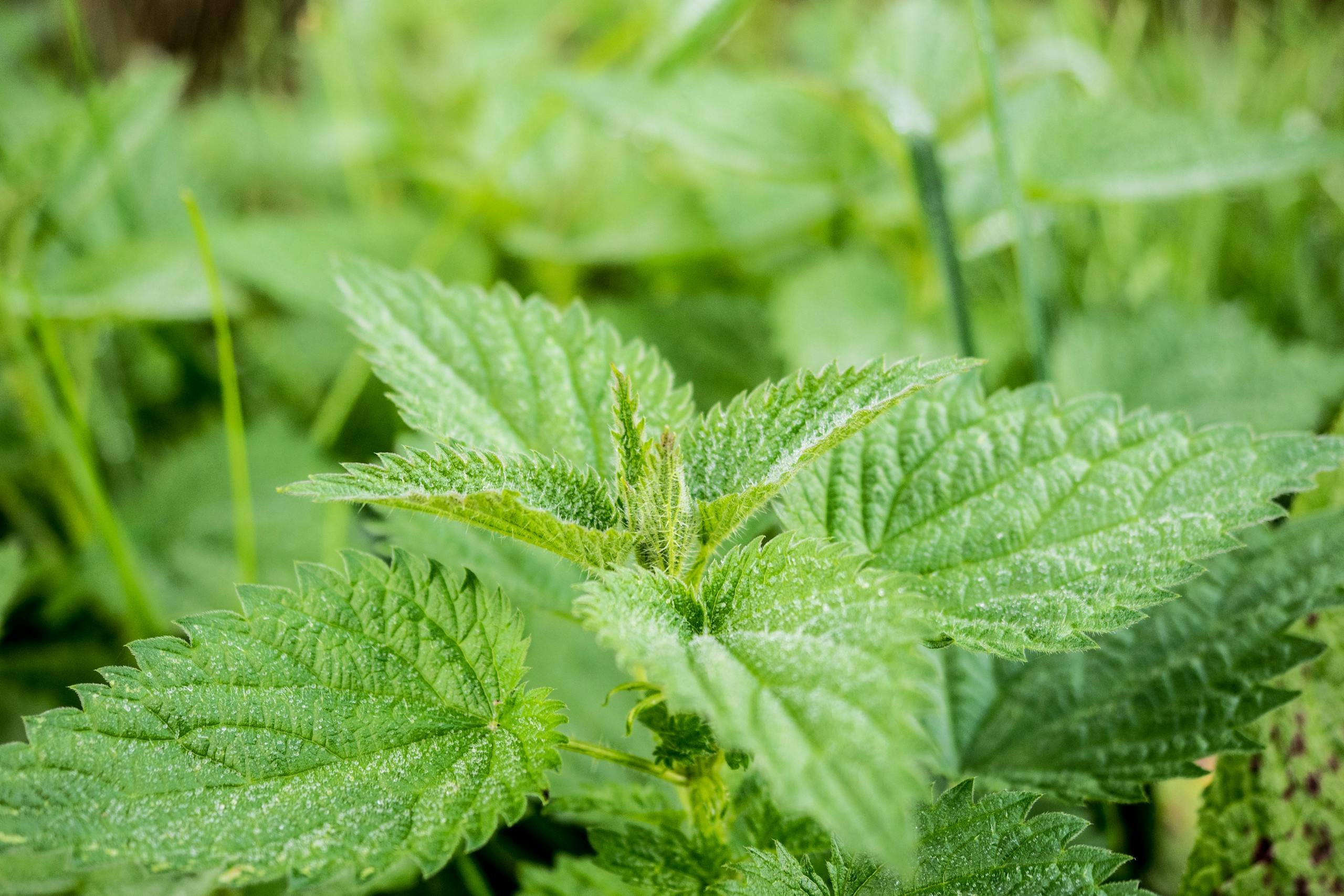
Urtica dioica L. Stinging Nettle
The Armored Inheritance — Part One: The Aerial Plant & the Spring Medicine
This monograph is the first of two parts. Part One covers the aerial plant: botanical identity, historical record, Galenic and astral framework, phytochemistry of leaf and stem, the therapeutic use of urtication, and the spring medicine harvest calendar. Part Two — The Root Medicine & the Autumn Dig — will be published in October 2026 as EP.7 concludes, covering root phytochemistry, the BPH evidence base, and the autumn harvest in the Creuse garden. The reader is invited to wait with the season between them.
I. Quick Reference Urtica dioica L. Stinging Nettle
| QUICK REFERENCE — Urtica dioica L. (Aerial Parts) | |
| Botanical Name | Urtica dioica L. |
| Family | Urticaceae |
| Common Names | Stinging nettle; grande ortie (Fr.); große Brennnessel (Ger.); ortiga mayor (Sp.) |
| Parts Used (This Volume) | Aerial parts — leaf and stem, first and second spring flush |
| Parts Used (Part Two) | Root — harvested autumn (see EP.7 Part Two, October 2026) |
| Planetary Ruler | Mars (traditional consensus: Culpeper, Lilly, Agrippa) |
| Galenic Temperament | Hot and Dry, 2nd–3rd degree |
| Primary Actions | Rubefacient; alterative; nutritive tonic; mast-cell stabiliser; anti-anaemic; diuretic |
| Capitulare de Villis | Not listed among the 73 specified species; present as managed estate weed and valuable economic plant — fibre, fodder, dye |
| Walafrid Strabo | Mentioned in Hortulus (c.840 CE) as common estate plant; sting noted, uses described |
| EMA Status | No current EMA Community herbal monograph on aerial parts; root covered separately |
| Publication | At Charlemagne’s Behest, EP.7 — Part One of Two. Published May 2026. |
II. Botanical Description & Identification
Taxonomy and Nomenclature
Urtica dioica L. belongs to the family Urticaceae. The species epithet dioica — from the Greek for ‘two houses’ — describes its dioecious reproductive strategy: male and female flowers on separate plants. The genus name Urtica derives from the Latin urere, to burn, which names the plant’s most conspicuous character before any other virtue is considered. Several subspecies are recognised across Europe; U. dioica subsp. dioica is the form predominant across France and the primary subject of this monograph.
The Trichome System — Biological Intelligence
A casual brush against the leaf produces an instant, burning shock. Examining the stem under magnification reveals the mechanism: thousands of tiny, translucent hairs called trichomes, each a microscopic hypodermic needle constructed of silica. When skin contacts them, the fragile tip shatters and the jagged edge pierces the epidermis, injecting a cocktail of histamine, formic acid, serotonin, and acetylcholine into the skin. The result is the characteristic burning weal that can persist for hours.
From an evolutionary standpoint, this is an extraordinarily costly investment. The plant expends significant metabolic energy manufacturing and arming millions of these needles — energy that could have been directed toward reproduction or growth. A plant does not invest this heavily in armor unless it has something of immense value to protect. The trichome system is not random aggression but a calibrated security architecture, and it has governed human perception of this plant for millennia — obscuring the payload it guards.
The sting is also the plant’s first clinical lesson. The same histamine that produces the skin reaction is present in the leaf in concentrations that, when delivered systemically through oral preparations, interact with the immune response in precisely the opposite direction — stabilising mast cells rather than triggering them. The weapon and the medicine are the same chemistry, differently applied.
Field Identification — The Creuse in Spring
Urtica dioica is unmistakable once encountered. In the Creuse and across central France, it emerges in early March from ground that has been disturbed or enriched — old midden sites, the base of stone walls, field margins, streamsides, anywhere that nitrogen accumulates. The stems are square in cross-section, covered in both stinging trichomes and shorter, non-stinging hairs. Leaves are opposite, heart-shaped to ovate, coarsely toothed, dark green, and densely armed.
The first spring flush is the most medicinally valuable: young growth before the plant flowers, typically through April and into May depending on elevation and exposure. Second flush follows cutting and continues into early summer. Once flowering begins, the aerial parts become less palatable and are best left for seed, fibre, and the pollinators that depend on the patch.
III. Historical & Ethnobotanical Record
Classical Sources
Dioscorides (De Materia Medica, c.65 CE) devotes a chapter to nettle, describing both the stinging and Roman nettle (Urtica pilulifera). He records the leaves applied topically for joint pain, the seed taken internally as an aphrodisiac and antidote to hemlock, and the bruised plant applied to stop nosebleeds. The rubefacient action is clearly understood: he notes the plant’s heat and its capacity to draw blood to the surface.
Pliny the Elder (Naturalis Historia, c.77 CE) is more expansive and more specific. He describes urtication — the deliberate striking of arthritic limbs with fresh nettles — as established medical practice, and notes the plant’s value as early spring food when little else was available. He records its fibre applications for weaving and its use in animal fodder to improve milk and egg production, observations that modern agriculture is only now systematically rediscovering.
Medieval Traditions
Hildegard von Bingen (Physica, c.1150–1160 CE) recognises nettle as a heating and drying plant, useful for loosening cold, damp congestion. She prescribes it for catarrh and for conditions she associates with excess cold — precisely the Galenic indications for phlegmatic constitutions that this monograph develops in Section IV. Hildegard’s clinical instinct, as so often, runs parallel to the Galenic framework without formally invoking it.
Walafrid Strabo (Hortulus, c.840 CE), writing from Reichenau during the Carolingian era, mentions nettle among the common plants of the managed estate. His tone is practical: it grows abundantly, it stings, and it is useful. He does not romanticise it. This is the most important Carolingian primary source for nettle, and it reflects the plant’s actual status in that era — not a prized medicinal like sage or fennel, but a managed, valued weed that appeared on every estate whether invited or not.
Gerard and Culpeper both treat nettle at length in their respective herbals. Culpeper, writing under Mars, emphasises the plant’s heating, stimulating, and dissolving character, and devotes considerable space to urtication for gout and rheumatism — therapeutic applications that by his era had centuries of documented clinical use behind them.
The First World War and After
The economic utility of nettle fibre experienced a dramatic twentieth-century revival during the First World War, when cotton supplies to Germany and Austria were blockaded. Both countries turned to nettle as a textile plant, harvesting wild stocks at scale and developing commercial cultivation programs. German army uniforms were manufactured from nettle fabric. This episode — largely forgotten today — demonstrates that the plant’s fibre applications were not merely archaic: given sufficient economic pressure, nettle became an industrial raw material within living memory.
Indigenous and Global Traditions
Across the Pacific Northwest, Himalayan highland communities, and Northern European cultures, nettle has served as a foundational plant in the material economy — cordage, fishing nets, textiles, spring tonic, mineral-rich potherb. The indigenous idiom for nettle in many traditions positions it not as a weed to be avoided but as a first food and first medicine of spring, the plant that breaks winter’s nutritional deficit and prepares the body for the season ahead. The movement for rematriation — the recovery of traditional ecological knowledge — specifically includes the rehabilitation of nettle from pest to first plant.
IV. Galenic Energetics & Temperament
Qualities and Degree
In the Galenic system, nettle is Hot and Dry in the second to third degree — a robust warming and drying agent, not extreme, but pronounced. This places it firmly in the class of plants suited to dispersing cold, wet, stagnant conditions: phlegmatic excess, catarrhal accumulation, cold and damp joint disease, late-winter nutritional depletion. The Galenic physician would have reached for nettle as winter ended and phlegmatic conditions peaked — exactly the window we identify today as the optimal harvest season.
The Phlegmatic Constitution and the Spring Medicine
The phlegmatic temperament — governed by cold and moisture, dominated by the element Water, associated with the winter season — accumulates excess through the cold months. By late winter and early spring, phlegmatic individuals typically present with sluggishness, heaviness, respiratory catarrh, water retention, and a system that needs to be moved, warmed, and cleared. This is the humoral portrait of the spring patient, and nettle addresses it at every level.
Its heating action counteracts the cold. Its drying action addresses excess moisture. Its iron and nutritive density replenishes what winter has depleted. Its alterative action supports the lymphatic and renal clearing of accumulated waste. Its rubefacient character — most dramatically expressed in urtication — moves blood, breaks stagnation, and restores circulation to congested areas. Nettle is not simply a spring tonic by cultural convention; it is a spring tonic by Galenic logic.
The Stagnation Principle — An Elder’s Teaching
There is a teaching that deserves to be transmitted here, received from an elder and wise medicine man: most pain is stagnation. Whether the agent is Vicks Vapor Rub, Tiger Balm, or the sting of a nettle, moving blood is the key mechanism — breaking up congestion, stimulating clearing, reestablishing flow where it has become arrested. This is not a folk simplification of complex biochemistry. It is a clinical principle that the Galenic system formalised in its doctrine of obstruction and resolution, that the Ayurvedic tradition articulates as ama and its dissolution, and that modern pharmacology confirms in its understanding of localised inflammation as both a symptom and a therapeutic tool. ~ Kat Maier
Urtication is the most direct expression of this principle that nettle offers. The rubefacient action — bringing blood (rube) to the skin and underlying tissues (fascia) — is the same mechanism that produces the initial sting and the subsequent therapeutic effect. The plant that hurts you on contact is, properly applied and properly understood, the same plant that moves the stagnant blood in your arthritic knee. This is not paradox. It is Galenic medicine at its most elegant.
V. Astro-Herbalism
Planetary Rulership — Mars
Nettle is universally assigned to Mars across the Western astro-herbalism tradition. Culpeper is unequivocal; Agrippa’s planetary lists include it; Lilly confirms it. The assignment is not arbitrary. Mars governs heat, inflammation, iron, the blood, the muscular system, and the capacity for directed action. Nettle expresses every one of these Martian qualities: the sting as martial aggression, the iron concentration as Martian mineral signature, the rubefacient action as Martial heat applied therapeutically, the alterative action on blood as Martian purification.
The Doctrine of Signatures
The Doctrine of Signatures — the principle that a plant’s physical form carries information about its therapeutic affinities — reads very clearly in Urtica dioica. The sting that inflames the skin identifies the plant’s capacity to work through and upon the skin and blood. The deep, penetrating root system that pulls minerals from disturbed ground identifies its capacity to extract and concentrate, both in soil and in the body. The serrated, aggressive leaf margin and the martial posture of the plant in waste ground — colonising, spreading, asserting — all speak the same language. Mars does not hide itself in this plant.
Constitutional Considerations
For the clinician working astrologically, nettle is indicated where there is a need for Martian energy — to break through stagnation, to heat what has become cold, to move what has become fixed. It is most powerfully indicated for phlegmatic and melancholic constitutions in spring, when the cold-dominant temperaments have accumulated excess through winter. It is used with more care in choleric constitutions or where there is inflammatory excess — not contraindicated, but selected more judiciously.
In the ACB clinical framework, the author’s own natal Saturn retrograde in Virgo and Pisces stellium establish a constitutional profile with cold and damp tendencies that respond strongly to Martian medicines in spring. Nettle, in this context, is not merely an intellectual subject. It is a seasonal necessity.
VI. Phytochemistry — Aerial Parts
Nutritive Constituents
Dried nettle leaf is approximately 30% protein by weight, a figure that exceeds spinach, kale, and most cultivated leafy greens by a considerable margin. This protein fraction includes all essential amino acids, making Urtica dioica one of the most nutritionally complete wild plants available in the European temperate zone. The iron content is exceptionally high — relevant to its historical use in treating spring anaemia and in the first flush’s role as a corrective for the iron deficit that accumulates through a winter of reduced fresh plant intake.
Calcium, magnesium, potassium, and silica are present in significant concentrations. Vitamins A, C, and K are all well represented in fresh leaf; vitamin C content is sufficient to explain the historical use of spring nettle in preventing scurvy in populations that had exhausted winter food stores.
Flavonoids — Quercetin and Kaempferol
The flavonoid profile of nettle leaf is clinically significant. Quercetin is the most important single constituent from a pharmacological standpoint: a flavonol present in concentrations sufficient to exert measurable mast cell stabilisation in vivo. Mast cells are the primary mediators of the allergic cascade — they release histamine and other inflammatory mediators in response to allergen exposure, producing the symptoms of seasonal allergic rhinitis (hay fever), urticaria, and related conditions.
Quercetin stabilises mast cell membranes, reducing the release of histamine before it occurs — a mechanism that is, pointedly, the biochemical opposite of what the plant does to the skin via its trichomes. The plant that stings you through histamine delivery also, taken orally, reduces your histamine response to the environment. Kaempferol complements quercetin’s action with additional anti-inflammatory and antioxidant activity.
The Sting Chemistry — Histamine, Formic Acid, Serotonin
The trichome cocktail consists primarily of histamine, formic acid (the same compound found in ant venom), serotonin, and acetylcholine. Each of these constituents contributes to the sting response: histamine produces the weal and flare, formic acid extends and intensifies the burning sensation, serotonin modulates local pain signalling.
When urtication is applied therapeutically, the localized delivery of these same compounds to arthritic or inflamed tissue produces a controlled local inflammatory response that paradoxically reduces chronic inflammation through counter-irritant mechanisms — depleting substance P (the primary pain neurotransmitter) and increasing blood flow to stagnant tissue.
Chlorophyll and the Blood Connection
Nettle’s chlorophyll content is among the highest of any common plant. Chlorophyll’s molecular structure is nearly identical to haemoglobin — the central atom is magnesium in chlorophyll and iron in haemoglobin, but the surrounding porphyrin ring structure is essentially the same. This structural kinship has been the basis of traditional claims about chlorophyll’s blood-building properties, and while the direct conversion argument is biochemically simplistic, the practical outcome — that a plant rich in both iron and chlorophyll is an excellent medicine for anaemia — stands on its own merits regardless of the molecular explanation.
Dynamic Accumulation — The Soil Connection
Urtica dioica is a dynamic accumulator in the technical sense: its root system actively draws minerals from subsoil and concentrates them in its foliage at levels substantially above what the surrounding soil analysis would predict. Nitrogen, iron, calcium, and potassium are all accumulated.
This is why nettle grows most luxuriantly on disturbed, nitrogen-rich ground — not because it merely tolerates such conditions but because it actively mines them. The plant’s exceptional mineral density is a direct consequence of this accumulation strategy, and it is why nettle-based liquid fertiliser, made by fermenting chopped plant material in water, is one of the most effective organic soil amendments available to the kitchen gardener.
VII. Pharmacological Activity & Research
Mast Cell Stabilisation and Seasonal Allergic Rhinitis
The clinical research on nettle leaf for allergic rhinitis is modest in volume but consistent in direction. Mittman’s 1990 randomised, double-blind trial (Planta Medica) remains the most frequently cited, showing freeze-dried nettle leaf superior to placebo for self-rated allergy symptom control. More recent in vitro work has confirmed quercetin’s mast-cell-stabilising mechanism at concentrations achievable through oral administration of standardised preparations.
The practical clinical evidence — accumulated through centuries of empirical use and partially confirmed by modern research — supports nettle leaf preparations as appropriate first-line botanical support for mild to moderate seasonal allergic rhinitis, particularly where the phlegmatic constitutional picture is present.
Anti-inflammatory and Analgesic Activity
Multiple in vitro studies have demonstrated inhibition of pro-inflammatory cytokines (including TNF-alpha, IL-1beta, and IL-6) by nettle leaf extracts. The anti-inflammatory mechanism is multi-targeted, acting through NF-kB pathway inhibition, COX enzyme modulation, and direct antioxidant activity. Human clinical trials remain limited in scale, but the in vitro picture is consistent with the plant’s long clinical record in inflammatory joint conditions.
Nutritive and Anti-Anaemic Effects
The iron content of dried nettle (3–4 mg per 100 g fresh weight; considerably higher dried) combined with the vitamin C content that enhances non-haem iron absorption makes a strong nutritional case for spring nettle as anti-anaemic food-medicine. This is not a subtle pharmacological action. It is macronutrient medicine — the kind of nutritional intervention that makes the difference between a population that reaches spring with its iron stores intact and one that does not.
Haemostatic and Urinary Applications
Nettle leaf is astringent and has a well-documented haemostatic (blood-stopping) action, traditionally applied both topically and internally for bleeding conditions — nosebleeds, menorrhagia, haematuria. The diuretic and urinary tonic action supports its use in urinary tract health and as a gentle renal clearing agent in spring protocols. Note that these aerial-part indications are distinct from the root’s actions on benign prostatic hyperplasia, which is reserved for Part Two of this monograph.
VIII. Urtication — The Rubefacient Tradition
What Urtication Is
Urtication — from the Latin urtica, nettle — is the deliberate application of fresh stinging nettle to the skin, typically by striking or pressing the plant against the affected area until the sting is delivered. The result is a localised inflammatory response: the characteristic burning weal, increased blood flow to the surface, and a complex neurochemical cascade that, paradoxically, reduces chronic pain and inflammation in the underlying tissue over the following hours and days.
This is not folk superstition. Pliny the Elder documented it in the first century. Culpeper prescribed it for gout. Contemporary randomised controlled trials have confirmed the clinical effect for osteoarthritis of the knee (Randall et al., 2000, Journal of the Royal Society of Medicine) and for lower back pain (Randall et al., 2004).
The mechanism is now partially understood: substance P, the primary neurotransmitter of chronic pain signalling, is depleted from local nerve endings by repeated sting exposure. Concurrently, the localised histamine and serotonin delivery increases blood flow and lymphatic activity in tissue that has become chronically cold and stagnant.
The Rubefacient Category
A rubefacient is any substance that brings blood (from the Latin ruber, red) to the skin surface and underlying tissues (fascia). The category includes Vicks Vapor Rub, Tiger Balm, capsaicin preparations, mustard plasters, and stinging nettle — very different substances sharing the same primary therapeutic mechanism: moving blood to where it has become insufficient or stagnant. The clinical principle behind all rubefacients is the same one the elder’s teaching names directly: most pain is stagnation, and moving blood is the key.
In Galenic terms, the rubefacient resolves obstruction. Cold and damp conditions — phlegmatic pathology — produce obstruction: fluid accumulates, blood stagnates, tissues become cold and painful. A rubefacient applied directly to the affected area drives heat and blood into the tissue, dissolving the obstruction and restoring flow. The sting of a nettle accomplishes this with a precision that a commercial topical preparation cannot fully replicate, because the nettle delivers the chemical stimulus directly into the skin in a pattern calibrated by the density of the trichome distribution.
Clinical Application of Urtication
Fresh plants are required. Dried nettle does not sting and cannot be used for urtication. The fresh plant is gathered with gloves, then the gloves are removed and the plant is applied to the affected joint or tissue by gentle striking or pressing. The leaves and stems carry the trichomes; the direction of application affects the intensity of the sting. Working with the grain of the hairs reduces the sting slightly; working against it increases it.
The sting should be applied until a noticeable weal develops — typically one to three minutes of contact. The area will burn and itch for thirty minutes to several hours; this is the therapeutic response, not a complication. The procedure can be repeated daily or every other day. Randall’s controlled trials used daily urtication for one week. Traditional practice in some communities was more extended.
Contraindications for Urtication
Do not apply to broken, infected, or already-inflamed skin. Do not use on individuals with known severe histamine sensitivity. Use with caution over very thin skin (inner wrist, ankle) where the weal can be excessive. The therapeutic target is cold, stagnant, chronic musculoskeletal pain — not acute inflammatory arthritis where additional histamine delivery would be counterproductive.
The Perfect Spring Cleanse Opening
Because urtication simultaneously stimulates blood flow, depletes substance P, increases local lymphatic activity, and delivers a controlled Martial heat to cold, stagnant tissue, it is an ideal opening procedure for the spring cleanse protocol in phlegmatic and melancholic constitutions. Applied to the major joints, the lumbar spine, or the bottoms of the feet (over a thick sock, for a gentler effect), it signals to the body that the season has changed — that winter’s cold contraction is over and warm, moving, vital spring has arrived. This is medicine that is felt in the body before it is understood by the mind, which is exactly the register in which Galenic seasonal medicine operates.
IX. Traditional Preparations & Dosage
Infusion — The Primary Oral Preparation
Standard infusion: 2–4 g of dried nettle leaf per 150–200 ml of freshly boiled water, steeped for 10–15 minutes, three times daily. For fresh leaf, use approximately three times the weight (6–12 g) to account for water content. This is the preparation of choice for allergic rhinitis, nutritive tonic use, anti-anaemic protocols, and urinary support. Nettle infusion has a pleasant, green, slightly mineral taste — one of the more palatable medicinal teas in the spring materia medica.
Tincture of Fresh Herb
Fresh nettle leaf tincture (maceration in 25–40% ethanol, 1:2 fresh plant ratio) captures the full volatile and mineral profile more completely than dried preparations. Dose: 25–50 ml of 1:2 tincture three times daily, or 5–10 ml of 1:5 three times daily. Prepare in the field with gloves on; the tincturing process neutralises the sting. The first spring flush, tinctured immediately after harvest, produces the highest-quality preparation.
As Food — Potherb, Soup, Beer
The simplest and most historically continuous preparation is as food. Young spring nettles, blanched for 30–60 seconds in boiling water (which completely disarms the trichomes), become a deep green, spinach-like potherb with an earthy, mineral flavour. They can be used in soup, stirred into egg dishes, made into pasta filling, or cooked as a simple side vegetable dressed with butter and nutmeg. In the Creuse and across rural France, nettle soup (soupe aux orties) remains a spring tradition in households that maintain the old relationship with the land.
Nettle beer is a fermented preparation with a long Northern European record — a light, naturally effervescent spring drink that delivers the plant’s mineral content in a form that supported working communities through the hungry gap. The recipe is simple: nettle tops, water, sugar, lemon, and a little yeast. It was medicine that did not announce itself as medicine, which is the finest kind.
Fermented Plant Juice — For the Garden
Nettle biomass fermented in water for 10–14 days produces a potent liquid fertiliser with high nitrogen, iron, and mineral content. Diluted 1:10 to 1:20 with water and applied to the soil around vegetables, it functions as an organic nitrogen feed equivalent in effect to many commercial liquid fertilisers, with the additional benefit of trace minerals that synthetic products do not supply. The smell during fermentation is memorable and unambiguous. Apply in the morning on days you have no visitors expected.
Nettle Compost Activator
Fresh nettle biomass added to a compost pile at a ratio of roughly 10% of total volume accelerates decomposition through its high nitrogen and moisture content. This is the dynamic accumulator cycle closing on itself: the plant pulls minerals from the soil, concentrates them in its biomass, and when composted returns them to the soil in a form more bioavailable than the original mineral deposit. The estate manager who maintained a nettle patch on disturbed ground and composted its trimmings was practicing regenerative agriculture centuries before the term existed.
X. Contraindications & Safety
General Safety Profile
Urtica dioica aerial parts have an excellent safety record in normal food and infusion doses. The plant has been consumed as food across Europe for millennia without documented toxicity. The regulatory literature (ESCOP, Commission E) recognises the aerial parts as safe for oral use within standard therapeutic parameters.
Specific Precautions
- Oedema of cardiac or renal origin: nettle’s diuretic action is generally gentle, but caution is warranted where fluid management is clinically controlled. Do not use concentrated preparations as a substitute for prescribed diuretics without practitioner involvement.
- Pregnancy: the plant has traditional uses in pregnancy support (nutritive, anti-anaemic), but concentrated tincture and high-dose preparations are used cautiously given limited safety data. Food-quantity use and standard infusion are generally regarded as acceptable.
- Drug interactions: nettle’s vitamin K content may interact with anticoagulants; monitor INR in patients on warfarin who begin regular high-dose nettle preparations. Additive effects possible with antihypertensive and diuretic medications. Mild hypoglycaemic action has been reported; monitor in insulin-dependent diabetes.
- Urtication: do not apply to broken, infected, or acutely inflamed skin. Avoid use in individuals with confirmed severe histamine sensitivity. Use caution over thin skin.
- Harvesting: gloves are non-negotiable when harvesting fresh plant material. The sting from a large patch of mature nettles is intense and can last several hours on sensitive skin.
XI. Nettle in the Carolingian Garden
The ACB Framing Essay
The Plant That Was Not on the List
The Capitulare de Villis (c.812 CE) specifies seventy-three plants that Charlemagne required to be grown on every royal estate across the Frankish Empire. Urtica dioica is not among them. This absence is, in its own way, instructive.
The Capitulare lists the plants that required deliberate cultivation — the ones that would not appear in the estate’s productive areas without active management and planting. Nettle did not need to be mandated. It was already there, on every estate, in every disturbed margin, wherever stone had been turned or ground had been enriched by centuries of human habitation. Charlemagne did not need to order his estate managers to grow nettle. He needed only to not pull it all out.
Walafrid Strabo, writing in his Hortulus at Reichenau around 840 CE, mentions nettle with the same matter-of-fact acknowledgment that one reserves for something too obvious to require extensive comment. It is there. It stings. It is useful. This is the Carolingian relationship with Urtica dioica in miniature: familiarity without reverence, utility without ceremony. The plant had been feeding, medicating, and clothing people for so long that it had ceased to seem remarkable.
The Carolingian estate manager who understood his nettle patch understood something that regenerative agriculture is only now recovering: a managed weed is not the same thing as an unmanaged one. Nettle left entirely to its own devices spreads aggressively and colonises productive ground. Nettle managed — cut regularly for food and medicine through spring and summer, composted in autumn, the root system contained to its designated margins — is a foundational element of estate fertility. The same plant that feeds the estate’s cattle, supports its butterfly population, provides spring medicine for its human inhabitants, and activates its compost pile is not a weed. It is unpaid staff.
The Harvest Calendar Opened
I am writing this in May 2026, at the beginning of what will be a long relationship with a particular nettle patch — the one at the back of the garden here in Clugnat, which I am clearing to build the food forest. The nettles have been on that ground for years, possibly decades. They have been accumulating minerals from the disturbed soil at the base of the west-facing stone wall, concentrating them in leaves that I am now harvesting for infusion, for tincture, and for the compost pile that will build the soil for everything that comes after them.
This is the spring half of the harvest calendar. The aerial parts — first and second flush through May and into June — are the medicine and food of the season. The urtication I have described in Section VIII is available now, from plants that are at their most vital and most stinging. The fermented plant juice that will feed the garden through summer is made from biomass cut in the clearing work.
But the calendar is only half open. The roots remain in the ground. They will continue to accumulate minerals through summer, and when the aerial parts die back in late September and October, the root medicine will be at its peak. That is when I will return to this patch with a different tool and a different intention — not to harvest the spring tonic but to dig the autumn medicine.
The phytosterols and lignans of the root that interact with human hormone metabolism, the BPH evidence base, the tincture of fresh root versus the dried preparation — all of that belongs to Part Two. The reader who has followed the aerial plant through spring and summer will meet the root in autumn with the full seasonal context that makes the medicine comprehensible. You cannot understand the root medicine without understanding what the plant has been doing above ground all year. The harvest calendar is one document, even if it requires two seasons to read.
A Note on the Garden
The nettles I am clearing are not being destroyed. The root system will regenerate on the margins where I leave it, and I will manage it there deliberately — for the butterflies, for the compost pile, for the autumn dig. The clearance work is making space for the food forest, but the food forest needs what the nettles have been doing for years: nitrogen, minerals, and the deep root action that prepares compacted soil for the shallower-rooted plants that will follow. The nettle patch is not being removed from the garden. It is being repositioned in it.
This is, in miniature, the Carolingian estate management model: not eradication but management. Not removal but relationship. The plant that costs nothing to establish, that feeds the land and the people and the insects and the livestock, that provides spring medicine and autumn tincture and summer fertiliser — that plant earns its place on the margin of any serious medicinal garden, regardless of whether Charlemagne thought to put it on the list.
Part Two — The Root Medicine & the Autumn Dig — follows in October 2026.
XII. Materia Medica Summary
| MATERIA MEDICA SUMMARY — Urtica dioica (Aerial Parts) | |
| Latin Binomial | Urtica dioica L. |
| Family | Urticaceae |
| Galenic Qualities | Hot and Dry, 2nd–3rd degree |
| Planetary Ruler | Mars |
| Taste | Acrid, astringent, slightly salty |
| Tissue Affinity | Blood; lymph; kidneys; skin; mucosa; reproductive |
| Primary Actions | Rubefacient; alterative; nutritive tonic; mast-cell stabiliser; anti-anaemic; diuretic; haemostatic |
| Key Constituents (Leaf) | Quercetin; kaempferol; chlorophyll; iron; calcium; vitamins A, C, K; histamine; formic acid; serotonin; silica; protein (30% dried weight) |
| Key Constituents (Root — Part Two) | Phytosterols; lectins; polysaccharides; lignans |
| Clinical Applications | Seasonal allergic rhinitis; iron-deficiency anaemia; spring nutritive tonic; urtication for musculoskeletal pain; urinary tract tonic; constitutional clearing for phlegmatic excess |
| Preparations | Infusion (fresh or dried leaf); tincture of fresh herb; food (potherb, soup, beer); topical — urtication; fermented plant juice (garden use) |
| Dosage (Infusion) | 2–4 g dried leaf in 150 ml water, 3× daily; or 25–50 ml fresh plant tincture (1:2, 25%) 3× daily |
| Contraindications | Caution in oedema from impaired cardiac or renal function; avoid concentrated preparations in confirmed renal disease; urtication — avoid on broken or inflamed skin |
| Drug Interactions | May potentiate anticoagulants (vitamin K content); additive effect possible with antihypertensives and diuretics; monitor in diabetes (mild hypoglycaemic action reported) |
| Harvest (Aerial) | First flush: early spring, before flowering. Second flush: after cutting, before seed set. Gloves essential. |
| Harvest (Root — Part Two) | Late September–October, after aerial die-back. Full root medicine and tincture method in EP.7 Part Two. |
| Part Two Publication | October 2026 — At Charlemagne’s Behest EP.7 Part Two: The Root Medicine & the Autumn Dig |
This information is for educational purposes only and is not intended to diagnose, treat, cure, or prevent any disease. Always consult with a qualified healthcare provider before using herbs medicinally.
XIII. Bibliography
Primary Historical Sources
Culpeper, Nicholas. Culpeper’s Complete Herbal & English Physician. Manchester: J. Gleave, 1826.
Dioscorides, Pedanius. De Materia Medica. c.65 CE. Trans. Lily Y. Beck. Hildesheim: Olms-Weidmann, 2005.
Gerard, John. The Herball, or Generall Historie of Plantes. London: John Norton, 1597.
Pliny the Elder. Naturalis Historia. c.77 CE. Trans. John Bostock. London: Taylor and Francis, 1855.
Strabo, Walafrid. Hortulus. c.840 CE. Trans. Raef Payne. Pittsburgh: Hunt Botanical Library, 1966.
Von Bingen, Hildegard. Physica. c.1150–1160 CE. Trans. Priscilla Throop. Rochester, VT: Healing Arts Press, 1998.
Phytochemistry and Pharmacology
Chrubasik, J.E., Roufogalis, B.D., Wagner, H., & Chrubasik, S. (2007). A comprehensive review on the stinging nettle effect and efficacy profiles. Part I: Herba urticae. Phytomedicine, 14(6), 423–435.
Klingelhoefer, S., Obertreis, B., Quast, S., & Behnke, B. (1999). Antirheumatic effect of IDS 23, a stinging nettle leaf extract, on in vitro expression of T helper cytokines. Journal of Rheumatology, 26(12), 2517–2522.
Mittman, P. (1990). Randomized, double-blind study of freeze-dried Urtica dioica in the treatment of allergic rhinitis. Planta Medica, 56(1), 44–47.
Obertreis, B., Giller, K., Teucher, T., Behnke, B., & Schmitz, H. (1996). Anti-inflammatory effect of Urtica dioica folia extract in comparison to caffeic malic acid. Arzneimittelforschung, 46(1), 52–56.
Randall, C., Meethan, K., Randall, H., & Dobbs, F. (2004). Nettle sting of Urtica dioica for joint pain — an exploratory study of this complementary therapy. Complementary Therapies in Medicine, 7(3), 126–131.
Randall, C., Randall, H., Dobbs, F., Hulbert, C., & Sanders, H. (2000). Randomized controlled trial of nettle sting for treatment of base-of-thumb pain. Journal of the Royal Society of Medicine, 93(6), 305–309.
Roschek, B. Jr., Fink, R.C., McMichael, M., & Alberte, R.S. (2009). Nettle extract (Urtica dioica) affects key receptors and enzymes associated with allergic rhinitis. Phytotherapy Research, 23(7), 920–926.
Astro-Herbalism and Vitalist Frameworks
Culpeper, Nicholas. Culpeper’s Complete Herbal & English Physician. Manchester: J. Gleave, 1826. (Planetary attributions.)
Popham, Sajah. Evolutionary Herbalism: Science, Spirituality, and Medicine from the Heart of Nature. Berkeley: North Atlantic Books, 2019.
Wood, Matthew. The Earthwise Herbal: A Complete Guide to Old World Medicinal Plants. Berkeley: North Atlantic Books, 2008.
Carolingian and Medieval Sources
Capitulare de Villis et Curtis Imperialibus. c.812 CE. In Boretius, A. (ed.), Monumenta Germaniae Historica: Capitularia Regum Francorum. Hannover, 1883.
Strabo, Walafrid. Hortulus. c.840 CE. Trans. Raef Payne. Pittsburgh: Hunt Botanical Library, 1966.
ACB Project References
Smith-Kizer, Carolyn. ‘At Charlemagne’s Behest: The Capitulare de Villis and the Living Galenic Garden.’ atcharlemagnesbehest.com. EP.1 Pillar Post, 2025.
Smith-Kizer, Carolyn. ‘Salvia officinalis: The Memory of a Garden.’ atcharlemagnesbehest.com. EP.2, April 2026.
Smith-Kizer, Carolyn. ‘Artemisia absinthium: Saturn’s Medicine and the Bitter Path.’ atcharlemagnesbehest.com. EP.3, April 2026.
Smith-Kizer, Carolyn. ‘The Phlegmatic Constitution: A Galenic Guide.’ atcharlemagnesbehest.com. EP.4, April 2026.
Smith-Kizer, Carolyn. ‘Foeniculum vulgare: Jupiter’s Gift to the Carolingian Table.’ atcharlemagnesbehest.com. EP.5, April 2026, forthcoming.
Smith-Kizer, Carolyn. ‘Hildegard’s Bridge: Where Carolingian Medicine Meets the Monastic Tradition.’ atcharlemagnesbehest.com. EP.6, May 2026, forthcoming.