
Rosemary for Inflammation: The Warm Herb for Cold, Stiff Aches
In short: Rosemary for inflammation has a long traditional use and some laboratory support, but few human trials. Its compounds calm inflammatory signalling in cell and animal studies, and the European Medicines Agency accepts rosemary oil and rosemary baths for minor muscle and joint aches on the strength of long use. Galen would add the important part: rosemary is a warming herb, for the cold, stiff kind of ache, and never for a joint that is hot, red and swollen.
Rosemary for inflammation is one of those searches that brings back a wall of capsules and promises. I would rather start where the old herbalists started, with the question they always asked first: is this pain hot, or is it cold? Get that right and rosemary makes sense. Get it wrong and it can make things worse.
This is the companion post to my full rosemary monograph, which covers the plant, its history, constituents and safety in detail.
Key Takeaways
- Galen divided pain into hot and cold. A hot, red, swollen joint called for cooling. A cold, stiff, aching one called for warmth, and rosemary is a warming herb.
- Dioscorides mixed rosemary into ointments against weariness. The European Medicines Agency still accepts rosemary baths and rosemary oil for minor muscle and joint aches, by traditional use.
- In the laboratory, carnosic acid, carnosol and rosmarinic acid calm inflammatory signals. Human trials are still few.
- Rosemary in food is safe for nearly everyone. Strong preparations and the essential oil need care in pregnancy and with seizure disorders.

Hot Pain and Cold Pain
To Galen, inflammation proper was a hot thing: the phlegmon, a swelling that is hot, red, tense and painful, made when too much blood floods into a part.1 I wrote about that in Garlic for Inflammation. Galenic care worked by contraries, so a hot, full part was cooled and emptied, never heated.2
But not every ache is hot. Every older person knows the other kind: the stiff knee on a damp morning, the cold hands that will not loosen, the back that eases once it is warm. In Galenic terms this is cold and damp settling into the joints and muscles, thick humours that will not move. That is the ache that asks for warmth.
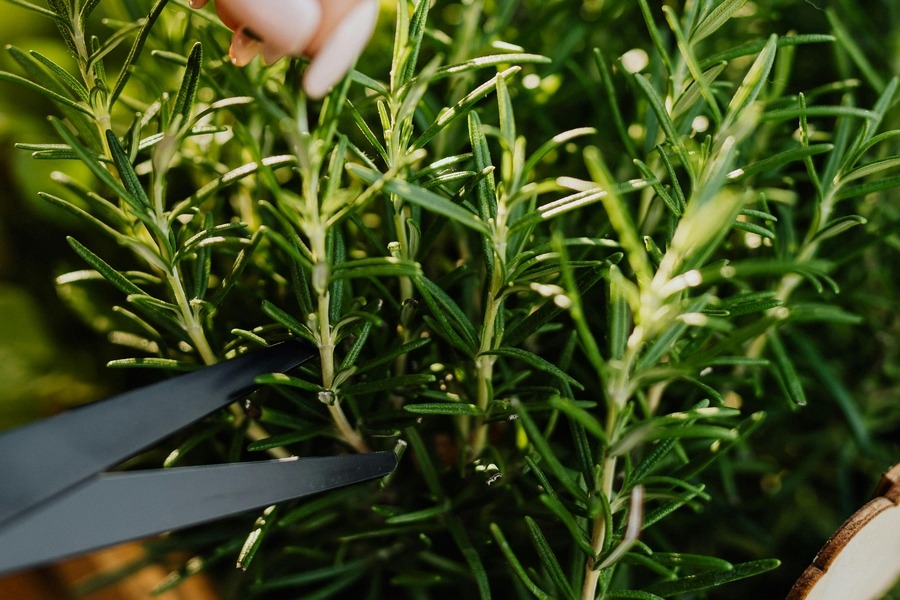
Rosemary is a warming, drying herb. Culpeper gave it to the Sun, “The Sun claims privilege in it,” and praised it for “all cold diseases.”3 He did not say all diseases. He said cold ones.
What Dioscorides Did with Rosemary
The oldest detailed account comes from Dioscorides in the first century. He calls the plant libanōtis, “which the Romans call rosmarinum,” and says it has a warming power. He gave it boiled in water before exercise, and mixed it into ointments against weariness and into a sweet-wine ointment for rubbing on the body.4
That is the use I want you to notice. Rosemary went into rubs for tired, aching bodies nineteen centuries ago, and it is still there today.
The Rosemary Bath and the Rub
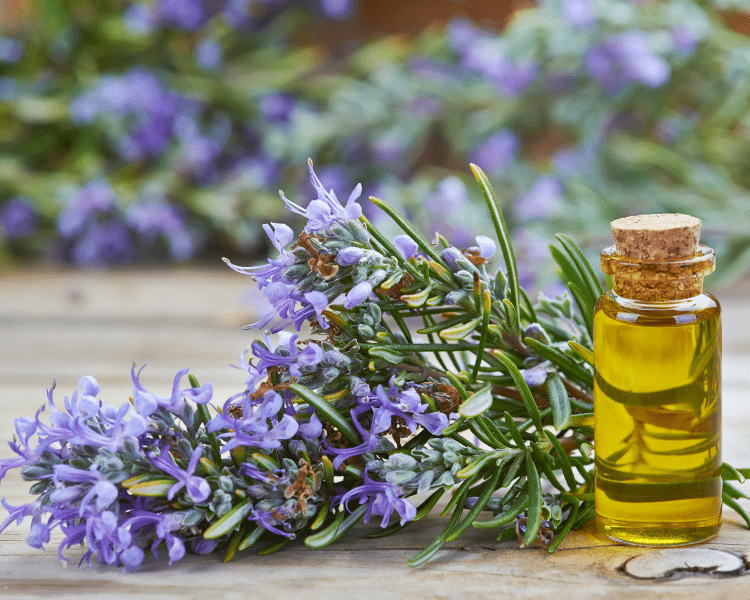
The European Medicines Agency accepts rosemary leaf as a bath additive for minor muscle and joint aches and minor problems of the circulation, and rosemary oil, rubbed on the skin, for minor muscular and joint pain and minor circulation problems in the legs. Both rest on long traditional use rather than clinical trials.5 6
The Agency adds a warning that any Galenist would recognise. If a joint becomes swollen or red, or you run a fever, see a doctor.6 That is the hot kind of inflammation, and it is no place for a warming rub.
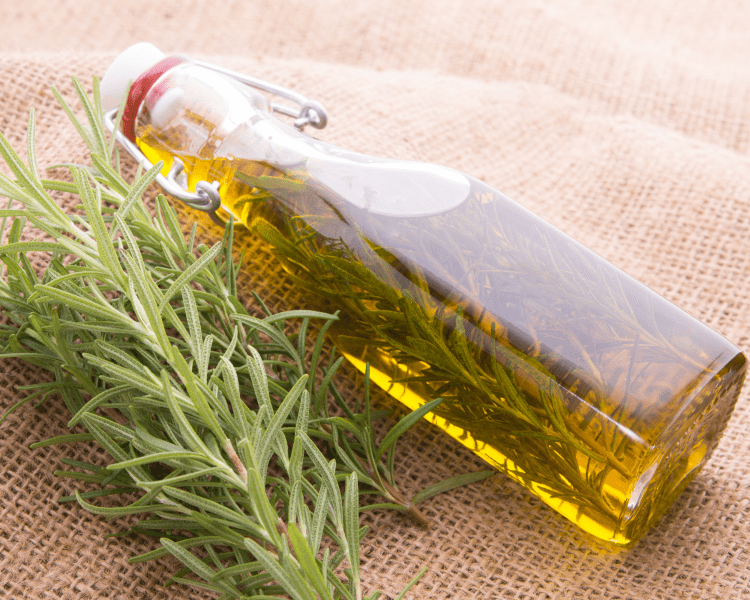
For the cold kind, here is how I use it. Simmer a good handful of rosemary in a litre of water for ten minutes, strain, and add it to a warm bath. Or rub rosemary-infused oil into cold, stiff hands and knees. Rosemary is stimulating, so not at bedtime for light sleepers. Both recipes are in the monograph.
What the Laboratory Shows
Rosemary is rich in carnosic acid, carnosol and rosmarinic acid. In cell and animal studies these compounds act as antioxidants and calm the signalling substances that drive inflammation. A 2019 review gathered this work together and was careful to say that most of it has not yet been tested in people.7
So the honest summary is this: a plausible mechanism, a long tradition of external use, and very little human evidence for rosemary by mouth as an anti-inflammatory.
Rosemary by Constitution
The four Galenic constitutional types take rosemary differently:
| Constitution | How rosemary sits |
|---|---|
| Phlegmatic (cold, moist) | An excellent match. Warms a cold, sluggish body and stiff, damp joints. |
| Melancholic (cold, dry) | Lifts the spirits, but drying. Use it in rich, moist dishes or with honey. |
| Sanguine (hot, moist) | Useful in food for its drying, clearing action. |
| Choleric (hot, dry) | Modest amounts only. Heat added to heat can bring headaches or restlessness. |
Rosemary Day to Day
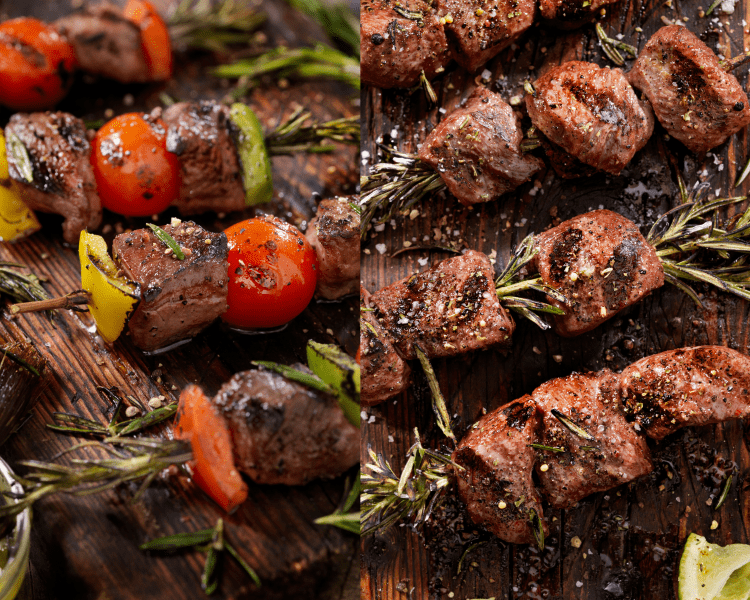
In the kitchen, rosemary belongs with lamb, pork, game, beans and bread. In a small trial with older adults, about ¾ g of dried rosemary, roughly what a well-seasoned dish holds, gave the best results on memory speed, and higher doses did worse.8 Culinary amounts are the right amounts.
For a tea, steep a teaspoon of dried leaves in a cup of just-boiled water, covered, for ten minutes. And if you want the old beauty water that made rosemary famous, see my post on Queen of Hungary Water.
Who Should Be Careful
- Pregnancy and breastfeeding. Rosemary in food is fine. Strong teas and extracts are not advised, and the oil is not for use in pregnancy or while breastfeeding.5 6
- Children. Rosemary oil is not for children and teenagers under eighteen.6
- Heart or kidney disease, fever, open wounds. Avoid rosemary oil with heart or kidney disease, and skip full rosemary baths with serious heart or circulation problems, high fever, serious infections or broken skin.5 6
- Seizure disorders. Rosemary oil contains camphor, which in large amounts can bring on seizures. Avoid strong preparations.9
- Aspirin allergy and blood thinners. Rosemary contains a salicylate and may add to the effect of blood-thinning drugs in medicinal amounts.10
- The essential oil. Never take it by mouth. Dilute it well for the skin and keep it away from the eyes.6
Common Questions
Does rosemary reduce inflammation?
In laboratory studies its compounds calm inflammatory signals, but human trials are few. Its best-supported use is external, as a warming bath or rub for minor muscle and joint aches.
Can I put rosemary oil on a swollen joint?
Not on a hot, red, swollen one. That needs a doctor, and in Galenic terms it needs cooling, not warmth. Rosemary suits the cold, stiff ache.
Is rosemary tea anti-inflammatory?
There is no good human evidence that it is. Rosemary tea is accepted for indigestion and mild digestive cramps, and it is a pleasant, warming cup on a cold day.
How much rosemary is safe?
Kitchen amounts are safe for nearly everyone. Strong teas, extracts and the essential oil need care, especially in pregnancy and with seizure disorders.
Which constitution benefits most?
In Galenic terms, the cold types: the phlegmatic most of all, and the melancholic in moist, nourishing forms.
About the author. Carolyn Smith-Kizer is a clinical herbalist with a 500-hour Herbal Academy credential, a certificate from the School of Evolutionary Herbalism, and associate membership of the American Herbalists Guild. She has studied herbs for about fifteen years and grows the Capitulare de Villis plants in her garden in the Creuse, France.
First published 19 August 2024. Updated 9 November 2026.
© 2024 Carolyn Smith-Kizer
If this work is useful to you, you can buy me a coffee — buymeacoffee.com/cskizer

Notes
- Galen, De tumoribus praeter naturam, in Claudii Galeni Opera omnia, ed. Karl Gottlob Kühn, vol. 7 (Leipzig: Cnobloch, 1824), 705–32. ↩
- Galen, Method of Medicine, ed. and trans. Ian Johnston and G. H. R. Horsley, 3 vols., Loeb Classical Library 516–18 (Cambridge, MA: Harvard University Press, 2011). ↩
- Nicholas Culpeper, The Complete Herbal, Project Gutenberg eBook 49513 (2015), s.v. “Rosemary,” https://www.gutenberg.org/ebooks/49513. ↩
- Dioscorides, De materia medica 3.75, in Pedanius Dioscorides of Anazarbus, De materia medica, trans. Lily Y. Beck, 3rd ed. (Hildesheim: Olms, 2017), 213. ↩
- European Medicines Agency, Committee on Herbal Medicinal Products, European Union Herbal Monograph on Rosmarinus officinalis L., folium, Rev. 1, EMA/HMPC/513940/2021 (Amsterdam: European Medicines Agency, 2024), https://www.ema.europa.eu/en/medicines/herbal/rosmarini-folium. ↩
- European Medicines Agency, “Rosmarini aetheroleum: Herbal Medicinal Product,” summary for the public, https://www.ema.europa.eu/en/medicines/herbal/rosmarini-aetheroleum. ↩
- Jonatas Rafael de Oliveira, Samira Esteves Afonso Camargo, and Luciane Dias de Oliveira, “Rosmarinus officinalis L. (Rosemary) as Therapeutic and Prophylactic Agent,” Journal of Biomedical Science 26 (2019): 5, https://doi.org/10.1186/s12929-019-0499-8. ↩
- Andrew Pengelly et al., “Short-Term Study on the Effects of Rosemary on Cognitive Function in an Elderly Population,” Journal of Medicinal Food 15, no. 1 (2012): 10–17, https://doi.org/10.1089/jmf.2011.0005. ↩
- European Food Safety Authority, “Camphor in Flavourings and Other Food Ingredients with Flavouring Properties: Scientific Opinion of the Panel on Food Additives, Flavourings, Processing Aids and Materials in Contact with Food,” EFSA Journal 729 (2008): 1–15. ↩
- RxList, “Rosemary: Health Benefits, Side Effects, Uses, Dose & Precautions,” accessed November 9, 2026, https://www.rxlist.com/supplements/rosemary.htm. ↩
Bibliography
Culpeper, Nicholas. The Complete Herbal. Project Gutenberg eBook 49513, 2015. https://www.gutenberg.org/ebooks/49513.
de Oliveira, Jonatas Rafael, Samira Esteves Afonso Camargo, and Luciane Dias de Oliveira. “Rosmarinus officinalis L. (Rosemary) as Therapeutic and Prophylactic Agent.” Journal of Biomedical Science 26 (2019): 5. https://doi.org/10.1186/s12929-019-0499-8.
Dioscorides. Pedanius Dioscorides of Anazarbus, De materia medica. Translated by Lily Y. Beck. 3rd ed. Hildesheim: Olms, 2017.
European Food Safety Authority. “Camphor in Flavourings and Other Food Ingredients with Flavouring Properties.” EFSA Journal 729 (2008): 1–15.
European Medicines Agency, Committee on Herbal Medicinal Products. European Union Herbal Monograph on Rosmarinus officinalis L., folium. Rev. 1. EMA/HMPC/513940/2021. Amsterdam: European Medicines Agency, 2024.
European Medicines Agency. “Rosmarini aetheroleum: Herbal Medicinal Product.” https://www.ema.europa.eu/en/medicines/herbal/rosmarini-aetheroleum.
Galen. De tumoribus praeter naturam. In Claudii Galeni Opera omnia, edited by Karl Gottlob Kühn, 7:705–32. Leipzig: Cnobloch, 1824.
Galen. Method of Medicine. Edited and translated by Ian Johnston and G. H. R. Horsley. 3 vols. Loeb Classical Library 516–18. Cambridge, MA: Harvard University Press, 2011.
Pengelly, Andrew, et al. “Short-Term Study on the Effects of Rosemary on Cognitive Function in an Elderly Population.” Journal of Medicinal Food 15, no. 1 (2012): 10–17. https://doi.org/10.1089/jmf.2011.0005.
RxList. “Rosemary: Health Benefits, Side Effects, Uses, Dose & Precautions.” Accessed November 9, 2026. https://www.rxlist.com/supplements/rosemary.htm.