
Making Herbal Tinctures at Home: A Galenic Stillroom Guide
Galen never made a tincture, yet making herbal tinctures at home still follows his rule. The physicians of his day, and the monks who tended Charlemagne’s gardens, drew the virtues out of plants with water, wine, vinegar, honey and oil. Strong distilled spirit came into the European apothecary much later, in the late Middle Ages. But the principle is the one Galen taught: the liquid you choose, the menstruum, adds its own temperament to the herb.1
A tincture is simply an herb steeped in alcohol and water. It keeps for years, draws out a far wider range of constituents than a tea, and fits in a pocket. This guide covers how I make them, which herbs suit them, and how to read them through Galenic eyes.
At a Glance
- What it is: an herb extracted in a mixture of alcohol and water
- Usual strength: 1 part herb to 5 parts liquid for dried herbs (1:5); 1 part to 2 for fresh (1:2)
- Usual alcohol: vodka or brandy at about 40% for most dried herbs; stronger spirit for fresh, juicy plants and resins
- Steeping time: four to six weeks by maceration, or about a day by percolation
- Shelf life: several years, cool and dark
- Galenic quality of the menstruum: spirits are hot and drying
- Best suited to: warming, dispersing herbs and phlegmatic constitutions
- Main cautions: alcohol in pregnancy, liver disease, recovery from alcohol use and with some medications; children
The Galenic Reading of a Tincture
Wine and spirits were classed as hot and drying. A tincture therefore warms, opens and disperses, and it carries an herb quickly through the body.2 That makes it the natural form for warming, pungent and aromatic herbs, and a less natural one for herbs whose whole virtue is cooling or moistening.
- Phlegmatic (cold and moist): tinctures suit you best. The heat and dryness of the spirit add to the work of warming herbs such as ginger, rosemary and thyme.
- Melancholic (cold and dry): the warmth helps, but the dryness does not. Take your drops in a cup of warm water or milk, or choose honeys and syrups instead.
- Choleric (hot and dry): go easy. Cold infusions and vinegars usually serve you better.
- Sanguine (hot and moist): occasional tinctures of drying, cleansing herbs are fine; cool infusions are often wiser.
For cooling herbs such as rose, violet, marshmallow or chickweed, I make a tea, a cold infusion or a vinegar rather than a tincture. Marshmallow root is the clearest example. Its soothing mucilage will not dissolve in alcohol, which makes it clump and fall out of the liquid, and heat damages it too. Steeped in cold water overnight, it gives up all its mucilage and keeps its cool, moist nature intact.
Which Herbs Make Good Tinctures
Tinctures shine with herbs that are resinous, bitter, aromatic or tough, the ones whose virtues don’t come out well in a cup of tea:
- Warming roots and rhizomes: ginger, turmeric, angelica and elecampane
- Aromatic leaves: rosemary, sage, thyme and lemon balm
- Bitters: gentian, dandelion root and wormwood, for digestive bitters taken before meals
- Resins: myrrh and frankincense, which dissolve only in strong alcohol
- Flowers for outward use: calendula and arnica, for compresses and liniments
Gathering and Making by the Moon
The old herbalists did not gather on just any day. Culpeper set out “The Time of gathering all Herbs, both Vulgarly, and Astrologically,” and in his astrological herbal each plant has a ruling planet, the Moon among them.3 Gathering an herb when its planet is strong and the Moon well placed was part of the craft, as much as gathering it at the right season.
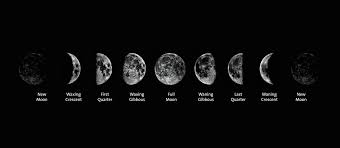
The plain, “vulgar” rules are just as old and need no astrology: gather on a dry morning once the dew has gone; take leaves before the plant flowers, flowers as they open, seeds when ripe, and roots in autumn or early spring when the plant’s strength has gone underground. Many gardeners and herbalists also start their tinctures in step with the Moon, beginning a jar at the new moon and straining it at a later phase, which happens to fit the four-to-six-week steeping time very well.
What You Need
- A clean glass jar with a tight lid
- Dried herb, chopped or coarsely ground, or fresh herb, finely chopped
- Vodka or brandy of about 40% alcohol (never rubbing alcohol or denatured alcohol, which are poisonous)
- Kitchen scales and a measuring jug, if you want consistent strength
- A fine strainer, muslin or cheesecloth, and a funnel
- Dark glass bottles (amber or blue) with droppers, and labels
Making a Tincture
1. The Folk Method
This is how most households have always done it. Fill a jar about half full with dried herb, or three-quarters full with fresh chopped herb, and pour in spirit until the plant is covered by a couple of centimetres. Nothing should poke above the liquid. Cap it, label it, and keep it somewhere you will see it every day.
2. The Weight-to-Volume Method
For a tincture of known strength, weigh the herb and measure the liquid. The usual ratio for dried herbs is 1:5, one part herb by weight to five parts liquid by volume: 100 g of dried herb to 500 ml of spirit. Fresh herbs, which carry their own water, are usually made at 1:2 with stronger alcohol.4 Knowing the ratio lets you dose consistently from batch to batch.
3. Steeping, Straining and Bottling
- Shake the jar every day for four to six weeks, and keep it out of direct sun.
- Strain through muslin, then gather the cloth and squeeze hard; the last of the liquid is the strongest.
- Let the tincture settle for a day, then pour it off the sediment into dark glass bottles.
- Label each bottle with the herb, the part used, the ratio, the alcohol, and the date.
4. The 24-Hour Percolation Method
Percolation drips the menstruum slowly through a packed column of powdered dried herb. Instead of waiting weeks, you have a strong, clear tincture in a day. This is the method taught in the Eclectic tradition by herbalists such as Thomas Easley, whose Modern Herbal Dispensatory, written with Steven Horne, covers percolation alongside the simpler methods.5
- Grind: grind the dried herb to a fine, even powder. The usual ratio is 1:5, herb weight to menstruum volume.
- Moisten: stir in just enough of the menstruum to make the powder feel like damp sand, cover, and let it rest for about an hour so it swells.
- Pack: set a cotton ball or filter paper in the neck of a percolation cone held on a stand with a drip valve beneath. Pack the moist powder in evenly and firmly, with no channels or air pockets.
- Pour: pour the rest of the menstruum over the top until it stands a little above the herb, and keep it topped up.
- Drip: open the valve to a slow, steady drip, roughly one drop a second or slower. Collection takes about 12 to 24 hours.
- Finish: stop when you have collected the full volume of menstruum you started with, then bottle and label.
Percolation gives a stronger, more consistent tincture than maceration, but it needs the cone and stand, a fine grind and some practice, and it works only with dried herbs. Here is a good demonstration of the method:
5. Alcohol-Free Extracts
Vegetable glycerine (a glycerite) and cider vinegar both make alcohol-free extracts. They draw out less than alcohol and keep for a shorter time, but they are kinder to children and to anyone avoiding alcohol.6 In Galenic terms vinegar is cooling and cutting, which makes it the better choice for hot, choleric people.7
6. Double Extraction for Mushrooms and Tough Roots
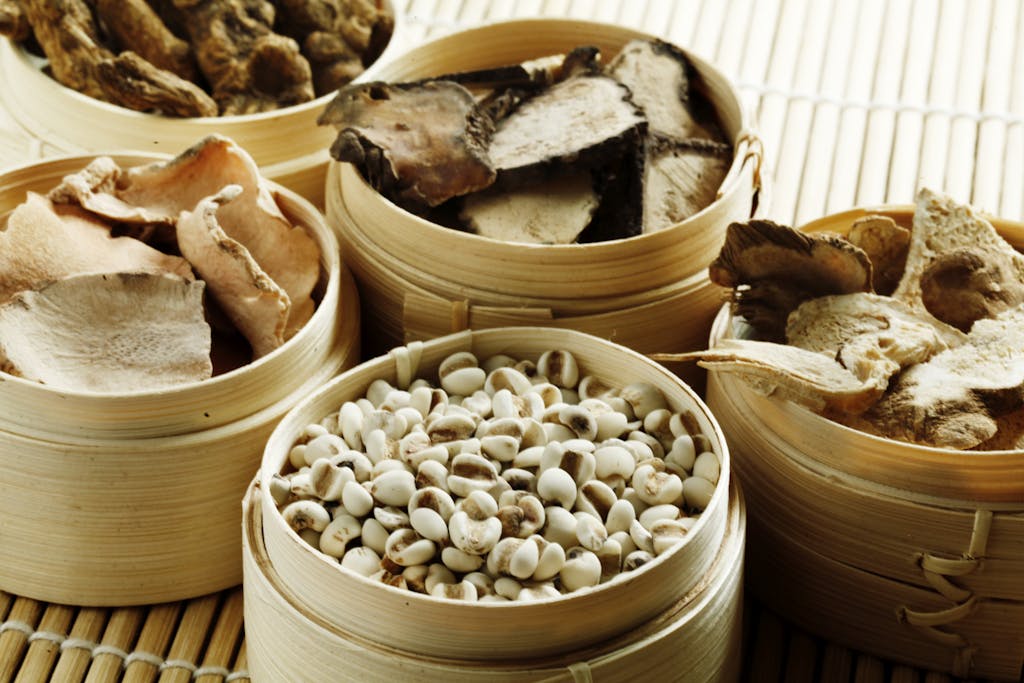
Some materials, such as reishi and other woody mushrooms, hold part of their value in water-soluble compounds and part in alcohol-soluble ones. The double extraction makes a tincture and a long decoction separately, then combines them, adding enough spirit to keep the finished mixture at least about 20–25% alcohol so that it keeps.
7. Spagyric Tinctures (Advanced)
The spagyric tincture is the most advanced preparation in this guide, and one I learned about from my teacher Sajah Popham of the School of Evolutionary Herbalism, where I earned my certificate as a vitalist herbal clinical practitioner. The word goes back to Paracelsus in the sixteenth century, and the method comes from the old alchemical work of separating a plant into its parts, purifying each, and joining them again.8
In the language of plant alchemy, a plant has three essentials: its volatile oil (the “sulphur,” or soul), its spirit (the “mercury,” carried by the alcohol), and its mineral body (the “salt”). An ordinary tincture keeps the first two and throws the third away with the spent herb. In a spagyric preparation, the spent herb is dried and burned slowly down to a pale ash, the soluble mineral salts are drawn out and purified, and they are returned to the tincture, so that the finished preparation holds the whole plant.9
It takes time, care and fire, and I haven’t made one yet myself. It is on my list, and when I do, I will write it up here step by step. Until then, Sajah’s book Evolutionary Herbalism is the place to start.
Taking Your Tinctures
- Dose: most adult doses of a 1:5 tincture fall between 1 and 5 ml (roughly 20 to 100 drops), two or three times a day.10 Start at the low end.
- How: in a little water, warm or cold. Bitters are best taken 10–15 minutes before meals, so you taste them.
- The alcohol: a 5 ml dose of a 40% tincture contains about 2 ml of alcohol. Stirring the drops into a cup of just-boiled water and letting it stand a few minutes drives some of it off.
- Blends: make each herb separately and mix the finished tinctures. That way you can change the proportions as you learn what suits you.

Storage
Keep tinctures in dark glass in a cool cupboard, away from the stove and the sunny windowsill. A well-made tincture keeps for several years. Throw it out if it grows mould, smells off, or turns cloudy in a way it never did before.
Safety
- Alcohol: avoid alcohol tinctures in pregnancy and breastfeeding, liver disease and recovery from alcohol use, and for children. Use glycerites or teas instead.
- Medications that react with alcohol: some drugs, such as metronidazole, must not be taken with alcohol at all. Ask your pharmacist.
- Herb–drug interactions: some herbs change how medications work. St John’s wort, for example, can weaken the effects of many important drugs, including antidepressants, birth control pills, blood thinners, heart drugs and HIV drugs.11 If you take medication, check with your doctor or pharmacist before starting a regular tincture.
- Identification: be completely certain of every wild plant before you tincture it.
- Fire: alcohol is flammable. Keep it away from flames, and leave the burning step of spagyric work until you have proper equipment and instruction.
- Children: store bottles out of reach, as you would any spirit.
Common Questions
Vodka or brandy?
Vodka is neutral and lets the herb speak. Brandy adds warmth, sweetness and its own Galenic heat, which suits warming winter herbs.
Can I use fresh herbs?
Yes, and some herbs, such as lemon balm and milky oats, are better fresh. Chop them finely and use stronger alcohol, because the plant’s own water dilutes the spirit. Fresh herbs can’t be percolated.
Maceration or percolation?
Maceration is simple and needs only a jar. Percolation is faster and makes a stronger, more consistent tincture, but needs a cone, a fine grind and practice.
Why use a tincture instead of a tea?
Tinctures keep for years, travel easily, and extract resins and bitter principles that water leaves behind. Teas are gentler, cheaper and better for cooling and nourishing herbs.
Which constitution benefits most from tinctures?
In Galenic terms, the cold, damp phlegmatic type, because the spirit itself is warming and drying.
© 2024 Carolyn Smith-Kizer
If this work is useful to you, you can buy me a coffee — buymeacoffee.com/cskizer

Notes
- Carolyn Smith-Kizer, “The Stillroom: Five Traditional Herbal Preparations,” At Charlemagne’s Behest, https://atcharlemagnesbehest.com/herbal-preparations-for-inflammation. ↩
- Smith-Kizer, “The Stillroom.” ↩
- Nicholas Culpeper, The Complete Herbal, Project Gutenberg eBook 49513 (2015), “The Time of gathering all Herbs, both Vulgarly, and Astrologically,” https://www.gutenberg.org/ebooks/49513. ↩
- James Green, The Herbal Medicine-Maker’s Handbook: A Home Manual (Berkeley, CA: Crossing Press, 2000). ↩
- Thomas Easley and Steven Horne, The Modern Herbal Dispensatory: A Medicine-Making Guide (Berkeley, CA: North Atlantic Books, 2016). ↩
- Richo Cech, Making Plant Medicine (Williams, OR: Horizon Herbs, 2000). ↩
- Smith-Kizer, “The Stillroom.” ↩
- Sajah Popham, Evolutionary Herbalism: Science, Spirituality, and Medicine from the Heart of Nature (Berkeley, CA: North Atlantic Books, 2019). ↩
- Popham, Evolutionary Herbalism. ↩
- Kerry Bone and Simon Mills, Principles and Practice of Phytotherapy: Modern Herbal Medicine, 2nd ed. (Edinburgh: Churchill Livingstone, 2013). ↩
- National Center for Complementary and Integrative Health, “St. John’s Wort: Usefulness and Safety,” last updated May 2025, https://www.nccih.nih.gov/health/st-johns-wort. ↩
Bibliography
Bone, Kerry, and Simon Mills. Principles and Practice of Phytotherapy: Modern Herbal Medicine. 2nd ed. Edinburgh: Churchill Livingstone, 2013.
Cech, Richo. Making Plant Medicine. Williams, OR: Horizon Herbs, 2000.
Culpeper, Nicholas. The Complete Herbal. Project Gutenberg eBook 49513, 2015. https://www.gutenberg.org/ebooks/49513.
Easley, Thomas, and Steven Horne. The Modern Herbal Dispensatory: A Medicine-Making Guide. Berkeley, CA: North Atlantic Books, 2016.
Green, James. The Herbal Medicine-Maker’s Handbook: A Home Manual. Berkeley, CA: Crossing Press, 2000.
National Center for Complementary and Integrative Health. “St. John’s Wort: Usefulness and Safety.” Last updated May 2025. https://www.nccih.nih.gov/health/st-johns-wort.
Popham, Sajah. Evolutionary Herbalism: Science, Spirituality, and Medicine from the Heart of Nature. Berkeley, CA: North Atlantic Books, 2019.
Smith-Kizer, Carolyn. “The Stillroom: Five Traditional Herbal Preparations.” At Charlemagne’s Behest. https://atcharlemagnesbehest.com/herbal-preparations-for-inflammation.