
Boswellia serrata: Herbal Monograph
Boswellia serrata, Indian frankincense, is a warming, drying resin. This herbal monograph sets out its botany, energetics, constituents, traditional uses and cautions, with references.
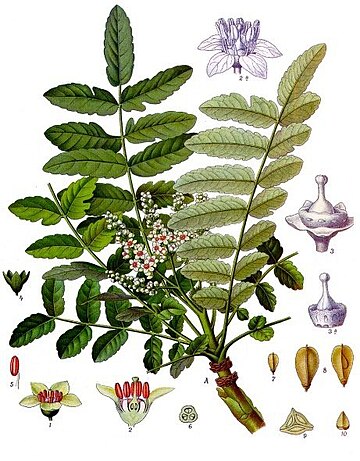
In short: Indian frankincense, Boswellia serrata, is a warming, drying gum resin whose boswellic acids, especially AKBA, are its main active compounds. It is best known for supporting a healthy inflammatory response and comfortable joints, with a place in respiratory and digestive support as well. It is not for pregnancy or breastfeeding, for anyone with a stomach ulcer, or in the weeks before surgery.
Botanical Name
Boswellia serrata Roxb. ex Colebr.
Latin Name
Boswellia serrata
Plant or Common Name
Indian Frankincense, Salai guggul, Indian Olibanum
Family
Burseraceae
Actions
Anti-inflammatory, analgesic, anti-arthritic, astringent, expectorant1
Energetics
Warming, drying2
Chemical Constituents
- Boswellic acids (β-boswellic acid, 11-keto-β-boswellic acid, acetyl-11-keto-β-boswellic acid)
- Essential oils (α-thujene, α-pinene, limonene)
- Pentacyclic triterpenes
- Tetracyclic triterpenes
- Polysaccharides
The boswellic acids, particularly acetyl-11-keto-β-boswellic acid (AKBA), are considered the primary active compounds responsible for many of Indian frankincense’s biological activities3.
Part of Plant Used
Gum resin
Uses
- Supports healthy inflammatory response
- Promotes joint health
- Supports respiratory wellness
- Promotes digestive health
- Supports healthy skin function
- Promotes cognitive function
In a randomised trial, women having radiotherapy for breast cancer who applied a boswellia cream had less severe skin redness and needed less steroid cream than women using a plain cream4.
Contraindications
- Pregnancy and lactation (due to insufficient safety data)
- Gastric or duodenal ulcers
- Scheduled surgery (within two weeks)
Side Effects
- Potential for mild gastrointestinal discomfort
- Nausea in some individuals
- Allergic skin reactions (rare)
While generally well-tolerated, these side effects have been noted in some individuals5.
Interactions with Other Drugs
- May interact with anti-inflammatory preparations
- May interact with anticoagulant preparations
- May affect the metabolism of drugs processed by cytochrome P450 enzymes
Take care when combining Indian frankincense with these types of preparations due to potential interactions6.
Dosage
- Standardized extract (containing 30-65% boswellic acids): 300-500 mg, two to three times daily
- Gum resin: 1200-3000 mg daily, divided into three doses
Clinical studies have used a wide range of doses, typically 300-1200 mg of standardized extract daily for various applications1.
How to Take It
Oral consumption as capsules, tablets, or gum resin. Topical application in creams or ointments.
Duration of Use
Can be used for 8-12 weeks continuously. For long-term use, consult with a qualified medical practitioner.
Risks
- Potential for increased bleeding risk at high doses
- May cause skin irritation in some individuals when applied topically
- Theoretical risk of interactions with certain medications
A review by Ernst5 emphasized the importance of considering individual health concerns and potential interactions when using Indian frankincense in medicinal amounts.
Perfumery
In the world of perfumery, incense holds a special place. When used in the form of essence or absolute, it imparts a unique and captivating scent. The aroma is woody, with a hint of minerality and subtle spicy undertones. It’s a scent that transports me to another time and place, evoking a sense of spirituality and reverence.
Incense
Burning incense is a significant source of indoor pollution. The main volatile pollutants emitted by incense are benzene, toluene, ethylbenzene, styrene, formaldehyde, acrolein, and acetaldehyde. fr.wikipedia.org/
Recipes
- Frankincense Tea
- 1/2 teaspoon powdered frankincense resin
- 1 cup hot water
- Honey to taste (optional)
Steep for 5-10 minutes, strain, and enjoy.
- Joint Support Blend
- 2 parts Indian frankincense powder
- 1 part turmeric powder
- 1 part ginger powder
Mix powders and take 1/2 teaspoon with warm water or add to food.
- Frankincense Massage Oil
- 10 drops frankincense essential oil
- 2 tablespoons carrier oil (e.g., jojoba or almond oil)
Mix oils and apply to affected areas for joint or muscle discomfort.
Tears of the Tree
The resin is gathered by cutting the bark and letting it seep out. It hardens into the droplets called “tears.” Frankincense was one of the Magi’s three gifts (Matthew 2:11), and it has scented Christian worship ever since. The Carolingian churches knew it well, even though no Frankish garden could grow it.
How it works differently: the boswellic acids, especially AKBA, act mainly on 5-lipoxygenase and the leukotrienes it produces. Common painkillers like ibuprofen work on a different enzyme family, cyclooxygenase. That difference is part of why boswellia is studied as a gentler companion for people who have used anti-inflammatories for a long time3.
Practical notes
- For joints, boswellia pairs well with turmeric. In one trial, curcumin combined with boswellic acid outperformed curcumin alone for knee osteoarthritis7.
- Take it with food to avoid stomach upset.
- Give it several weeks. It works slowly.
- Buy from sources that can tell you where and how the resin was harvested. The wild frankincense trees are under real pressure (see the Guardian note below).

Remember to always consult with a qualified medical practitioner before incorporating new herbs into your wellness routine, especially if you have existing health concerns or are taking other preparations.
How the West’s Wellness Industry Is Driving Ethiopia’s Frankincense Trees Towards Extinction. The Guardian. September 16, 2024. As Western demand for frankincense skyrockets, the overharvesting of the resin is pushing wild frankincense trees toward extinction, while those collecting it in impoverished regions see little profit and face violence and exploitation.
Return to: The Complete Guide to Anti-Inflammatory Eating
© 2024 Carolyn Smith-Kizer
If this work is useful to you, you can buy me a coffee — buymeacoffee.com/cskizer

Notes
- M. Z. Siddiqui, “Boswellia serrata, a Potential Antiinflammatory Agent: An Overview,” Indian Journal of Pharmaceutical Sciences 73, no. 3 (2011): 255–61, https://doi.org/10.4103/0250-474X.93507.
- Sebastian Pole, Ayurvedic Medicine: The Principles of Traditional Practice (London: Singing Dragon, 2013).
- Hermann P. T. Ammon, “Boswellic Acids in Chronic Inflammatory Diseases,” Planta Medica 72, no. 12 (2006): 1100–1116, https://doi.org/10.1055/s-2006-947227.
- Stefano Togni et al., “Clinical Evaluation of Safety and Efficacy of Boswellia-Based Cream for Prevention of Adjuvant Radiotherapy Skin Damage in Mammary Carcinoma: A Randomized Placebo Controlled Trial,” European Review for Medical and Pharmacological Sciences 19, no. 8 (2015): 1338–44.
- Edzard Ernst, “Frankincense: Systematic Review,” BMJ 337 (2008): a2813, https://doi.org/10.1136/bmj.a2813.
- Mona Abdel-Tawab, Oliver Werz, and Manfred Schubert-Zsilavecz, “Boswellia serrata: An Overall Assessment of In Vitro, Preclinical, Pharmacokinetic and Clinical Data,” Clinical Pharmacokinetics 50, no. 6 (2011): 349–69, https://doi.org/10.2165/11586800-000000000-00000.
- Armen Haroyan et al., “Efficacy and Safety of Curcumin and Its Combination with Boswellic Acid in Osteoarthritis: A Comparative, Randomized, Double-Blind, Placebo-Controlled Study,” BMC Complementary and Alternative Medicine 18 (2018): 7, https://doi.org/10.1186/s12906-017-2062-z.
Bibliography
Abdel-Tawab, Mona, Oliver Werz, and Manfred Schubert-Zsilavecz. “Boswellia serrata: An Overall Assessment of In Vitro, Preclinical, Pharmacokinetic and Clinical Data.” Clinical Pharmacokinetics 50, no. 6 (2011): 349–69.
Ammon, Hermann P. T. “Boswellic Acids in Chronic Inflammatory Diseases.” Planta Medica 72, no. 12 (2006): 1100–1116.
Ernst, Edzard. “Frankincense: Systematic Review.” BMJ 337 (2008): a2813.
Haroyan, Armen, Vahan Mukuchyan, Nina Mkrtchyan, et al. “Efficacy and Safety of Curcumin and Its Combination with Boswellic Acid in Osteoarthritis: A Comparative, Randomized, Double-Blind, Placebo-Controlled Study.” BMC Complementary and Alternative Medicine 18 (2018): 7.
Pole, Sebastian. Ayurvedic Medicine: The Principles of Traditional Practice. London: Singing Dragon, 2013.
Siddiqui, M. Z. “Boswellia serrata, a Potential Antiinflammatory Agent: An Overview.” Indian Journal of Pharmaceutical Sciences 73, no. 3 (2011): 255–61.
Togni, Stefano, Giada Maramaldi, Alberto Bonetta, Luca Giacomelli, and Francesco Di Pierro. “Clinical Evaluation of Safety and Efficacy of Boswellia-Based Cream for Prevention of Adjuvant Radiotherapy Skin Damage in Mammary Carcinoma: A Randomized Placebo Controlled Trial.” European Review for Medical and Pharmacological Sciences 19, no. 8 (2015): 1338–44.