
How to Start Using Herbs Safely: A Beginner’s Guide
People often ask me how to start using herbs safely. My answer is always the same: slowly, with a few gentle plants, and with your eyes open. Herbs are strong enough to be useful, which also means they are strong enough to cause trouble when used carelessly.
This post includes affiliate links. Click here for my full disclosure policy.
This guide is for the complete beginner. It covers five gentle herbs to start with, how to buy and store them, the habits that keep you safe, and when to ask for help.
Know the Simple First
Galen wrote eleven books on single herbs, which he called simples, before he wrote at length about mixing them.1 A physician trained in his tradition learned each plant’s qualities, hot or cold, dry or moist, and how strongly it acted, before combining it with anything else.
That is still the best way to begin. Learn one plant at a time. Drink it, taste it, notice what it does in your own body, and only then add another. A beginner who knows five herbs well is safer, and more useful to her family, than one who owns fifty jars and knows none of them.
Five Gentle Herbs to Start With
These five are kitchen-friendly, widely available and well studied. Two of them, sage and fennel, were grown in Charlemagne’s gardens. Even so, each has a caution worth knowing.
Chamomile (Matricaria chamomilla)
Part used: Flowers
Energetics: Slightly bitter, aromatic, neutral to slightly warm
Traditional uses: A calming evening tea; settles the stomach
Cautions: People allergic to ragweed, chrysanthemums, marigolds or daisies may react to chamomile. Interactions with warfarin and some drugs processed by the liver have been reported.
Chamomile belongs to the daisy family, so anyone with allergies to its relatives should take care.2 Interactions with warfarin and with some drugs broken down by the liver have also been reported.2 For more, see my chamomile monograph.
Peppermint (Mentha × piperita)
Part used: Leaves
Energetics: Pungent, cooling, aromatic
Traditional uses: An after-dinner tea that settles the stomach
Cautions: Can worsen heartburn. Concentrated peppermint oil is far stronger than the tea.
Peppermint tea appears to be safe for most people.3 The main complaint is heartburn, because peppermint relaxes the valve at the top of the stomach. Concentrated peppermint oil is another matter entirely. Its reported side effects include heartburn, nausea and stomach pain, and it should never be taken straight from the bottle.3
Ginger (Zingiber officinale)
Part used: Rhizome
Energetics: Pungent, hot, dry
Traditional uses: A warming tea for cold days; settles nausea
Cautions: Can cause heartburn and stomach upset in large amounts. Not for people who already run hot. Ask your doctor first if you take blood thinners or are pregnant.
Ginger’s common side effects are heartburn, stomach discomfort and diarrhea.4 It is strongly heating, so someone who already runs hot and flushed may do better with a cooler herb. My ginger monograph has the full picture.
Garden Sage (Salvia officinalis)
Part used: Leaves
Energetics: Pungent, bitter, warm, dry
Traditional uses: A gargle for the throat; a digestive with rich food
Cautions: Contains thujone, so avoid large amounts over long periods and avoid it as a tea or supplement in pregnancy. Cooking amounts are fine.
Sage is one of the plants Charlemagne ordered grown on his estates, and it is a good teacher for beginners because its strength is easy to taste. Its essential oil contains thujone, which is why sage is a herb for short courses rather than a daily tea for months. My sage monograph covers it in depth.
Fennel (Foeniculum vulgare)
Part used: Seeds
Energetics: Sweet, pungent, warm
Traditional uses: Chewed or brewed after meals for gas and bloating
Cautions: Avoid concentrated fennel oil. Ask your doctor before using fennel as a supplement in pregnancy or with hormone-sensitive conditions.
Fennel is another of Charlemagne’s plants and one of the gentlest digestive seeds there is. A teaspoon of crushed seed in a cup of hot water is a fine place to start. My fennel monograph has the details and cautions.
My Go-to Source for Herbs
Buying and Storing Herbs
- Buy from suppliers who tell you where their herbs come from and how they test them. Organic is a good sign, though not a guarantee.
- Start with dried herbs for tea. They are cheap, easy to measure and easy to stop if something disagrees with you. Capsules and extracts are stronger and harder to judge.
- Store herbs in glass jars, away from light and heat. Most dried leaves and flowers lose their strength within about a year. Roots, barks and seeds keep longer.
- Label every jar with the plant’s name, both common and Latin, and the date you bought or harvested it.
For simple ways to prepare what you buy, see The Stillroom: Five Traditional Herbal Preparations and Making Herbal Tinctures at Home.
A Word About Wild Plants
Gathering your own herbs is one of the joys of this work, but plant identification is a skill that takes years. Here in France, the national health agency warns every spring about people who pick autumn crocus, which is poisonous in every part, believing it to be wild garlic. Poison centres recorded 28 such cases between 2020 and 2022, and two people died.5
The agency’s advice is good for any forager: pick only plants you know well, check every leaf rather than gathering by the armful, and if in doubt, leave it.5 Wild garlic smells of garlic when crushed; autumn crocus does not.
Habits That Keep You Safe
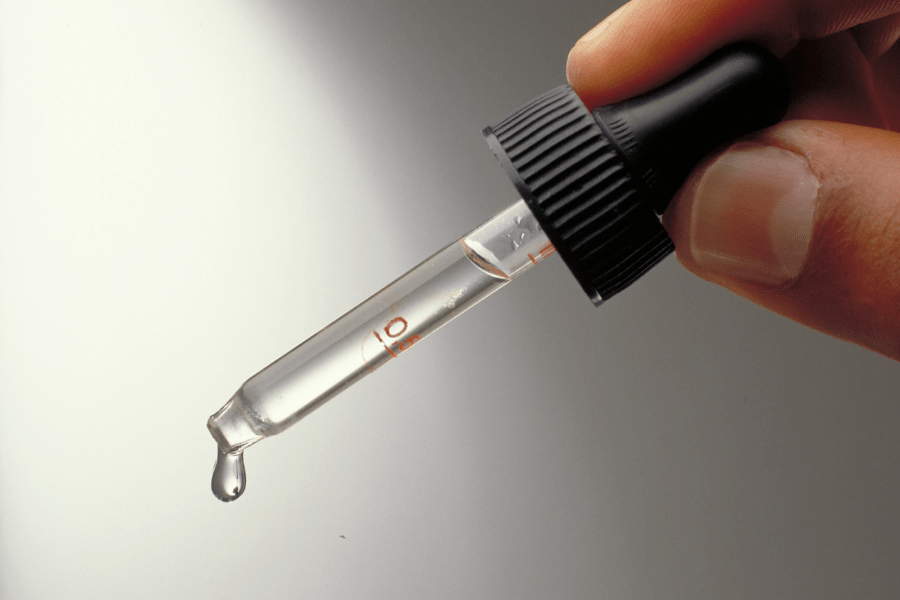
- Add one herb at a time. Give it a week or two before adding anything else, so you know what is doing what.
- Start with a small amount. A single cup of tea a day is plenty to begin with.
- Keep a short journal. Note the herb, the amount, the time of day and how you feel.
- Stop if something seems wrong. A rash, stomach upset, a headache or anything unexpected is your body’s answer, so listen to it.
- Tell your doctor and pharmacist about every herb you take, including daily teas. If you take any medication, read Herb–Drug Interactions: What You Need to Know before you start.
- Take extra care if you are pregnant or breastfeeding, giving herbs to a child, or living with a long-term health condition. My Anti-Inflammatory Herb Safety guide covers these groups in more detail.
Herb-Drug Interaction Checker
When to Ask for Help
A good herbalist will ask about your health, your medications and your constitution before suggesting anything. In the United States, the American Herbalists Guild lists Registered Herbalists who have met its peer-review standards.
France is different. The herbalist diploma was abolished on 11 September 1941 under the Vichy government, and herbalists who already held it were allowed to keep working only until their deaths.6 Senators have since proposed bringing the profession back, but for now there is no state-recognized herbalist in France. Pharmacists, many of whom trained in plant science, are often the best first stop here.
Frequently Asked Questions
Which herb should a complete beginner start with?
Chamomile or peppermint tea. Both are gentle, easy to find and easy to stop if they do not suit you. Just check the allergy and heartburn cautions above first.
Are herbal teas safe every day?
Gentle teas like chamomile, peppermint and fennel are fine for most people in normal amounts. Stronger herbs, like sage, are better in short courses with breaks.
Are capsules better than teas?
Not for beginners. Teas are milder, easier to adjust and easier to stop. Capsules and extracts concentrate a plant, and with it the risks.
Can I use herbs if I take medication?
Often yes, but talk to your doctor or pharmacist first. Some herbs change how medications work.
Begin Small
Start with one plant you can grow, taste and come to know. That is how every herbalist I respect began, and it is how the old physicians taught. The knowledge builds one simple at a time.

© 2024 Carolyn Smith-Kizer
If this work is useful to you, you can buy me a coffee — buymeacoffee.com/cskizer

Notes
- Sabine Vogt, “Drugs and Pharmacology,” in The Cambridge Companion to Galen, ed. R. J. Hankinson (Cambridge: Cambridge University Press, 2008), 304–22.
- National Center for Complementary and Integrative Health, “Chamomile,” NCCIH Herbs at a Glance, accessed October 15, 2026, https://www.nccih.nih.gov/health/chamomile.
- National Center for Complementary and Integrative Health, “Peppermint Oil,” NCCIH Herbs at a Glance, accessed October 15, 2026, https://www.nccih.nih.gov/health/peppermint-oil.
- National Center for Complementary and Integrative Health, “Ginger,” NCCIH Herbs at a Glance, accessed October 15, 2026, https://www.nccih.nih.gov/health/ginger.
- Anses, “Confusion entre colchique et ail des ours : des intoxications parfois mortelles,” April 7, 2025, https://www.anses.fr/fr/content/actu-confusion-colchique-ail-des-ours.
- Jean-Luc Fichet et al., Proposition de loi visant à créer un diplôme et organiser la profession d’herboriste, Sénat, no. 750 (2010–2011), filed July 12, 2011, https://www.senat.fr/leg/ppl10-750.html.