
Foeniculum vulgare: A Jupiter Herb in a Saturn World
If wormwood is Saturn’s great representative in the Carolingian garden — cold, austere, and uncompromising in its clinical work — then fennel is its counter-weight and complement: Jupiter’s herb, warm and expansive, the carminative that moves what bitterness has loosened, the digestive medicine that asks nothing difficult of the patient.
Foeniculum vulgare has been in continuous cultivation and clinical use across the Mediterranean world for at least three thousand years. Its inclusion in the Capitulare de Villis is not surprising; what is instructive is its placement in a list that includes some of the most demanding medicines in the Western canon.
The Carolingian physician understood that a complete digestive pharmacy needs both the heroic bitter and the gentle mover, both Saturn’s discipline and Jupiter’s warmth. This monograph examines Foeniculum vulgare through the Galenic and astro-herbalism frameworks that governed its use for fifteen centuries, alongside current phytochemical and pharmacological evidence.
The European Medicines Agency’s Committee on Herbal Medicinal Products EU herbal monograph on Foeniculum vulgare , confirming well-established use for dyspeptic complaints and traditional use in upper respiratory catarrh, providing the most current authoritative regulatory assessment of the evidence record.
I. Quick Reference
| Botanical Name | Foeniculum vulgare Mill. |
| Accepted Varieties | var. vulgare (bitter fennel); var. dulce (sweet/Florence fennel); var. azoricum (Florence/bulb fennel) |
| Synonyms | Anethum foeniculum L.; Foeniculum officinale All.; Foeniculum dulce DC. |
| Common Names | Fennel; Sweet Fennel; Common Fennel; Wild Fennel; Finocchio (Italian); Fenouil (French) |
| Family | Apiaceae (Umbelliferae) |
| Tribe | Apieae |
| Capitulare de Villis | Listed as feniculum — Chapter 70 of the 812 CE imperial mandate |
| Astrological Ruler | Jupiter (primary); Mercury (secondary in some traditions) |
| Galenic Quality | Warm in the 2nd–3rd degree; Dry in the 1st–2nd degree |
| Part Used | Seeds (fruit); leaves; roots; occasionally the essential oil |
| Harvest Season | Seeds: late summer when fully ripe and beginning to dry on the plant |
| Native Region | Mediterranean basin; southern Europe and Asia Minor |
| Naturalized In | Widely across temperate Europe, North and South America, Australia, southern Africa |
II. Botanical Description & Identification
Morphology
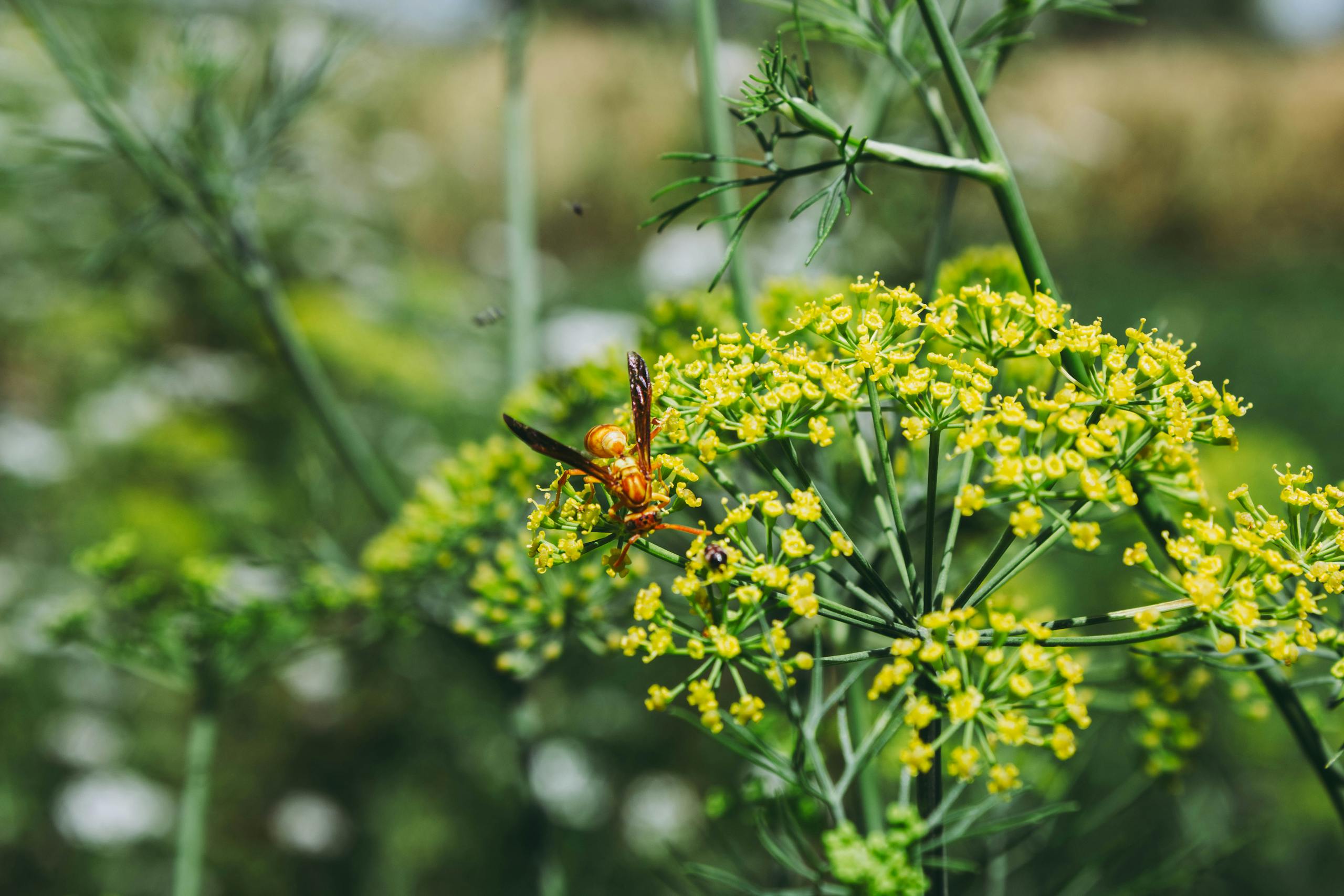
Foeniculum vulgare is a tall, strongly aromatic perennial herb (or biennial in cultivation) reaching 90–200 cm in height. The entire plant is glaucous green, finely divided, and conspicuously feathery in appearance, with a characteristic sweet, anise-like fragrance that is one of the most immediately recognizable in the garden. The morphology presents clearly Jovian signatures in the classical system: expansive, generous in growth, pleasant in scent, and architecturally elegant without austerity.
Stems: Erect, branching, hollow, smooth, and glaucous. Strongly aromatic when cut or bruised. The hollow stem is a classic Apiaceae characteristic and was noted by the classical authors as an identifying feature.
Leaves: Finely pinnate, divided into thread-like (filiform) segments, giving the plant its distinctive feathery appearance. Lower leaves are large and long-petiolate; upper leaves become simpler and nearly sessile. The leaves are intensely aromatic and were the part most commonly used in Carolingian cooking.
Flowers: Bright yellow, arranged in compound umbels 5–15 cm across. Flowers July through October in northern European climates. The umbel structure is the defining characteristic of the Apiaceae family and was noted in medieval herbals as the signature of the family’s carminative and digestive properties.
Fruit (seeds): Oblong to ovoid schizocarps, 4–8 mm long, green ripening to grey-green or grey-brown, with five prominent longitudinal ridges. The ‘seeds’ of commerce are technically mericarps (half-fruits), though the term seed is retained in the herbal and culinary literature. They contain the highest concentration of essential oil and are the primary medicinal part.
Root: Stout, fleshy, white taproot in cultivated forms; smaller and woody in wild plants. The root was used medicinally in the classical tradition (Dioscorides specifically recommends the root) and is diuretic and carminative in its own right.
Habitat & Distribution
Native to the dry, rocky soils and coastal scrublands of the Mediterranean basin, where it grows in full sun with sharp drainage. Naturalized so extensively across temperate zones that it now appears wild or semi-wild across much of Europe, North America, and Australia — in California it has become invasive in coastal habitats.
In the Carolingian garden context, it would have been cultivated in the physic garden alongside other Mediterranean aromatics, likely requiring some protection in the colder northern winters, though fennel is substantially more cold-tolerant than many Mediterranean herbs.
Cultivation Notes (Carolingian Context)
Fennel requires full sun and well-drained soil, tolerating poor soil well. It is allelopathic to many other garden plants — a characteristic known in the folk agricultural record and likely the reason for its traditional placement in a dedicated bed rather than integrated into the kitchen garden.
It self-seeds freely in mild winters and can become persistent in the garden. The Capitulare de Villis listing as feniculum most likely refers to the standard species; the bulb-forming Florence variety (var. azoricum) is a later selection. Both seed and leaf were used medicinally and culinarily in the Carolingian period.
III. Historical & Ethnobotanical Record
Pre-Classical and Classical Sources
Ancient Egypt and Greece: Fennel is documented in Egyptian medical papyri and was a significant plant in Greek medicine. The Greek name marathon gave its name to the plain where the famous battle was fought — the site was overgrown with wild fennel. This etymological connection reflects how deeply embedded fennel was in the Mediterranean landscape and culture.
Hippocrates (5th century BCE): The Hippocratic corpus references fennel in several preparations, establishing the digestive and galactagogue actions that persist through the entire subsequent tradition. The carminative use in infants is documented from this period.
Dioscorides (De Materia Medica, c. 50–70 CE): Dioscorides provides the most detailed classical account of fennel. He recommends the root for diuretic and digestive use, the seed decoction for increasing milk in nursing mothers, and the herb for digestive complaints, poor vision (a classical and persistent use), and as a component in compound preparations for the chest and lungs. His account establishes the core therapeutic profile that persists essentially unchanged through the Carolingian period and beyond.
Pliny the Elder (Naturalis Historia, c. 77 CE): Pliny records 22 remedies using fennel, including the famous observation that snakes rub against fennel after shedding their skin to restore their sight — a piece of natural observation (whether accurate or not) that became one of the most frequently repeated justifications for fennel’s traditional use in eye conditions.
Galen (De Simplicium Medicamentorum, 2nd century CE): Galen assigns fennel a warm and moderately dry quality and uses it therapeutically for digestive complaints, flatulence, and as a carminative component in compound preparations. His energetic assignment — warm and gently drying — is the one adopted in this monograph and consistent with the plant’s clinical action.
Medieval & Carolingian Sources
Capitulare de Villis (c. 812 CE): Listed as feniculum in Chapter 70, fennel was among the non-negotiable plants mandated for every imperial estate. In the Carolingian medical context, its primary role was digestive: both as a cooking spice that aided digestion of the heavy, meat-and-grain diet of the period, and as a medicinal preparation in its own right for flatulence, colic, and digestive sluggishness. Its secondary role was in respiratory preparations, consistent with the Dioscoridean tradition.
The School of Salerno (Schola Medica Salernitana, 11th–12th century): The Salernitan medical school, which transmitted and systematized Galenic medicine for the Latin West, gives fennel significant treatment in the Regimen Sanitatis Salernitanum, identifying it as a carminative, digestive tonic, and galactagogue. The Salernitan text’s wide medieval circulation ensured that fennel’s therapeutic position remained consolidated and authoritative through the 13th century.
Hildegard von Bingen (Physica, 12th century): Hildegard addresses fennel extensively, identifying it as a warming herb for the stomach and for conditions of cold, damp, or sluggish digestion. She notably uses it for chest complaints and for ‘heat of the heart’ — a usage that reflects the medieval expansion of fennel’s therapeutic range beyond the purely digestive.
Macer Floridus (De Viribus Herbarum, c. 11th century): The versified herbal treats fennel as a primary digestive and eye herb, and records its use as a diuretic and emmenagogue. The compound fennel preparations for the eyes and for respiratory conditions in Macer reflect the continuation of Dioscorides’ recommendations through the medieval Latin tradition.
Early Modern Sources
John Gerard (Herball, 1597): Gerard provides extensive coverage of fennel, noting its varieties, culinary uses, and therapeutic applications. He repeats the carminative, galactagogue, and diuretic traditions and adds observations on its cultivation in English gardens.
Nicholas Culpeper (Complete Herball, 1653): Culpeper assigns fennel to Mercury — a departure from the dominant Jupiter attribution in the Galenic tradition. His reasoning reflects Mercury’s rulership of the nervous system and the digestive-nervous interface (the enteric nervous system, in contemporary terms).
While the Mercury attribution has coherent reasoning — fennel does act on the smooth muscle of the gut in ways consistent with Mercury’s domain over nerve-mediated function — the Jupiter attribution is more internally consistent with the plant’s expansive, warming, pleasant character and is the position taken in this monograph.
Culinary tradition: Fennel’s role as a culinary herb is inseparable from its medicinal role across all periods. The practice of serving fennel with fish (documented from classical antiquity through the present), of adding fennel seed to bread and sausages, and of using the fronds in salads and sauces was simultaneously culinary pleasure and digestive medicine. The Carolingian court’s use of fennel in cooking was a practical application of the same Galenic principle that governed its medicinal use: the warming, carminative herb aids the digestion of heavy foods.
Ethnobotanical Record
Fennel has one of the widest and most consistent ethnobotanical records of any culinary-medicinal herb in the Western tradition. Core uses documented across cultures and centuries:
- Carminative and antispasmodic: relief of flatulence, bloating, intestinal cramps, and colic across all age groups
- Galactagogue: promotion of milk production in nursing mothers, one of the most consistent uses from Hippocrates to the present
- Infant colic: fennel seed preparations for colic in infants and young children; among the most widely used traditional infant remedies in European folk medicine
- Digestive tonic: gentle stimulation of gastric secretion and appetite
- Expectorant: traditional use in chest complaints, cough, and upper respiratory catarrh
- Eye conditions: traditional use in eye washes and compresses for inflamed, tired, or weak eyes
- Emmenagogue and hormonal: traditional use for menstrual irregularity and menopausal symptoms; connected to the phytoestrogenic constituents
- Culinary medicine: seeds used as a breath freshener and digestive after meals, particularly after heavy meat dishes
IV. Galenic Energetics & Temperament
Temperament Profile
Within the Galenic four-quality system, Foeniculum vulgare presents a warm and gently drying profile — significantly milder than the extreme cold-dry of wormwood (3rd degree in both qualities) and more moderately warm than the resolutely warming-drying of sage. This positions fennel as the most accessible and patient-friendly herb in the ACB series to date: it corrects phlegmatic cold-damp excess without the clinical aggression of a 3rd-degree medicine.
| Quality | Assignment | Clinical Implication |
| Heat/Cold | Warm, 2nd–3rd degree | Gently to moderately warming; appropriate for cold-phlegmatic conditions without overstimulating |
| Moisture/Dryness | Dry, 1st–2nd degree | Gently drying; reduces excess moisture and phlegm without the extreme drying of wormwood or sage |
| Taste | Sweet-aromatic; with faint bitter note in seed | The sweetness signals nutritive and warming action; the aromatic quality signals carminative and anti-spasmodic activity |
| Overall Temperament | Warm-dry, 2nd degree | The ideal phlegmatic corrective: warming enough to kindle digestive fire, gentle enough for long-term use and for use with children and the elderly |
Constitutional Indications
Fennel’s warm-dry 2nd-degree profile makes it the quintessential gentle phlegmatic corrective. Its constitutional indications within the Galenic framework:
- Cold, phlegmatic digestive terrain: slow digestion, flatulence, bloating, and colic of the cold-damp type
- Phlegmatic respiratory excess: cold, damp catarrh; mucus accumulation in the upper respiratory tract
- Cold-damp uterine conditions: menstrual irregularity and cramping of the cold, constricted type
- Phlegmatic constitution in general: suitable for long-term constitutional support in ways that wormwood (3rd degree) is not
Notably, fennel’s gentleness makes it one of the few warming digestive herbs appropriate for constitutional use in children and in the elderly — populations for whom the strong bitters and 3rd-degree medicines are generally contraindicated.
Humoral Actions
Fennel’s primary humoral action is on phlegm: it warms and moves cold-damp accumulation in the digestive tract, dissolving the flatulent phlegm that the Galenic tradition understood as the root cause of bloating and colic.
Its secondary action is on the lungs, where it acts as a gentle expectorant, warming and thinning the cold-damp mucus that the phlegmatic constitution produces in excess. These two actions — digestive carminative and respiratory expectorant — represent the most consistently documented therapeutic applications across the full fifteen-century span of the Western tradition.
V. Astro-Herbalism Analysis
Planetary Rulership: Jupiter
The assignment of Foeniculum vulgare to Jupiter is the dominant position in the Western astro-herbalism tradition and the one fully adopted in this series. The reasoning is multi-layered and internally consistent:
Galenic profile alignment: Jupiter governs warmth, expansion, and the beneficent regulation of the body’s natural processes. Fennel’s warm-dry 2nd-degree temperament is a clear Jovian energetic: warming without aggression, expanding without excess, beneficent in its clinical character.
Morphological signature: Fennel’s morphology is expansively Jovian: tall, architecturally generous, bright yellow flowers on wide umbels, pleasant and welcoming in fragrance, productive of seed in abundance. Jupiter’s plants in the traditional literature are characteristically large, yellow-flowered or yellow-fruited, aromatic in a pleasant way, and suggestive of abundance. Fennel fits this profile in every respect.
Organ affinity: Jupiter governs the liver, the blood, and the processes of digestion and assimilation in the traditional planetary medicine system. Fennel’s primary clinical action is on the digestive system — specifically on the process of digestion and the movement of digestive gases — placing it firmly in Jupiter’s domain.
Galactagogue action: The promotion of milk production is a traditionally Jovian action — an expression of Jupiter’s nourishing, abundant, life-sustaining quality. Fennel’s consistent galactagogue use across cultures and millennia is one of the most compelling arguments for its Jovian attribution.
The ACB frame — Jupiter in a Saturn World: The title of this episode captures the clinical and cosmological relationship at the heart of the ACB series. The Carolingian garden pharmacy is dominated by Saturnine and warming-drying medicines — because the northern European climate and the phlegmatic constitution that dominates in it require Saturn’s austere correctives.
But a pharmacy without Jupiter’s beneficence is incomplete. Fennel represents Jupiter’s contribution to the Saturnine pharmacy: the herb that moves and transforms rather than simply constricts and dries, that nourishes as it corrects, and that is accessible to the full range of patients rather than reserved for short-course heroic interventions.
Note on Culpeper’s Mercury attribution: Culpeper’s assignment of fennel to Mercury, on the grounds of its action on the digestive nervous system and its clarifying effect on vision and cognition, is a coherent minority position. Mercury’s domain over the nervous system and the sensory apparatus does connect to fennel’s traditional eye and cognitive uses.
The Jupiter attribution is adopted here because it better accounts for the full therapeutic profile — particularly the galactagogue action, the liver affinity, and the expansive morphological character — but the Mercury argument is not without merit.
Doctrine of Signatures
- The tall, expansive, architecturally generous growth habit signals Jovian abundance and beneficence
- The bright yellow umbel flowers signal warmth, solar connection, and the digestive-liver domain
- The hollow stem is a traditional signature for carminative action — the ability to move gas and open blocked passages
- The abundant seed production signals the galactagogue and generative actions
- The sweet, pleasant, welcoming scent signals that the medicine is accessible and gentle — a contrast to the warning-scent of Saturn’s wormwood
- The feathery, airy leaf structure signals lightness and the dispersal of heaviness — appropriate for a herb that dissolves the heavy accumulation of phlegmatic flatulence
ACB Series Positioning
Fennel occupies a specific structural position in the ACB series that is not accidental. EP.2 gave us sage (Jupiter-Saturn synthesis: the warming-drying constitutional corrective for the phlegmatic type). EP.3 gave us wormwood (Saturn: the heroic bitter, the eliminating, disciplining medicine for entrenched phlegmatic excess). EP.4 gave us the phlegmatic constitution itself as a diagnostic framework. EP.5 gives us fennel: Jupiter’s contribution, the herb that demonstrates that correcting phlegmatic excess does not require only bitter and austere medicine.
The series is building a complete clinical picture of how to treat the dominant constitution of the Carolingian population — and fennel is the demonstration that Jupiter’s warmth and abundance are as essential to that picture as Saturn’s discipline.
VI. Phytochemical Profile
Essential Oil (Seed)
The essential oil constitutes 2–6% of the dry weight of the ripe fruit (seed) — a significantly higher concentration than in most aromatic herbs and the basis for fennel’s consistent carminative, antispasmodic, and expectorant actions. The oil composition varies by variety and chemotype:
- trans-Anethole (50–85%): The dominant constituent of the sweet fennel seed essential oil and the compound responsible for the characteristic anise-like aroma. Anethole has well-documented antispasmodic activity on smooth muscle (the mechanistic basis of the carminative action), antimicrobial activity, and estrogenic activity (the mechanistic basis of the galactagogue and phytoestrogenic actions). The EMA’s well-established use designation for fennel rests substantially on the clinical evidence for anethole-mediated antispasmodic action.
- Fenchone (1–20%): A monoterpene ketone present in higher proportions in bitter fennel (var. vulgare) than in sweet fennel (var. dulce). Fenchone contributes the slightly bitter, camphoric note to bitter fennel and has its own antispasmodic and expectorant activity. The EMA monograph distinguishes bitter and sweet fennel as separate therapeutic entities with different active constituent profiles.
- Methyl chavicol (estragole, 1–10%): A phenylpropanoid present in variable amounts. The EMA has addressed the potential genotoxicity concern for estragole-containing preparations and established acceptable exposure limits; preparations within traditional dosing ranges are considered acceptably safe for adults in short-term use.
- α-Pinene, limonene, β-myrcene, α-phellandrene: monoterpene hydrocarbons contributing to the aromatic profile and with their own minor antispasmodic and antimicrobial activity
Flavonoids
- Quercetin and kaempferol glycosides: anti-inflammatory, antioxidant, antispasmodic
- Rutin: capillary-strengthening, anti-inflammatory
- Isorhamnetin glycosides: antioxidant
The flavonoid fraction contributes to the anti-inflammatory and antioxidant activity documented in fennel extracts and complements the essential oil’s antispasmodic action on the smooth muscle of the gut.
Phenylpropanoids & Coumarins
- Anethole (as above — also present in the fixed oil and plant tissue, not only the essential oil)
- Furanocoumarins: bergapten, psoralen, xanthotoxin — present in low concentrations; phototoxicity risk with topical application of the essential oil in sunlight
- Hydroxycinnamic acids: chlorogenic acid, caffeic acid derivatives — antioxidant
Phytosterols & Fatty Acids (Seed)
- Fixed oil (10–22% of seed): petroselinic acid (a rare omega-6 fatty acid), oleic acid, linoleic acid
- Phytosterols: β-sitosterol — anti-inflammatory, cholesterol-modulating
Other Constituents
- Minerals: potassium, calcium, magnesium, iron, manganese — the seed is a nutritionally significant source
- Vitamins: vitamin C (leaf), B vitamins (seed)
- Dietary fibre: significant in the whole seed
- Proteins and amino acids: the seed is a modest protein source
VII. Pharmacological Activity & Research
Carminative & Antispasmodic Action
This is the best-evidenced and most clinically established action of fennel, supported by both the mechanistic evidence (anethole’s smooth muscle relaxant activity via calcium channel modulation and direct antispasmodic effect on the intestinal wall) and by clinical trial data.
The EMA has granted well-established use status for fennel in dyspeptic complaints including flatulence, bloating, and mild spasmodic gastrointestinal discomfort — the most authoritative regulatory endorsement available in the EU herbal medicines framework.
The clinical evidence base includes:
- Randomized controlled trials demonstrating efficacy of fennel seed preparations in infant colic (including the well-cited Alexandrovich et al., 2003 RCT)
- Clinical trials supporting efficacy in irritable bowel syndrome-type symptoms when combined with other carminatives
- Mechanistic studies confirming anethole’s spasmolytic effect on isolated smooth muscle preparations
Expectorant & Respiratory Action
The EMA grants traditional use status for fennel in upper respiratory catarrh, reflecting the extensive historical record rather than robust clinical trial evidence. The mechanistic basis is well-understood: the volatile oil constituents, when taken internally or inhaled as steam, stimulate mucociliary clearance and have mild expectorant activity. Fenchone in particular has documented secretolytic action (it thins and loosens mucus), and anethole has mild antimicrobial activity against respiratory pathogens.
Galactagogue Action
The promotion of milk production in nursing mothers is one of the most consistent traditional uses of fennel across all periods of the historical record. The mechanistic basis is now better understood: anethole has structural similarity to dopamine and may act by modulating prolactin secretion through dopamine receptor pathways.
Animal studies support galactagogue activity. Clinical evidence in humans remains limited to observational data and small trials; however, the consistency of the traditional record across cultures and millennia is itself clinically significant evidence.
Safety note: the EMA specifically addresses fennel preparations in breastfeeding in its monograph. Maternal use of fennel herbal tea at traditional doses is considered acceptable, but the infant’s exposure through breast milk to the volatile oil constituents (including estragole) requires that duration of use be limited.
Phytoestrogenic / Hormonal Activity
Anethole and related phenylpropanoids have demonstrated estrogenic activity in vitro and in animal models. This provides a mechanistic basis for the traditional use of fennel in menstrual irregularity, menopausal symptoms, and as a galactagogue.
The clinical translation of the in vitro estrogenic activity is uncertain and likely dose-dependent; at traditional culinary and herbal tea doses, the estrogenic exposure is modest. Concentrated preparations (essential oil, high-dose extracts) carry a greater theoretical concern for hormone-sensitive conditions.
Antimicrobial Activity
Fennel essential oil and anethole have demonstrated antimicrobial activity in vitro against a range of bacteria and fungi, including Helicobacter pylori (of potential relevance to the digestive tonic use) and Candida species. The clinical relevance of in vitro antimicrobial data is always uncertain, but the findings support the traditional use of fennel in digestive infections and intestinal dysbiosis.
Anti-inflammatory & Antioxidant Activity
The flavonoid fraction (quercetin, kaempferol, rutin) and phenolic acids contribute to well-documented anti-inflammatory and antioxidant activity in vitro. These actions complement the primary carminative and antispasmodic indications and may contribute to fennel’s traditional use in inflammatory digestive conditions.
VIII. Traditional Preparations & Dosage
Seed Infusion (Tea)
The primary and most historically documented preparation. The seeds should be lightly crushed before infusion to improve extraction of the volatile oil:
- 2–5 g crushed seeds per 150–250 ml boiling water
- Cover and infuse 10–15 minutes (covering is essential to retain volatile oil)
- Take one cup, 2–3 times daily, preferably after meals for digestive use
- For infant colic: weaker preparation (1–2 g per 150 ml), cooled to body temperature, given by spoon or in a bottle
- Duration: may be used over extended periods for constitutional support given the 2nd-degree quality; EMA guideline is up to 2 weeks for dyspeptic complaints without medical advice
Tincture
- 1:5 in 45% ethanol (whole seed)
- Dose: 1–3 ml, 2–3 times daily
- Combined preparations with other carminatives (ginger, cardamom, chamomile) are traditional and clinically rational
Fennel Seed Honey (Mel Foeniculi)
A traditional preparation with Carolingian period precedent: whole or crushed fennel seeds macerated in raw honey for 2–4 weeks, then strained or left whole. Used as a digestive, expectorant, and galactagogue. One teaspoon taken after meals or in warm water. The combination of honey’s demulcent and antimicrobial properties with fennel’s carminative action produces a preparation particularly suited to the cold-damp phlegmatic respiratory presentation.
Essential Oil
Internal use of the essential oil is outside the scope of traditional herbal practice and requires clinical supervision. The EMA monograph covers the whole herb and the seed, not the isolated essential oil, for traditional use designation. External use of diluted essential oil (1–2% in carrier oil) for abdominal massage is a traditional application for colic, consistent with the plant’s topical antispasmodic action.
Culinary Use as Medicine
The Carolingian physician’s understanding that food and medicine are not categorically distinct — an understanding encoded in the Hippocratic tradition and preserved through Galen — is nowhere more practically demonstrated than with fennel.
Adding fennel seed to bread, meat dishes, and legumes was simultaneously flavoring and preventive medicine: the carminative seeds aided the digestion of foods that would otherwise produce flatulence and digestive discomfort. This is the practical application of the Galenic warm-drying corrective built into the food culture of the Carolingian world.
- Seed: added to bread, sausages, cheese, fish dishes, and legumes throughout the Mediterranean and northern European tradition
- Leaf (frond): used fresh in salads, as a garnish, and as a flavoring for fish and poultry
- Root: boiled as a vegetable with carminative and diuretic action; used in broths
- Florence fennel bulb (var. azoricum): a later selection; the bulb is eaten as a vegetable and has the same carminative action as the seed, in a much milder form
IX. Contraindications & Safety
Contraindications
- Known allergy to Apiaceae (Umbelliferae) family plants: cross-reactivity is possible with celery, carrot, coriander, dill, and other family members
- Pregnancy: fennel’s emmenagogue action and estrogenic activity contraindicate therapeutic doses during pregnancy; culinary use is generally considered acceptable
- Hormone-sensitive conditions (estrogen-dependent tumours, endometriosis, uterine fibroids): the phytoestrogenic activity of anethole warrants caution with concentrated preparations
- Epilepsy: isolated anethole and fenchone have shown convulsant activity at high doses in animal models; concentrated essential oil preparations should be avoided; standard seed tea is not considered to present this risk at traditional doses
Cautions
- Breastfeeding: the EMA permits short-term maternal use of fennel tea at traditional doses; extended use or high-dose preparations should be avoided due to the infant’s exposure to volatile oil constituents through breast milk
- Infants under 4 months: fennel preparations should be used with caution in very young infants and only in dilute form
- Phototoxicity: topical use of the essential oil may cause photosensitive reactions; not relevant to internal use
Drug Interactions
- Ciprofloxacin: fennel may reduce absorption of this antibiotic; separate by at least 2 hours
- Oestrogen-containing medications: theoretical interaction given phytoestrogenic activity; clinical significance at traditional herbal doses is uncertain
- Anticoagulants: theoretical interaction; fennel has some coumarin content; clinical significance at traditional herbal doses is low but noted
EMA Position (2018)
The EMA Committee on Herbal Medicinal Products has established two designations for fennel:
- Well-established use: Bitter fennel (var. vulgare) fruit for symptomatic treatment of mild spasmodic gastrointestinal complaints including flatulence, and for symptomatic treatment of mild bronchial catarrh — backed by clinical evidence sufficient for the higher regulatory standard
- Traditional use: Sweet fennel (var. dulce) in dyspeptic complaints and upper respiratory catarrh — backed by the extensive traditional record
This distinction between bitter and sweet fennel in the EMA monograph reflects the different essential oil profiles (fenchone-dominant vs. anethole-dominant) and their different clinical evidence bases. For the purposes of this monograph and the ACB series, both varieties are considered therapeutically equivalent at the constitutional and Galenic level; the distinction is clinically relevant for standardized pharmaceutical preparations.
X. Fennel in the Carolingian Garden
Fennel’s place in the Capitulare de Villis illuminates something important about how Charlemagne’s physicians thought about the construction of a complete pharmacy. The list includes some of the most demanding medicines in the Western canon — wormwood, henbane, black hellebore — alongside the everyday kitchen herbs and the gentle, pleasant plants like fennel.
Fennel’s presence in this list is not trivial. It represents the recognition that Jupiter’s medicines are as necessary as Saturn’s: that the pharmacy which can only cleanse and discipline, but cannot warm and nourish and gently move, is an incomplete pharmacy.
In the practical Carolingian context, fennel served multiple simultaneous functions. In the kitchen, it flavored bread, meat, and fish and aided the digestion of a diet heavy in grain and preserved foods. In the physic garden, it provided the seed for carminative preparations for flatulence, colic, and digestive sluggishness — conditions that were, in a population eating the Carolingian diet in northern European winter, essentially universal.
In the nursing context, it supported milk production in a period when infant mortality from failure to thrive was a serious concern. And in the chest and lung, it provided the gentle expectorant action appropriate for the early stage of respiratory phlegmatic accumulation, before the condition required the heavier intervention of elecampane or the heroic action of wormwood.
This is the clinical intelligence of the Capitulare de Villis: not a random list of useful plants, but a carefully considered pharmacy that addresses the full range of conditions likely to be encountered in the population it was designed to serve. Fennel’s position in that list reflects its position in the therapeutic hierarchy: essential, accessible, broadly applicable, and — in the most literal Galenic sense — beneficent.
XI. Materia Medica Summary
| Botanical Name | Foeniculum vulgare Mill. |
| Planet | Jupiter (primary); Mercury (secondary) |
| Galenic Quality | Warm 2nd–3rd degree; Dry 1st–2nd degree |
| Taste | Sweet-aromatic; faint bitter note (seed) |
| Primary Actions | Carminative; antispasmodic; expectorant; galactagogue; mild digestive bitter; diuretic; emmenagogue; phytoestrogenic |
| Primary Indications | Flatulence; intestinal colic; bloating; infant colic; upper respiratory catarrh; digestive sluggishness (phlegmatic); menstrual irregularity; insufficient lactation |
| Key Constituents | Essential oil: trans-anethole (50–85%), fenchone (bitter fennel); flavonoids: quercetin, rutin, kaempferol; fixed oil: petroselinic acid; phytosterols |
| Preparations | Seed infusion (primary); tincture; fennel honey; culinary use; external essential oil (diluted) |
| Standard Dose (seed tea) | 2–5 g crushed seed per 150–250 ml boiling water, covered 10–15 min, 2–3x daily |
| Standard Dose (tincture) | 1–3 ml (1:5, 45% EtOH), 2–3 times daily |
| Contraindications | Pregnancy (therapeutic doses); Apiaceae allergy; hormone-sensitive conditions (concentrated preparations) |
| Regulatory Status | EMA well-established use: bitter fennel for flatulence and mild bronchial catarrh. EMA traditional use: sweet fennel for dyspeptic complaints. |
| Capitulare de Villis | Listed as feniculum; Chapter 70; mandatory imperial estate plant |
XII. Bibliography
Primary Historical Sources
Anonymous. (c. 11th century). Regimen Sanitatis Salernitanum. [Various editions; English trans. Ordronaux, J., 1870. J.B. Lippincott.]
Charlemagne. (c. 812 CE). Capitulare de Villis vel Curtis Imperialibus. Monumenta Germaniae Historica, Leges, Sectio II, Capitularia Regum Francorum, Vol. 1. [Boretius, A., Ed., 1883. Hannover: Hahn.]
Culpeper, N. (1653). The English Physitian, or an Astrologo-Physical Discourse of the Vulgar Herbs of this Nation. London: Peter Cole.
Dioscorides, P. (c. 50–70 CE). De Materia Medica. [Trans. Goodyer, J., 1655; facsimile ed. Gunther, R.T., 1934. Oxford University Press.]
Galen. (2nd century CE). De Simplicium Medicamentorum Temperamentis ac Facultatibus. In Kühn, C.G. (Ed.), Claudii Galeni Opera Omnia. [Leipzig, 1821–1833.]
Gerard, J. (1597). The Herball, or Generall Historie of Plantes. London: John Norton.
Hildegard von Bingen. (12th century). Physica. [Trans. Throop, P., 1998. Healing Arts Press.]
Phytochemistry & Pharmacology
Alexandrovich, I., Rakovitskaya, O., Kolmo, E., Sidorova, T., & Shushunov, S. (2003). The effect of fennel (Foeniculum vulgare) seed oil emulsion in infantile colic: A randomized, placebo-controlled study. Alternative Therapies in Health and Medicine, 9(4), 58–61.
Anwar, F., Ali, M., Hussain, A.I., & Shahid, M. (2009). Antioxidant and antimicrobial activities of essential oil and extracts of fennel (Foeniculum vulgare Mill.) seeds from Pakistan. Flavour and Fragrance Journal, 24(4), 170–176.
Badgujar, S.B., Patel, V.V., & Bandivdekar, A.H. (2014). Foeniculum vulgare Mill: A review of its botany, phytochemistry, pharmacology, contemporary application, and toxicology. BioMed Research International, 2014, 842674.
Mileo, A.M., Di Venere, D., Linsalata, V., Fraioli, R., & Miccadei, S. (2012). Artichoke polyphenols induce apoptosis and decrease the invasive potential of the human breast cancer cell line MDA-MB231. Journal of Cellular Physiology, 227(9), 3301–3309.
Rather, M.A., Dar, B.A., Sofi, S.N., Bhat, B.A., & Qurishi, M.A. (2012). Foeniculum vulgare: A comprehensive review of its traditional use, phytochemistry, pharmacology, and safety. Arabian Journal of Chemistry, 9, S1574–S1583.
Sadeghnia, H.R., Farahmand, S.K., Gharaei, R., Afshari, R., & Ghorbani, A. (2013). Foeniculum vulgare extract abolishes increased oxidative stress in the kidney and liver of subacute lead-exposed rats. Pharmaceutical Biology, 51(6), 734–739.
Astro-Herbalism & Galenic Framework
Culpeper, N. (1653). Astrological Judgment of Diseases. London.
Popham, S. (2019). Evolutionary Herbalism: Science, Spirituality, and Medicine from the Heart of Nature. North Atlantic Books.
Wood, M. (2008). The Earthwise Herbal, Volume I: A Complete Guide to Old World Medicinal Plants. North Atlantic Books.
Regulatory Sources
European Medicines Agency, Committee on Herbal Medicinal Products (HMPC). (2018). European Union herbal monograph on Foeniculum vulgare Mill. var. vulgare, fructus (revision). EMA/HMPC/513580/2016. London: EMA.
European Medicines Agency, Committee on Herbal Medicinal Products (HMPC). (2018). Assessment report on Foeniculum vulgare Mill. var. vulgare, fructus. EMA/HMPC/137428/2006 Rev. 2. London: EMA.
ACB Series
Smith-Kizer, C. (2025). The Capitulare de Villis and the Galenic Garden: An Introduction to the At Charlemagne’s Behest Plant Series. atcharlemagnesbehest.com. [EP.1]
Smith-Kizer, C. (2026). Salvia officinalis: A Galenic and Astro-Herbalism Monograph. atcharlemagnesbehest.com. [EP.2]
Smith-Kizer, C. (2026). Artemisia absinthium: Saturn’s Great Regulator. atcharlemagnesbehest.com. [EP.3]
Smith-Kizer, C. (2026). The Phlegmatic Constitution: A Complete Diagnostic Guide. atcharlemagnesbehest.com. [EP.4]