
The Perpetual Vegetable Food Forest Charlemagne Already Knew
Good King Henry, Strawberry Spinach, and the Medieval Logic of the Perpetual Vegetable Food Forest.
The perpetual vegetable food forest movement is certain it has discovered something new. Plant once, harvest always — the perennial logic of abundance over extraction, of working with a plant’s nature rather than against it. It is a genuinely good idea. It is also, give or take twelve centuries, exactly what Charlemagne already wrote down.
In 812 AD, the emperor issued the Capitulare de Villis, a meticulous administrative order governing the crown estates of the Frankish empire. Chapter 70 lists the plants each estate was expected to cultivate. The list is practical, not poetic — these are working plants, chosen because they produce reliably without demanding constant intervention. Among them: blidum and bonus Henricus. Strawberry spinach and Good King Henry. Two plants the contemporary perpetual vegetable food forest movement is quietly rediscovering, convinced it is breaking new ground.
It is not breaking new ground. It is returning to it.
Good King Henry: The Aristocrat of the Kitchen Garden
Chenopodium bonus-henricus goes by many names — Good King Henry, Poor Man’s Asparagus, Mercury, Lincolnshire Spinach — and the proliferation of names is itself a clue. Plants accumulate common names when they are genuinely, widely used. This one was used everywhere.
It is a perennial, which already sets it apart from the annual spinach most gardeners grow today. Once established, it returns reliably each spring without any assistance from you. The young shoots, harvested before the leaves fully unfurl, are treated exactly like asparagus — steamed, buttered, done. The leaves, darker and more robust than annual spinach, are cooked as a pot herb throughout the season. The flower spikes are edible. Even the seeds can be ground into flour in a pinch. Bonus Henricus is the kind of plant that makes itself useful in every possible way, which is precisely why it appeared in Chapter 70.
It requires almost nothing of you. A reasonable soil, reasonable light, and the patience to let it establish in its first year before harvesting heavily. After that, it simply grows. Year after year. Decade after decade, if left undisturbed.
The perpetual vegetable food forest literature treats this as revelation. The Carolingians treated it as common sense.
Strawberry Spinach: The Beautiful Weed That Feeds You Twice
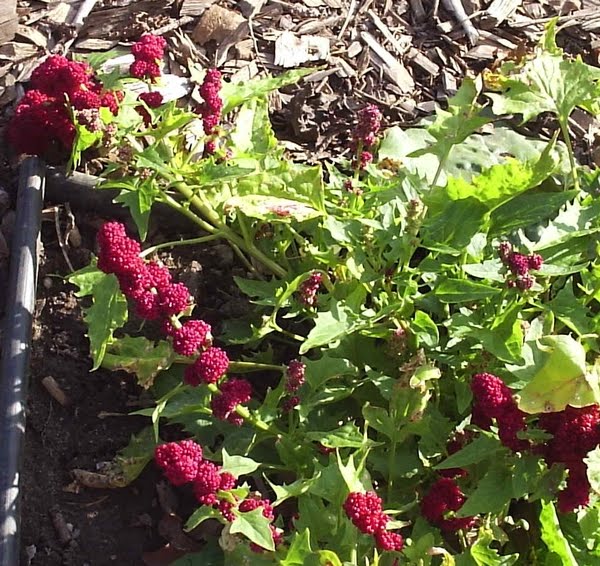
Blitum virgatum — known in French as arroche fraise, in English as strawberry spinach — is technically an annual, which might seem to disqualify it from the food forest conversation. But any plant that self-seeds so freely it returns every year without any effort on your part has earned an honorary perennial status. Mine certainly has.
I have grown strawberry spinach for sixteen years. I blogged about it in 2010, back when I was deep in eighteenth-century French colonial foodways research, when it was still one of those plants you had to explain to people. It was called ‘arroche fraise’ in the historical French sources I was working with, and once I grew it, I understood immediately why it had survived in kitchen gardens for so long: it is beautiful, it is useful, and it does not ask permission.
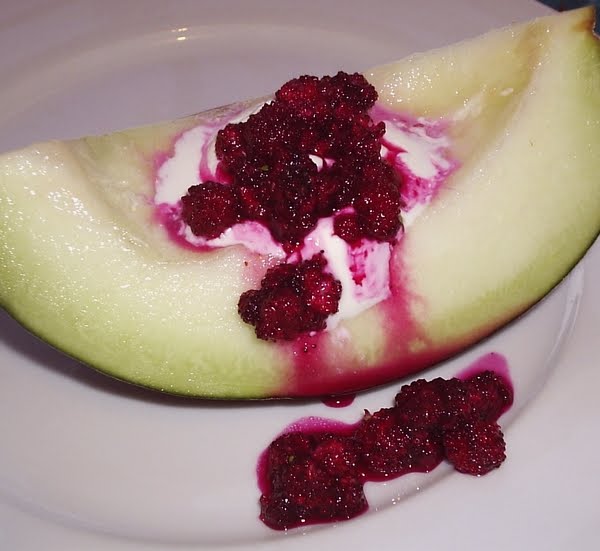
The plant produces spinach-like leaves throughout the season — mild, tender, perfectly good as a cooked green or a raw addition to salads. But the reason people remember it, the reason it spreads through gardens and persists across centuries, is the fruit: small, jewel-bright red spheres, clustered along the stems like tiny strawberries.
They are not strawberries in any culinary sense — they are mild and slightly mucilaginous, pleasant rather than spectacular — but the visual effect is dramatic. A plant that produces both a useful leaf crop and ornamental fruit that photographs magnificently is a plant with a future, even if it currently has to remind people it exists.
Seeds from my collection are sitting in a packet right now, waiting to go into the ground at Clugnat. In a few months, if all goes well, they will be growing in what was a Carolingian administrative district — Creuse was Frankish territory — not far from where some version of this plant might have grown in a crown estate garden twelve hundred years ago. I am not given to mysticism about plants. But I will admit that this particular thread of continuity is not nothing.
The Capitulare Logic ~ The Perpetual Vegetable Food Forest Charlemagne Already Knew
Chapter 70 of the Capitulare de Villis is often read as a horticultural inventory, which it is. But it is also, if you read it with a herbalist’s eye, a document about reliability. The plants listed are not the most exotic or the most medicinally sophisticated available to the Frankish court. They are the ones that could be counted on to produce, year after year, across a range of soils and climates, with minimal intervention from estate managers who had other concerns — the original perpetual vegetable food forest.
This is precisely the logic of the food forest: reduce inputs, increase reliability, work with the plant’s natural tendencies rather than against them. Charlemagne was not a permaculturist. He was a pragmatist. The difference is largely one of vocabulary.
Good King Henry and strawberry spinach survived the medieval period, the early modern period, the eighteenth century, the nineteenth century’s passion for improvement and exotic introductions, and the twentieth century’s industrialization of the food supply. They are still here. They are, as the food forest movement would say, proven performers. As the Carolingians would simply say: they work.
| “The perpetual vegetable food forest movement thinks it invented this. Charlemagne already wrote it down.” |
A Note for Your Garden
If you have not grown either of these plants, I want to make the case plainly: start this season.
Good King Henry takes a year to establish properly — resist the urge to harvest heavily in the first season, let it build roots, and you will have a productive perennial for many years to come. It prefers reasonably fertile soil and tolerates partial shade, which makes it useful in the dappled light of an actual food forest canopy. Sources for seed are more readily available now than they were a decade ago; search for Chenopodium bonus-henricus or ‘Lincolnshire Spinach’ from specialist heritage seed suppliers.
Strawberry spinach is easier: direct sow in spring, thin to give it room, and let a few plants go to seed at the end of the season. It will find its own way back the following year. The red fruit appears in late summer, which means you have both a leaf harvest in spring and early summer and an ornamental and edible fruiting display in August and September. Seek it as Blitum virgatum, Chenopodium capitatum, or ‘arroche fraise’ if you are sourcing from French suppliers.
Both plants belong in any serious kitchen garden. The Capitulare said so in 812. The perpetual vegetable food forest movement is saying so again now. Perhaps the third time through, we will actually listen.
© 2026 Carolyn Smith-Kizer. All rights reserved.