
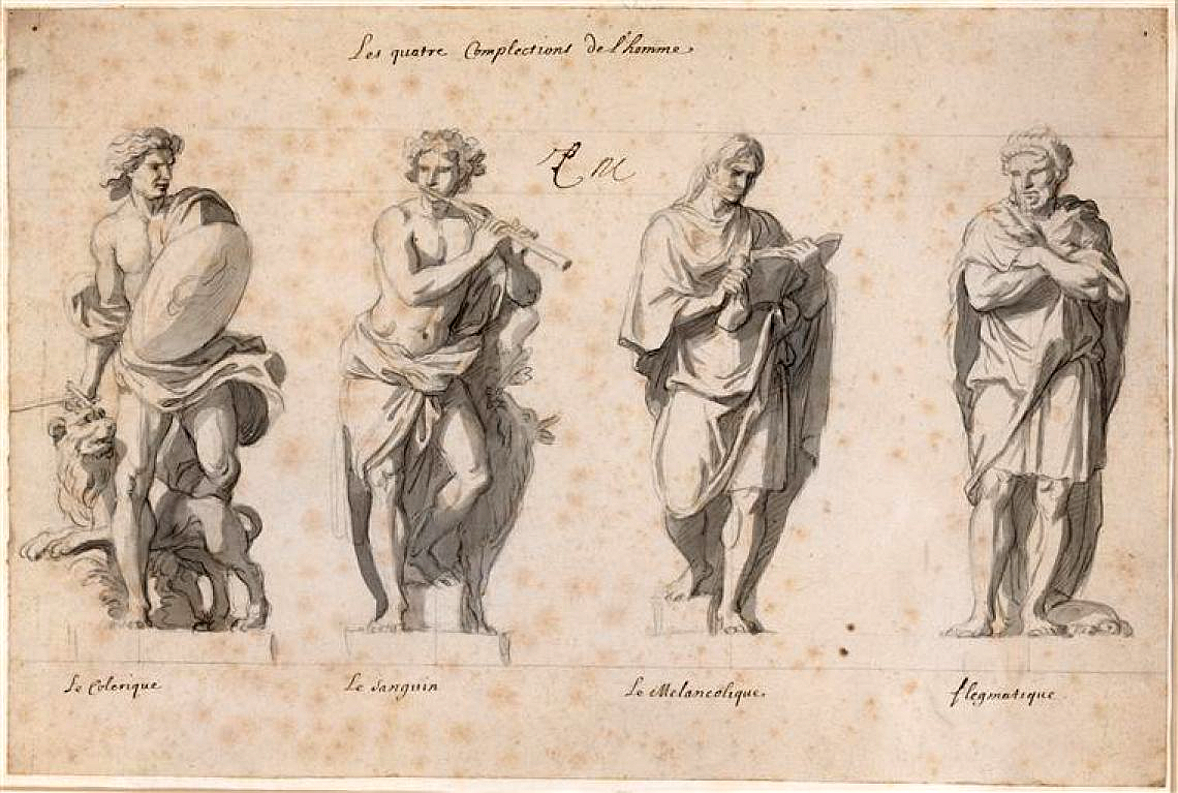
The Phlegmatic Constitution
A Complete Diagnostic Guide
You know this person. You may be this person.
They move through the world at a slightly slower pace than everyone else — not out of laziness, but because their body is constitutionally oriented toward conservation rather than expenditure. They sleep well, perhaps too well. They run cold and damp: perpetually cool hands, a tendency toward congestion and mucus production, a digestive system that works but slowly. They gain weight without apparent cause and lose it with disproportionate difficulty. They are emotionally steady — the calm one in a crisis, the person who takes a long time to become angry but longer still to let it go. When they are unwell, the illness tends to present as congestion, catarrh, swelling, sluggishness, or fluid accumulation rather than heat and inflammation.
In the Galenic system — the medical framework that governed European clinical practice from the second century CE through at least the seventeenth, and that informs the entire Carolingian pharmacy encoded in the Capitulare de Villis — this person has a phlegmatic constitution. Their dominant humor is phlegm. Their associated element is water. Their season of greatest vulnerability is winter. Their organs of primary affinity are the lungs and the lymphatic system. And the herbal medicine designed to address their particular terrain has been documented continuously for over two thousand years.
This post is a complete diagnostic guide to the phlegmatic constitution: what it looks like, how to recognize it, what goes wrong when it goes wrong, and how the Western herbal tradition has addressed it. The clinical questionnaire and scoring guide for self-assessment, along with the full body-system reference chart, are available to Archives tier members as a downloadable PDF.
I. The Galenic Foundation: Four Humors, Four Constitutions
The Galenic system of constitutional medicine rests on four humors — blood, yellow bile, black bile, and phlegm — each corresponding to an element, a set of qualities, a season, an organ system, and a temperament. In the healthy body, all four humors are present and in relative balance. In any given individual, one humor tends toward dominance, shaping the physical and psychological constitution across a lifetime. The clinical art lies in reading which humor dominates, understanding its tendencies and vulnerabilities, and applying the principle of contraries: the medicine corrects excess by providing its opposite quality.
The four constitutional types in brief:
| Constitution | Humor | Element | Qualities | Character |
| Sanguine | Blood | Air | Hot & Moist | Warm, sociable, optimistic, energetic |
| Choleric | Yellow Bile | Fire | Hot & Dry | Driven, assertive, prone to anger and inflammation |
| Melancholic | Black Bile | Earth | Cold & Dry | Analytical, cautious, prone to anxiety and depression |
| Phlegmatic | Phlegm | Water | Cold & Moist | Calm, steady, tolerant, prone to congestion and sluggishness |
These are not personality categories in the contemporary psychological sense, and they are not rigid boxes into which individuals are sorted permanently. They are clinical tools for understanding terrain — the underlying physiological and psychological tendencies that shape how a person becomes unwell and what the appropriate corrective medicine looks like. Most people present as mixed constitutions with one dominant type; the clinical task is identifying the primary tendency.
This guide focuses entirely on the phlegmatic constitution, which is arguably both the most common in colder northern European climates and the most underrecognized in contemporary herbal practice, where the dominant clinical conversation tends toward inflammation and heat rather than congestion and cold.
II. The Phlegmatic Body: Physical Constitution
Structure and Appearance
The phlegmatic constitution presents a recognizable physical type, though the degree of expression varies considerably between individuals:
- Tendency toward a larger, rounder, or softer body frame; tissue is often described in historical texts as ‘loose’ or ‘relaxed’ rather than taut
- Soft, pale, or cool skin; skin may appear slightly puffy or prone to water retention, particularly around the face, ankles, and hands
- Eyes that are often light in color, with a calm or slightly unfocused quality; may appear heavy-lidded
- Hair tends toward fine, light, or thin
- Constitutional tendency toward weight gain, particularly adipose tissue, with significant resistance to weight loss even with dietary change
- Slow metabolism as a baseline: body temperature tends to run cool, extremities are often cold
- Abundant mucus production: prone to postnasal drip, morning congestion, frequent throat-clearing, productive cough
Digestion
Digestion is the phlegmatic constitution’s most clinically significant domain. The Galenic tradition consistently identifies weak digestive fire — insufficient warmth to fully transform food into usable nourishment — as the root vulnerability of the phlegmatic type:
- Slow gastric emptying; food sits heavily; bloating and fullness after moderate meals
- Tendency toward nausea, particularly in the morning or when eating rich foods
- Poor appetite on waking; the phlegmatic constitution rarely wakes hungry
- Sluggish bowel; constipation of the slow, cold, dry type (not the hot, spasmodic type of the choleric) or alternating with loose stools from incomplete digestion
- Tendency toward food sensitivities, particularly to dairy and cold, heavy, or raw foods that increase phlegm
- Low stomach acid presentation: food intolerances, undigested food in stool, nutrient malabsorption
Energy & Sleep
- High sleep requirement; feels genuinely rested only after 8–9 hours; struggles significantly with sleep deprivation
- Slow to fully wake; morning grogginess can persist for an hour or more
- Energy is steady rather than high; rarely experiences the sharp peaks of energy typical of sanguine or choleric constitutions
- Tends toward low energy in cold, damp weather; seasonal low energy is significant, particularly in winter and early spring
- Prone to afternoon energy slump; napping comes easily and readily
- Stamina is often better than initial energy suggests: can sustain moderate effort over a long period once warmed up
Respiratory & Lymphatic Tendency
The lungs and lymphatic system are the phlegmatic constitution’s primary organ affinities — the body systems most likely to manifest excess phlegm as clinical pathology:
- Chronic or recurrent upper respiratory congestion, catarrh, or sinusitis
- Productive cough; mucus production that is abundant, white or pale, and watery to slightly thick
- Susceptibility to chest infections, bronchitis, and conditions involving mucus accumulation in the lungs
- Lymphatic sluggishness: swollen lymph nodes that are slow to resolve; enlarged tonsils; tendency toward cystic or soft tissue swellings
- Edema or fluid retention, particularly in the lower limbs, face, and hands
- Prone to ear infections with fluid accumulation, particularly in childhood
III. The Phlegmatic Mind & Temperament
The Galenic constitutional system does not separate body and mind. The humor that shapes the physical constitution shapes the psychological one equally. The phlegmatic temperament is among the most internally consistent in the four-constitution system:
Strengths of the Phlegmatic Temperament
- Emotional stability: genuinely difficult to destabilize; calm in crisis in a way that is not suppression but constitutional steadiness
- Patience and endurance: capable of waiting, sustaining effort, and tolerating difficulty over extended periods
- Loyalty and consistency: relationships are taken seriously; the phlegmatic person does not abandon connections easily
- Capacity for deep listening: does not rush to fill silence; hears what is actually being said
- Methodical intelligence: thinks thoroughly rather than quickly; conclusions are reliable once reached
- Practical and grounded: more interested in what works than in theory for its own sake
Vulnerabilities of the Phlegmatic Temperament
- Inertia: the same constitutional tendency that produces steadiness also produces difficulty initiating change; the phlegmatic person needs more activation energy than other types
- Attachment and possessiveness: things, relationships, and patterns are held onto past the point of usefulness; letting go is constitutionally difficult
- Grief that does not move: the phlegmatic type tends to accumulate unprocessed grief rather than expressing and releasing it; this is clinically significant in the lung and chest domain
- Withdrawal under stress: the stress response is to slow down and go inward rather than fight or flee; this can present as apparent depression or passivity
- Difficulty with motivation: without external structure or clear purpose, the phlegmatic constitution tends toward comfortable stagnation
- Overthinking as a variant of inertia: analysis as a substitute for action; the decision is never quite ready to be made
The Phlegmatic Under Stress
When the phlegmatic constitution is under chronic stress — whether emotional, physical, or relational — the clinical picture tends toward accumulation and congestion rather than the explosive expression of the choleric or the anxious depletion of the melancholic. Unprocessed emotion in the phlegmatic type often manifests somatically in the chest and throat — the lungs and lymphatic system tighten around what has not been said or felt or released. This is not metaphor; it is clinical observation with a coherent physiological pathway through the vagal-respiratory connection.
The herbs indicated for the phlegmatic constitution under stress are therefore not simply warming digestive bitters (though those are foundational), but include the lymphatic movers and lung-opening herbs that address the somatic expression of emotional congestion: cleavers, violet, elecampane, and the Artemisia family in its warming representatives.
IV. Seasonal Vulnerabilities & Timing
The Galenic system assigns each humor its season of dominance and corresponding vulnerability:
- Winter is the season of phlegm — cold and moist, the qualities that increase phlegmatic dominance. The phlegmatic constitution is at its most vulnerable from November through February: congestion is heaviest, energy is lowest, digestion is most sluggish, and the tendency toward lymphatic accumulation peaks.
- Early spring is the traditional season of phlegmatic excess — the period when winter’s accumulated phlegm needs to be moved and cleared. This is the classical season for bitter-tonic and lymphatic herbal protocols: the spring cleanse as genuine clinical intervention rather than commercial wellness concept.
- Summer, with its heat and dryness, typically benefits the phlegmatic constitution — the opposing qualities provide natural correction. Many phlegmatic individuals feel their best in warm weather and experience a significant drop in symptoms.
- Autumn is a transitional period: as temperatures drop and dampness increases, the phlegmatic constitution begins to accumulate again in preparation for another difficult winter.
Clinical note: the Carolingian physician’s awareness of seasonal timing is directly encoded in the Capitulare de Villis plant list. The warming, drying, bitter, and aromatic herbs mandated for every imperial estate — sage, wormwood, fennel, hyssop, horehound — are precisely the herbs indicated for phlegmatic excess and winter congestion. The pharmacy was designed for the population’s constitutional needs in a cold, northern European climate.
V. Organ Affinities & Clinical Pathology
Each constitution has its primary organ affinities — the body systems most likely to manifest pathology when the dominant humor is in excess. For the phlegmatic constitution:
Lungs & Respiratory Tract
The lungs are the phlegmatic constitution’s primary organ. Excess phlegm accumulates in the respiratory tract, producing the characteristic clinical picture of chronic catarrh, productive cough, bronchial congestion, and susceptibility to respiratory infection. The traditional herbal response is the class of herbs called expectorants and bronchial tonics: elecampane (Inula helenium), hyssop (Hyssopus officinalis), horehound (Marrubium vulgare), thyme (Thymus vulgaris), and mullein (Verbascum thapsus). All of these appear in or are compatible with the Capitulare de Villis tradition.
Lymphatic System
The lymphatic system is the body’s drainage network, and in the phlegmatic constitution it tends toward sluggishness — fluid moves slowly, lymph nodes swell and are slow to resolve, and the overall sense is of accumulation without adequate clearance. The herbs indicated are the lymphatic movers: cleavers (Galium aparine), violet (Viola odorata), calendula (Calendula officinalis), and red clover (Trifolium pratense). These are cooling-to-neutral herbs that move rather than heat — an important distinction from the warming bitters used for digestive phlegmatic conditions.
Digestive System
Weak digestive fire is the phlegmatic constitution’s most consistently noted vulnerability in the classical texts. The therapeutic response is the warming bitter: herbs that simultaneously stimulate gastric secretion (through bitter receptor activation) and provide warming aromatic constituents that counteract the cold-damp of phlegmatic digestion. The Capitulare plants most directly indicated here: wormwood (Artemisia absinthium), sage (Salvia officinalis), fennel (Foeniculum vulgare), and lovage (Levisticum officinale).
Joints & Musculoskeletal System
In later stages of phlegmatic excess, fluid accumulation extends to the joints, producing the cold, damp, swollen arthritis pattern — joint pain that is worse in cold, damp weather and better with warmth and movement. This is the classic picture of what we now call osteoarthritis with joint effusion. The traditional herbal response combines warming circulatory herbs (ginger, rosemary, black pepper) with anti-inflammatory and lymphatic herbs.
VI. The Herbal Response: Correcting Phlegmatic Excess
The Galenic principle of contraries dictates that cold-moist conditions require warm-dry medicines. The herbal response to phlegmatic excess operates on three clinical levels simultaneously:
- Warming the digestive fire: stimulating gastric secretion, bile production, and the metabolic transformation of food
- Drying excess moisture: reducing mucus production, moving lymphatic fluid, clearing accumulation
- Moving what is stuck: aromatic and circulatory herbs that shift stagnation and restore flow
Primary Phlegmatic Herbs
The following herbs represent the core materia medica for phlegmatic constitutional treatment in the Western tradition. All are consistent with the Capitulare de Villis plant list or directly listed within it:
| Herb | Planet | Action Class | Primary Phlegmatic Indication |
| Sage (Salvia officinalis) | Jupiter/Saturn | Warming bitter, astringent | Warming digestive; reduces excess mucus; classic phlegmatic corrective |
| Wormwood (Artemisia absinthium) | Saturn | Bitter tonic, choleretic | Strongest digestive bitter; anthelmintic; moves bilious congestion |
| Fennel (Foeniculum vulgare) | Jupiter | Carminative, warming | Warming carminative; moves gas and bloating; gentle phlegmatic digestive |
| Hyssop (Hyssopus officinalis) | Jupiter | Expectorant, warming | Warming expectorant for cold, damp respiratory congestion; clears phlegm from lungs |
| Horehound (Marrubium vulgare) | Mercury | Bitter expectorant | Bitter expectorant for chronic productive cough and bronchial phlegm |
| Elecampane (Inula helenium) | Mercury/Jupiter | Expectorant, tonic | Deep respiratory tonic; moves old, stuck lung phlegm; prebiotic inulin content |
| Ginger (Zingiber officinale) | Mars | Warming stimulant | Strongest warming herb; kindles digestive fire; disperses cold-damp accumulation |
| Rosemary (Salvia rosmarinus) | Sun | Warming circulatory | Warming circulatory stimulant; moves sluggish phlegmatic circulation |
| Cleavers (Galium aparine) | Moon | Lymphatic mover | Primary lymphatic herb; moves fluid accumulation; cooling-neutral energetics |
| Thyme (Thymus vulgaris) | Venus | Warming antimicrobial | Warming antimicrobial expectorant; indicated for infected phlegmatic respiratory states |
Dietary Principles for the Phlegmatic Constitution
The Galenic dietary tradition for phlegmatic constitutions is among the most clinically coherent and practically applicable aspects of the system:
- Favor: warming, drying, and aromatic foods. Ginger, black pepper, garlic, onion, mustard, horseradish, and all the warming spices directly address phlegmatic cold-damp. These were the primary digestive condiments in the Carolingian kitchen for sound clinical reasons.
- Favor: bitter greens and foods. Dandelion, chicory, endive, radicchio, and arugula stimulate the digestive fire and liver function. The bitter appetite — historically normalized in European cuisine — was a constitutional correction built into the food culture.
- Reduce: cold, raw, heavy, or dairy-rich foods. These are phlegm-producing in the Galenic system, and the clinical observation is consistent with modern experience of dairy and cold-food sensitivity in constitutionally phlegmatic individuals.
- Reduce: sweet, heavy, and floury foods. Excess carbohydrate in the cold-damp constitution promotes phlegm production and sluggish digestion in the Galenic framework — a position the contemporary understanding of insulin resistance and metabolic syndrome has given a different mechanistic explanation for the same clinical observation.
- Eat warm: food should be served warm and cooked rather than raw and cold. This is not a preference but a therapeutic instruction for the phlegmatic constitution.
- Eat less at a sitting: the phlegmatic digestive fire is easily overwhelmed. Smaller, more frequent warm meals are consistently better tolerated than large, cold, heavy meals.
VII. Differential Diagnosis: Distinguishing Phlegmatic Excess from Other Patterns
The phlegmatic constitution is frequently confused with melancholic presentations and with simple fatigue or hypothyroidism. A brief differential:
| Feature | Phlegmatic | Melancholic | Simple Fatigue / Depletion |
| Quality | Cold & Moist | Cold & Dry | Variable |
| Energy | Steady low; heavy | Depleted; anxious | Variable; irregular |
| Mood | Calm; slow; attached | Anxious; brooding; withdrawn | Irritable; reactive |
| Body | Soft; round; fluid retention | Thin; tight; dry skin | Variable |
| Digestive | Slow; bloated; cold | Constipated; dry; nervous | Weak; variable |
| Respiratory | Mucus; congestion; damp cough | Dry; tight; anxious breathing | Not typically prominent |
| Key Herb Class | Warming bitters; expectorants | Warming nervines; nourishing tonics | Adaptogens; nourishing tonics |
The practical clinical distinction between phlegmatic and melancholic presentations matters because the herbal response differs significantly. Warming bitters (wormwood, gentian, artichoke leaf) are indicated for the phlegmatic digestive pattern but can be too harsh and depleting for the already-dry melancholic constitution. The melancholic patient who is misidentified as phlegmatic and given strong bitters will typically report worsening — increased dryness, constipation, and anxiety. Constitutional identification is the prerequisite for appropriate treatment.
VIII. The Phlegmatic Constitution in the Carolingian Context
The Capitulare de Villis plant list, read through the lens of Galenic constitutional medicine, reveals a clinical pharmacy explicitly designed for a cold, northern European population in a climate that systematically promotes phlegmatic excess. The plants mandated by Charlemagne’s 812 CE imperial edict are overwhelmingly warming, drying, aromatic, and bitter — precisely the qualities required to correct cold-damp phlegmatic terrain.
This was not coincidence, and it was not purely culinary. The Carolingian court physicians — trained in the Galenic tradition transmitted through Byzantine, Arabic, and early monastic intermediaries — understood that the primary clinical problem in northern France and Germany was not heat and inflammation but cold, damp, and phlegmatic accumulation. The pharmacy was built for the population.
Sage (Jupiter-Saturn, warming-drying) opens the ACB series because it is the quintessential phlegmatic corrective — warming, preserving, drying, and tonifying the constitution most likely to be dominant in the readership of this series and in the population of the Carolingian empire. Wormwood (Saturn, cold-dry in the 3rd degree) follows as the heroic phlegmatic cleansing herb — the one you reach for when gentle correction is insufficient. Fennel (Jupiter, warming) completes the initial triad as the most accessible and gentle of the phlegmatic digestive herbs.
Understanding the phlegmatic constitution is therefore not peripheral to this series — it is the clinical foundation that explains why these particular plants were chosen, why they were considered non-negotiable, and why the Carolingian physician’s pharmacy looks the way it does.
IX. Clinical Application: A Practitioner’s Framework
For practitioners using this guide clinically, the following framework summarizes the assessment and treatment approach:
Assessment
- Establish dominant constitutional type using the questionnaire (Archives tier)
- Identify which body systems are expressing phlegmatic excess most prominently: digestive, respiratory, lymphatic, or musculoskeletal
- Assess seasonal pattern: is the phlegmatic excess worse in winter/spring (typical) or year-round (more entrenched constitutional pattern)?
- Screen for mixed constitutional presentation: phlegmatic-melancholic is common (cold-damp dominant with secondary cold-dry overlay) and requires modified treatment
- Note emotional component: unprocessed grief, attachment patterns, or inertia that has a somatic expression in chest and lymphatic congestion
Treatment Principles
- Begin with the digestive system: warming the digestive fire is the foundation for all other correction in the phlegmatic constitution. No lymphatic or respiratory protocol will hold if the digestive terrain is not addressed first.
- Layer the approach: warming bitters before meals (wormwood, gentian, artichoke leaf) + warming carminatives with meals (fennel, ginger, cardamom) + expectorants and lymphatics as indicated by presentation
- Seasonal timing: intensify warming and drying protocols in autumn to prepare for winter; run lymphatic and spring-cleansing protocols in February through April
- Exercise as medicine: the phlegmatic constitution requires movement to generate internal warmth that the body does not naturally produce in sufficient quantity. This is not lifestyle advice; it is clinical instruction.
- Caution with cooling herbs: the phlegmatic constitution is often sensitive to cooling herbs (marshmallow, slippery elm, violet) in large quantities during winter, even when those herbs might seem indicated for symptom relief. Cooling symptom relief at the expense of constitutional warmth worsens the underlying terrain.
Monitoring
- Phlegmatic improvement markers: increased energy on waking; clearer nasal passages in the morning; reduced afternoon heaviness; improved bowel regularity; gradual and sustained weight normalization; emotional fluidity replacing attachment and inertia
- Aggravation signs: increased dryness or constipation (too many warming bitters without adequate moisture); increased anxiety (constitutional correction moving too fast for the nervous system); worsening congestion (cooling herbs or cold foods reintroduced during winter),
The phlegmatic constitution is, in many ways, the constitution most naturally aligned with the approach of the Capitulare de Villis series: steady, accumulating depth over time, more interested in substance than in speed, and at its best when the underlying terrain has been properly understood and consistently addressed. If you recognize yourself here, the complete self-assessment questionnaire and body-system clinical reference chart are available to Archives tier members as a downloadable PDF. The questionnaire provides a weighted scoring system and interpretation guide; the reference chart maps the full phlegmatic clinical picture by body system with corresponding herbal and dietary interventions.
ARCHIVES TIER MEMBERS
The complete diagnostic PDF for this episode — including the weighted self-assessment questionnaire with scoring and interpretation bands, and the full body-system clinical reference chart — is available for download in the Archives tier at youtube.com/@thelittleoldlady_101.
In This Series
- EP. 1 — The Capitulare de Villis and the Galenic Garden: An Introduction
- EP. 2 — Salvia officinalis: The Quintessential Phlegmatic Corrective
- EP. 3 — Wormwood: Saturn’s Great Regulator
- EP. 4 — The Phlegmatic Constitution: A Complete Diagnostic Guide [this post]
- EP. 5 — Fennel: A Jupiter Herb in a Saturn World (forthcoming)
- EP. 6 — Hildegard’s Bridge: From Charlemagne to the 12th Century (forthcoming)
Every Thursday at atcharlemagnesbehest.com I go deeper — the history, the medicine, the plants Charlemagne put in his garden and why they still matter. The living example of this constitution is documented over at youtube.com/@thelittleoldlady_101.