
Wise Woman in the Bible: Compassion That Acts
Long before there were clinics on every corner, every village had a woman people went to. She knew which leaf to lay on a burn and which tea to brew for a colicky baby. She sat up with the sick and the dying, delivered the babies, laid out the dead, and listened. She is the wise woman in the Bible, and she belongs to our own Carolingian story too. This essay is about who she was, and about the one quality without which all her knowledge was worthless.
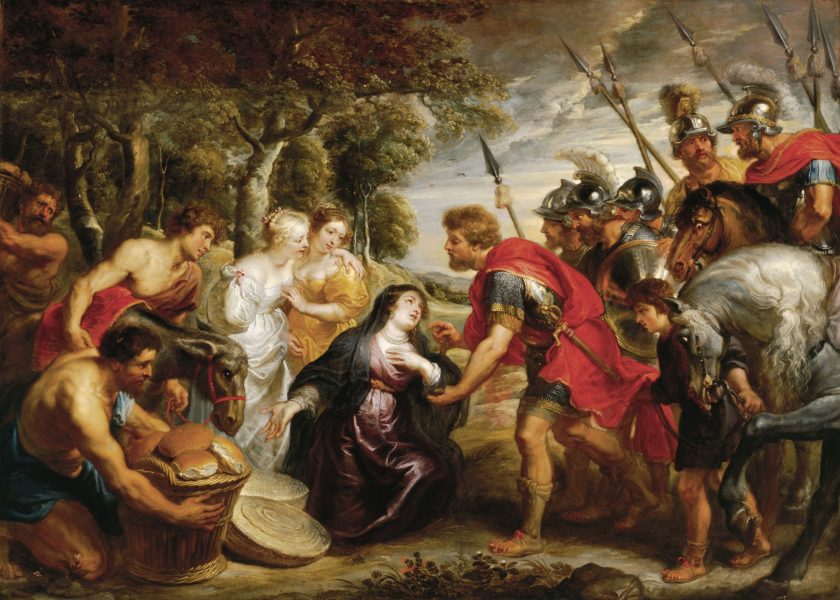
Cover image: Peter Paul Rubens, The Meeting of David and Abigail
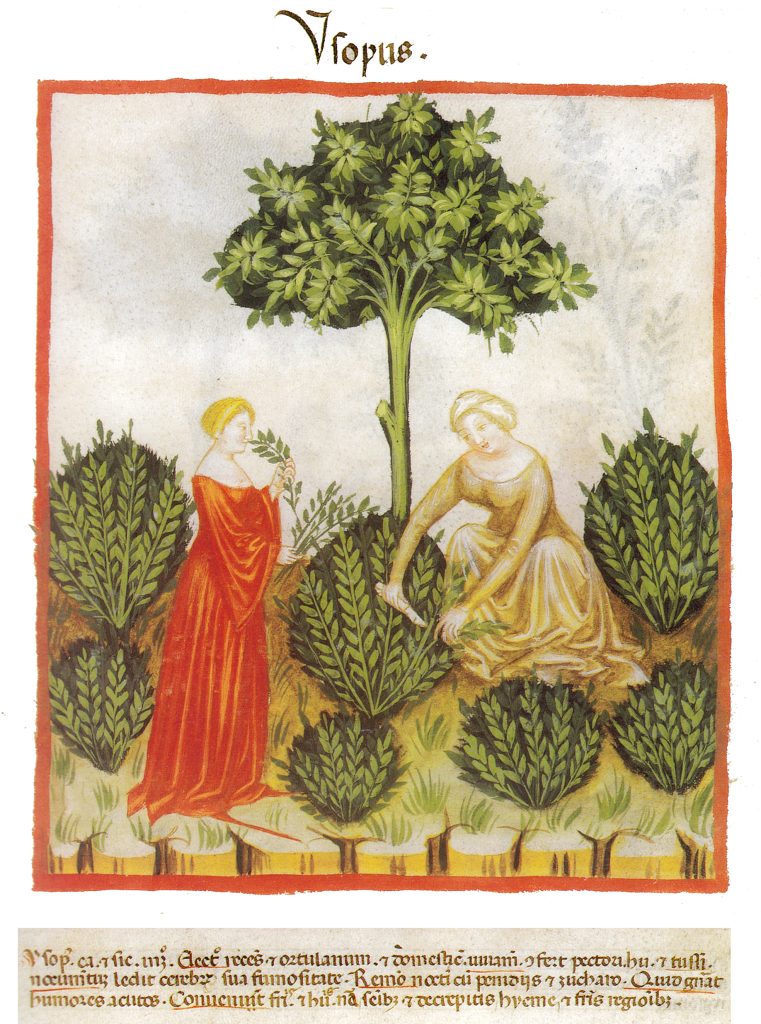
The Wise Women of Scripture
The Hebrew Bible names her plainly. When Joab needed someone to move King David’s heart toward his banished son, he “fetched thence a wise woman” from Tekoa (2 Samuel 14:2). When a rebel took refuge in the town of Abel, it was a wise woman who stood on the wall, reasoned with Joab, and saved her whole city (2 Samuel 20:16–22). Abigail, “a woman of good understanding,” rode out with bread, wine and figs and turned David from bloodshed (1 Samuel 25:3, 18–35). Deborah judged Israel under her palm tree (Judges 4:4–5).
And at the very beginning of Israel’s story stand two women whose wisdom was entirely practical. Shiphrah and Puah were midwives in Egypt, ordered by Pharaoh to kill every Hebrew boy at birth. “But the midwives feared God, and did not as the king of Egypt commanded them, but saved the men children alive” (Exodus 1:17). Their faith did not stay in the heart. It went into their hands.
Proverbs gathers all of this into a portrait: the woman of strength who “openeth her mouth with wisdom; and in her tongue is the law of kindness” (Proverbs 31:26), and behind her, Wisdom herself, crying in the streets and calling the simple to come and learn (Proverbs 8).
Moved in the Gut: Splanchnizomai
When the Gospels want to describe what Jesus felt when he looked at suffering people, they reach for an unusual word. Splanchnizomai comes from splanchna, the inward parts: the bowels, the heart, the gut. It means to be moved in one’s innermost self, to feel compassion as a physical thing.1 In the Gospels it is used almost entirely of Jesus himself, or of figures in his parables who stand for God.
But when he saw the multitudes, he was moved with compassion on them, because they fainted, and were scattered abroad, as sheep having no shepherd.
Matthew 9:36 (KJV)
What matters is what the word does next. It never stops at a feeling. When Jesus “was moved with compassion” he touched the leper (Mark 1:41), taught the shepherdless crowd (Mark 6:34), fed the hungry four thousand (Matthew 15:32), and touched the eyes of the blind (Matthew 20:34). Gut-deep compassion, in the Gospels, always becomes an action.
“To Love Is to Act”
Victor Hugo put the same truth in four French words, traditionally given as among the last he wrote, in May 1885: Aimer, c’est agir. To love is to act. They are my favourite words in any language, and I think they are the whole of what the wise woman tradition was about.
Jesus said much the same at the Last Supper: wash one another’s feet; love one another. And in his picture of the judgment, the sheep are not those who felt the most, but those who acted: “I was an hungred, and ye gave me meat … I was sick, and ye visited me” (Matthew 25:35–36). Micah had said it centuries before: do justly, love mercy, and walk humbly with thy God (Micah 6:8). Humbly, I have always thought, means on foot, in dusty sandals, among people.

The Wise Woman in Charlemagne’s World
The Carolingian age built this ideal into its monasteries. The famous Plan of St. Gall, drawn up around 820 as a model for a great abbey, sets a house for the physician beside a little walled garden of medicinal herbs, the herbularius, with sage, rue, lilies, roses, fennel, cumin and the rest laid out in neat beds within reach of those who needed them.2 Care for the sick was not an afterthought; it was drawn into the plan of the house of God.
Two and a half centuries later, Hildegard of Bingen wrote her great books on plants and on the body from a Rhineland convent. She is the wise woman the medieval world remembered by name; the village women who did the same work, from Clugnat to the Black Forest, are remembered by no one. See Hildegard von Bingen’s Herbalism.
What the Wise Woman Knew
- She knew her plants. Not as theory, but as the leaf in her hand, gathered at the right season, dried, stored and used with care.
- She knew her people. Who ran hot and who ran cold, whose grief was making them ill, which child needed food more than any tea.
- She knew her limits. Jesus never spoke against physicians. “They that be whole need not a physician, but they that are sick” (Matthew 9:12) takes for granted a trade with knowledge, learning and practice. The wise woman knew when a matter was beyond her, and sent for help.
- She knew her God. Her knowledge served the One who made the plants, and her care was an act of worship.
The Leaves of the Tree
The Bible ends where it began, in a garden. Beside the river of the water of life stands the tree of life, “and the leaves of the tree were for the healing of the nations” (Revelation 22:2; compare Ezekiel 47:12). I read that as a promise that care, and the plants that serve it, will not end when this age ends. There will always be people to look after, and always leaves to gather for them.
Until then, the wise woman’s calling is open to anyone, woman or man, who will learn the plants, love the people, and let compassion that begins in the gut go out through the hands.
Common Questions
Does the Bible use the phrase “wise woman”?
Yes. The Hebrew ishah chakhamah, “wise woman,” is used of the woman of Tekoa (2 Samuel 14:2) and the woman of Abel (2 Samuel 20:16).
What does splanchnizomai mean?
It is the Greek verb for being moved with compassion, built on splanchna, the inward parts. It describes compassion felt deep in the body, and in the Gospels it is almost always followed by action.
Who said “To love is to act”?
The words Aimer, c’est agir are traditionally attributed to Victor Hugo and said to be among the last he wrote, shortly before his death in May 1885.
Was herbal care part of Christian tradition?
Very much so. Carolingian monasteries kept physic gardens, as the Plan of St. Gall shows, and women such as Hildegard of Bingen wrote on plants and the body.
© 2024 Carolyn Smith-Kizer
If this work is useful to you, you can buy me a coffee — buymeacoffee.com/cskizer

Notes
- Helmut Köster, “σπλάγχνον, σπλαγχνίζομαι,” in Theological Dictionary of the New Testament, ed. Gerhard Kittel and Gerhard Friedrich, trans. Geoffrey W. Bromiley, vol. 7 (Grand Rapids, MI: Eerdmans, 1971), 548–59. ↩
- Walter Horn and Ernest Born, The Plan of St. Gall: A Study of the Architecture and Economy of, and Life in, a Paradigmatic Carolingian Monastery, 3 vols. (Berkeley: University of California Press, 1979). ↩
Bibliography
Horn, Walter, and Ernest Born. The Plan of St. Gall: A Study of the Architecture and Economy of, and Life in, a Paradigmatic Carolingian Monastery. 3 vols. Berkeley: University of California Press, 1979.
Köster, Helmut. “σπλάγχνον, σπλαγχνίζομαι.” In Theological Dictionary of the New Testament, edited by Gerhard Kittel and Gerhard Friedrich, translated by Geoffrey W. Bromiley, 7:548–59. Grand Rapids, MI: Eerdmans, 1971.