
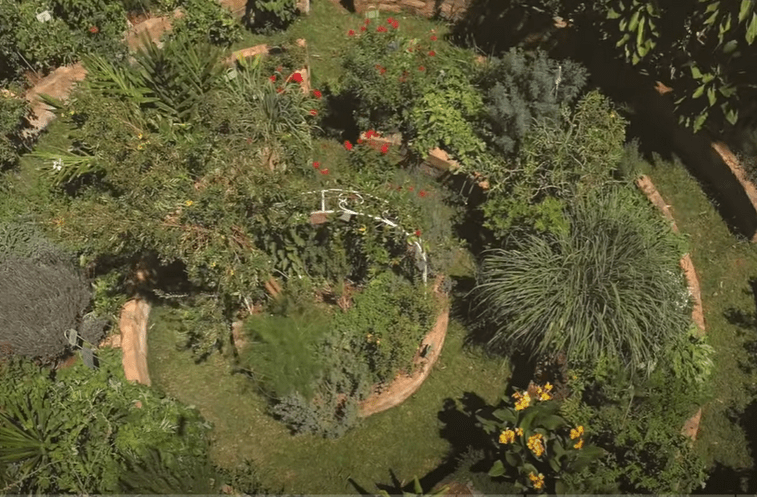
How to Plan a Herb Garden: A Step-by-Step Guide
If you want to know how to plan a herb garden, start where the monks did. Around the year 820, someone drew a plan for an ideal monastery on five sheets of parchment sewn together. It survives in the abbey library of St. Gall, in Switzerland, and it includes a small physic garden: sixteen straight beds, each given to a single plant, laid out near the infirmary and the physician’s house.1 Sage, rosemary, lovage, fennel, rue, savory, lilies and roses all have their places, and so, charmingly, does the bean.1
This post includes affiliate links. As an Amazon Associate I earn from qualifying purchases. Click here for my full disclosure policy.
Twelve centuries later, that plan is still the best model I know for a home herb garden. It is simple, every bed can be reached, and each plant has room to show you what it is. This guide walks through planning your own, step by step.
Step 1: Read Your Ground
Before you choose a single plant, spend a few days watching the place you mean to plant.
- Sun. Note how many hours of direct sun each part of the garden gets. Most of the classic herbs, sage, thyme, rosemary and lavender among them, want six hours or more.
- Drainage. Dig a hole about 30 cm (a foot) deep, fill it with water, and see how long it takes to empty. If water is still standing after a few hours, plan on raised beds.
- Soil. A simple home test kit will tell you the pH. Most herbs are happy between slightly acid and neutral, roughly pH 6 to 7.
- Winter. Know how cold your winters get. In the United States that means your USDA hardiness zone. Here in the Creuse, it means knowing that wet, cold winters kill more Mediterranean herbs than frost alone.
- Water and wind. Note where the hose reaches and where the wind cuts through. A sheltered, sunny corner near the house is worth more than a large, exposed one far away.
an incredible, comprehensive resource
Chestnut School of Herbal Medicine’s Guide to the Best Books on
Herbal Medicine, Foraging, and Herb Gardening
Books of Interest
The Family Garden Plan by
Melissa K. Norris

Herbalism by
Dian Dincin Buchman
Step 2: Decide What Your Household Will Use
The old physic gardens were planted for a purpose, and yours should be too. Rather than buying every herb in the catalogue, ask what your household actually reaches for.
- Teas you drink: chamomile, peppermint, lemon balm, fennel.
- Kitchen herbs: sage, thyme, rosemary, lovage, savory.
- The stillroom: calendula and St. John’s wort for infused oils, lavender for sachets, yarrow for the first-aid shelf.
- For the bees: nearly all of the above, plus borage and hyssop.
Start with eight to twelve plants you will truly use. You can always add a bed next year. My guide to 15 Essential Herbs to Grow in Your Garden covers how to grow each of the classics, and How to Start Using Herbs Safely covers the cautions.
Step 3: Mix Annuals, Biennials and Perennials
A good plan balances plants that come back every year with plants you sow fresh.
- Perennials such as sage, thyme, lovage, lemon balm and lavender form the backbone. Put them where they can stay for years.
- Annuals such as calendula and chamomile give quick results and often self-seed. Give them a bed you can dig over each spring.
- Biennials such as parsley and caraway flower in their second year. Leave them a corner where they will not be disturbed.
Books and Sites of Interest
Rosemary Gladstar’s Medicinal Herbs
the herbal medicine-makers handbookJames green
American Botanical Council
Step 4: Draw the Plan
Take a sheet of squared paper and draw your space to scale, marking north, trees, walls, the tap and the path to the kitchen door. Then lay out your beds.
- Keep beds narrow. About 1.2 metres (4 feet) wide lets you reach the middle from either side without stepping on the soil. This is exactly why the St. Gall beds were long and straight.
- Make paths comfortable. Allow 60 to 90 cm (2 to 3 feet) for paths, wider if you use a wheelbarrow or a cane. Bark, gravel or grass all work.
- Group plants by their needs. Put sage, thyme, rosemary and lavender together in the sunniest, best-drained bed. Put mint, lemon balm and valerian in a damper, partly shaded one.
- Plan for height. Lovage, fennel and valerian grow tall, so set them at the back or north side, where they will not shade smaller plants.
- Contain the spreaders. Mint, lemon balm and St. John’s wort will roam. Sink mint in a bottomless bucket, or give it a bed of its own.
- Use the vertical space. Bean towers, trellises and espaliered fruit along a fence add height without taking up ground.

Plan Your Garden based on your area.
Try it ~ it’s free!
Step 5: Prepare the Ground
Good preparation saves years of struggle. If your soil is heavy clay or stays wet in winter, build raised beds 20 to 30 cm (8 to 12 inches) high and fill them with a mix of topsoil, compost and grit. On reasonable soil, a no-dig approach works well: lay cardboard over the grass in autumn, cover it with a thick layer of compost, and plant through it in spring.
Go easy on rich feeding. Most herbs grow fine in modest soil, and plants pushed with too much fertiliser grow lush and soft, often with less scent and flavour. Compost is usually all they need.
Readers in France and elsewhere in Europe can find organic herb seed from French suppliers such as Kokopelli and the Ferme de Sainte Marthe, which sell open-pollinated varieties you can save seed from year after year.
My gift to you!
Layout pages, harvest logs & more . . .
Step 6: Plant and Tend
- Seeds or plants? Calendula, chamomile, borage and fennel are easy from seed. Rosemary, lavender and thyme are slow from seed, so most people buy young plants or take cuttings from a friend.
- Spacing. Follow the packet or label. As a rough guide, thyme needs about 20 cm (8 inches), sage about 45 cm (18 inches), and lovage a full metre.
- Watering. Water deeply and less often, so roots go down. Once established, the Mediterranean herbs need very little.
- Pests. Skip chemical sprays entirely: you are growing plants to eat and drink. A mixed planting, healthy soil and a sharp eye do most of the work.
13 Essential Tools for Planting & Harvesting Your Garden
Step 7: Harvest, Dry and Keep Notes
Harvest leaves just before the plant flowers, on a dry morning after the dew has gone. Pick flowers just after they open, and dig roots in autumn once the top growth has died back. Dry everything in the shade, in small bundles or on screens, and store it in labelled glass jars away from light.
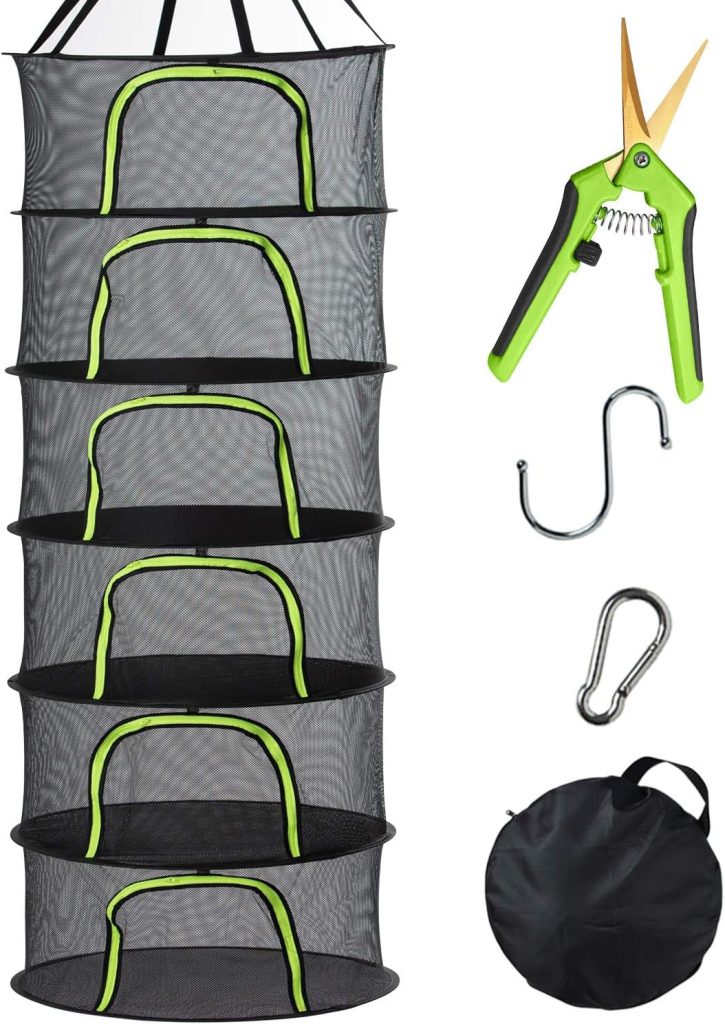
My favorite herb drying hanging rack
Comes with a bonus pair of pruners
Keep a garden journal from the first day: what you planted and where, when it flowered, what you harvested, and what you would change. After two or three seasons, it will be the most valuable gardening book you own. For ways to use your harvest, see The Stillroom: Five Traditional Herbal Preparations.
My gift to you!
A place for all your wins♥
Frequently Asked Questions
How big should my first herb garden be?
Smaller than you think. Two beds of about 1.2 by 2.4 metres (4 by 8 feet) will hold a dozen herbs and give you plenty to use, dry and share.
Can I plan a herb garden in containers?
Yes. Sage, thyme, rosemary, lavender, mint, lemon balm and chamomile all grow well in pots. Use a gritty compost and make sure every pot drains.
When is the best time to plan?
Winter. Draw the plan when the garden is bare, order seed early, and you will be ready to plant as soon as the soil warms in spring.
Do I need a large garden for a physic bed?
No. The St. Gall plan fitted sixteen herbs into a garden smaller than many back yards. One well-planned bed is enough to begin.
A Plan Worth Keeping
The monk who drew the St. Gall plan never saw it built, as far as anyone knows. Yet his sixteen beds have taught gardeners for twelve hundred years. A plan on paper is where every good garden begins.
© 2024 Carolyn Smith-Kizer
If this work is useful to you, you can buy me a coffee — buymeacoffee.com/cskizer

Notes
- Walter Horn and Ernest Born, The Plan of St. Gall: A Study of the Architecture and Economy of, and Life in a Paradigmatic Carolingian Monastery, 3 vols. (Berkeley: University of California Press, 1979).