
Artemisia vulgaris Mugwort: Herbal Monograph
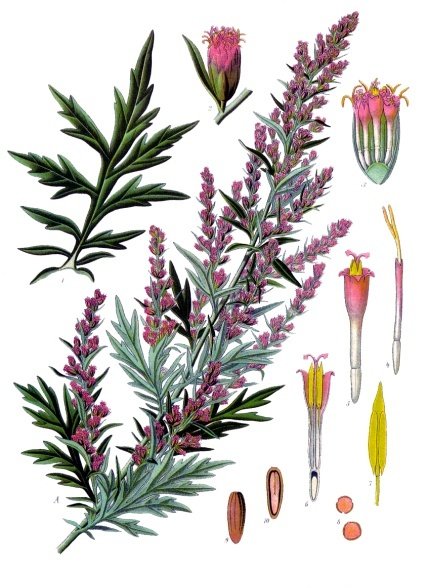
In short: Mugwort, Artemisia vulgaris, is the common wayside wormwood of Europe, northern Africa and Asia, a warming and drying bitter. It has traditionally been used as an emmenagogue, a carminative and a gentle nervine for the stomach and the nerves. As an emmenagogue it is unsuitable in pregnancy, and it contains thujone, so it is best taken in modest amounts.
Botanical Name
Artemisia vulgaris L.
Latin Name
Artemisia vulgaris L.
Plant or Common Name
Mugwort, Armoise [Fr.], Common Wormwood, Felon herb
Family:
Asteraceae
Native Region:
Artemisia vulgaris has a wide native distribution across:
• Europe
• Northern Africa
• Asia (including Siberia, Japan, and parts of China)
It has been naturalized in many other parts of the world, including:
• North America
• South America
• New Zealand
The plant is adaptable and can be found in various habitats, including:
• Waste places
• Roadsides
• River banks
• Coastal areas
• Disturbed soils
Chemical Constituents:
• Essential oils (1,8-cineole, camphor, α- and β-thujone)
• Flavonoids (quercetin, kaempferol)
• Coumarins
• Triterpenes
• Sesquiterpene lactones
• Polyacetylenes
• Phenolic acids
Actions:
• Emmenagogue
• Carminative
• Antispasmodic
• Nervine
• Mild sedative
• Bitter tonic
• Diaphoretic
• Diuretic
Energetics:
Warming and drying
Part of Plant Used:
Leaves, flowering tops, and occasionally roots
Harvesting Guidelines and any sustainability issues:
• Harvest leaves and flowering tops just before or at the beginning of flowering
• Cut stems about 6 inches from the top
• Sustainably abundant in most areas; can be invasive in some regions
Pliny the Elder ~ Plin. Nat. 26.13 ~ 77 CE

CHAP. 13.—THE PLANT CALLED BELLIS: TWO REMEDIES.
~ Bellis is the name of a plant that grows in the fields, with a white flower somewhat inclining to red; if this is applied with artemisia [mugwort], it is said, the remedy is still more efficacious. ~
Uses (Traditional, Modern, Scientific Research):
• Traditional: Menstrual irregularities, digestive issues, anxiety, insomnia
• Modern: Appetite stimulant, digestive aid, mild sedative
• Scientific Research: Potential antioxidant, antimicrobial, and neuroprotective properties; studies on effects on diabetes and obesity
Specific Indications or Affinities:
• Reproductive system (menstrual irregularities, menopausal discomforts)
• Digestive system (flatulence, indigestion, poor appetite)
• Nervous system (mild anxiety, insomnia)
Types of Preparations:
• Infusion (tea)
• Tincture
• Essential oil (diluted)
• Dried herb (smoking blend)
• Poultice
• Dream pillow
Recipes:
- Mugwort Tea: Steep 1–2 teaspoons of dried mugwort in a cup of boiling water for 10–15 minutes. Strain and drink up to 3 times daily.
- Mugwort Dream Pillow: Fill a small cloth bag with dried mugwort leaves and place inside your pillowcase.
- Mugwort Tincture: Combine 1 part dried mugwort with 5 parts 40% alcohol. Macerate for 2–4 weeks, strain.
Contraindications:
• Pregnancy (due to emmenagogue effects)
• Breastfeeding
• Individuals with known allergies to plants in the Asteraceae family
• Epilepsy or seizure disorders
Side Effects:
• Generally safe when used in appropriate doses
• Potential for allergic reactions
• Large doses may cause nausea, vomiting, or headaches
• May cause vivid dreams or sleep disturbances
Interactions with Other Drugs:
• May interact with anticoagulant medications
• Potential interaction with diabetes medications
• May affect the metabolism of drugs processed by liver enzymes
Dosage:
• Tea: 1–2 teaspoons of dried herb per cup of boiling water, up to 3 times daily
• Tincture: 2–4 mL of 1:5 tincture, up to 3 times daily
How to Take It:
• Internal: Tea, tincture
• External: Essential oil (diluted), poultice
• Scent: Dream pillow
Duration of Use:
• Short-term use (1–2 weeks) is generally suggested
• Long-term use should be under the guidance of a qualified medical practitioner
Safety/Risks:
• Contains thujone, which can be neurotoxic in large amounts
• Potential for allergic reactions
• May cause photosensitivity in some individuals
• Not suggested for long-term use without the guidance of a qualified medical practitioner
Return to: The Complete Guide to Anti-Inflammatory Eating
© 2024 Carolyn Smith-Kizer
If this work is useful to you, you can buy me a coffee — buymeacoffee.com/cskizer

From Charlemagne’s Garden to Your Kitchen
The Little Old Lady’s Guide to Herbal Bitters
Wormwood, gentian, angelica, dandelion and the other bitter herbs of the Capitulare de Villis: how the Galenic physicians read them, how to grow and harvest them, and how to make your own tinctures, vinegars, bitter wines and signature blends at home. A 40-page illustrated, printable PDF.
Bibliography
Bone, Kerry, and Simon Mills. Principles and Practice of Phytotherapy: Modern Herbal Medicine. 2nd ed. Edinburgh: Churchill Livingstone/Elsevier, 2013.
Chevallier, Andrew. Encyclopedia of Herbal Medicine. 3rd ed. London: DK Publishing, 2016.
Hoffmann, David. Medical Herbalism: The Science and Practice of Herbal Medicine. Rochester, VT: Healing Arts Press, 2003.
Judžentienė, Asta, and Jurga Buzelytė. “Chemical Composition of Essential Oils of Artemisia vulgaris L. (Mugwort) from North Lithuania.” Chemija 17, no. 1 (2006): 12–16.