
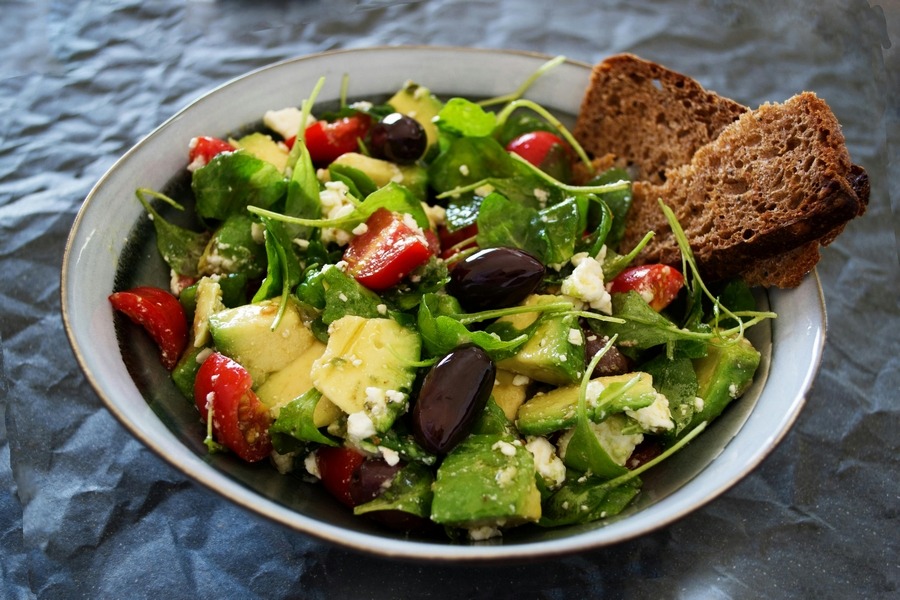
Anti-Inflammatory Eating: A Wise Woman’s Galenic Guide to the Table
Anti-inflammatory eating is not a diet you go on and come off. It is a way of setting the table, and it is far older than the phrase. Galen was writing about it in Rome in the second century, and Charlemagne’s stewards were planting for it on the royal estates six hundred years later. I came to this way of eating as a clinical herbalist and as a cancer survivor, and I have lived it at my own table for more than twenty years. This guide brings that old understanding together with what modern research has actually found, so you can build a plate that suits your own body.
In short: Anti-inflammatory eating means building most meals from vegetables, fruit, pulses, whole grains, nuts, olive oil, oily fish, fermented foods and kitchen herbs, and eating less ultra-processed food and sugar. Trials of the Mediterranean pattern and of fermented foods show lower inflammatory markers in the blood. Galen adds the piece most modern guides leave out: the right table depends on the person sitting at it.
Key Takeaways
- Eat mostly whole foods you could recognise from a market stall or a garden.
- Use olive oil, nuts, oily fish and fermented foods often. These have the best human trial evidence behind them.
- Cook with herbs and spices every day, in food amounts.
- Eat less ultra-processed food, fewer sugary drinks and less refined flour.
- Match the table to your temperament and the season, the way Galen taught.
- Sleep, movement and calm matter as much as any single food.
What Is Inflammation, and Why Does Food Matter?
Inflammation is the body’s own repair crew. A cut finger turns red, warm and swollen because blood and immune cells rush in to clean and mend the tissue. Ruslan Medzhitov describes this as a protective response that is meant to switch off once the job is done.1
Trouble starts when it does not switch off. A large review led by David Furman describes a low, steady, body-wide inflammation that builds with age and is fed by a poor diet, too little movement, broken sleep, chronic stress and a disturbed gut. That smouldering state is linked with heart disease, type 2 diabetes, fatty liver and several other long-term illnesses.2 Food is one of the few levers on that list that we pull three times a day.
What Galen Knew About the Table
Galen wrote a whole book, On the Properties of Foodstuffs, about what each grain, pulse, vegetable, fruit, meat and fish does in the body.3 He sorted foods by their qualities: warming or cooling, drying or moistening. He also sorted them by the kind of blood they made. Some foods, he said, produce good juice and some produce bad juice, and a body fed for years on bad juice grows hot, heavy and irritable. That is as close to the modern idea of chronic inflammation as a second-century physician could come.
Galen also insisted that the same food acts differently in different bodies. Barley water cools a hot, dry, choleric person and can chill a cold, damp, phlegmatic one. So the first question at a Galenic table is never only what is good to eat? It is good for whom, and in what season? You can find your own temperament in The Four Galenic Constitutional Types, and see how Galen’s thinking shaped the medieval kitchen in Medieval Spices and Galen.
The Carolingians carried this thinking into the garden. Chapter 70 of the Capitulare de Villis names the herbs, vegetables and fruit trees every royal estate was to grow, and the list reads like a well-stocked anti-inflammatory kitchen: sage, rosemary, fennel, lovage, parsley, leeks, onions, garlic, cabbage and more. You can read all of them in my Capitulare de Villis Plant List, and see what that table did for the people who ate from it in Carolingian Height and Diet.
What Does the Research Say?
Most of the internet’s anti-inflammatory food lists rest on test-tube studies. A few things have been tested in people, and those are the ones I build on.
The Mediterranean pattern. In one arm of the Spanish PREDIMED trial, older adults at high risk of heart disease ate a Mediterranean diet with extra olive oil or extra nuts for a year. Compared with people on a low-fat diet, they had lower blood pressure and clear falls in inflammatory markers such as C-reactive protein and interleukin-6.4
Ultra-processed food. Kevin Hall’s team at the US National Institutes of Health fed twenty adults ultra-processed meals for two weeks and unprocessed meals for two weeks. The meals were matched for calories, sugar, fat, fibre and salt on the plate. On the ultra-processed diet, people ate about 500 calories a day more and gained weight. On the unprocessed diet they lost it.5
Fermented foods. At Stanford, healthy adults who added yogurt, kefir, kimchi, sauerkraut and other fermented foods for ten weeks grew a more varied gut flora. Nineteen inflammatory proteins in their blood fell, interleukin-6 among them. A high-fibre group in the same trial did not see those falls in the same time.6
Omega-3 fats. Philip Calder’s review explains how the long-chain omega-3 fats in oily fish, EPA and DHA, damp down several inflammatory pathways and help inflammation resolve.7 Most people eating a Western diet get very little of them.
The Anti-Inflammatory Plate: Foods to Build On
- Vegetables and fruit, in many colours. Leafy greens, cabbages, onions and leeks, carrots, beets, berries, apples and pears. Variety matters more than any one superfood.
- Pulses and whole grains. Lentils, beans, chickpeas, oats, barley and whole wheat if you tolerate it. If you wonder whether to give up gluten, read Gluten-Free and Anti-Inflammatory first.
- Olive oil and nuts. Extra virgin olive oil as your everyday fat, and a handful of walnuts, almonds or hazelnuts most days.
- Oily fish. Sardines, mackerel, herring, anchovies and salmon, two or three times a week.
- Fermented foods. Yogurt, kefir, sauerkraut, kimchi and the like, a little every day. My Fermentation and Herbs for Gut Health shows how to start.
- Herbs and spices. Used generously in cooking. More on these below.
Herbs and Spices in the Kitchen
Kitchen herbs are where food and herbalism meet. A meta-analysis of six trials by Amirhossein Sahebkar found that curcumin supplements lowered C-reactive protein, but mainly in the forms the body could absorb well.8 Black pepper helps with that: in a small human study, piperine raised blood levels of curcumin about twentyfold.9 Cook turmeric with a pinch of pepper and a little fat, the way Indian cooks always have.
These are the herbs and spices I reach for most, each with its own page:
- Turmeric, warm and bitter, with pepper and fat
- Ginger, warming for a cold stomach
- Garlic, the rustic’s theriac
- Rosemary, the warm herb for cold, stiff aches
- Ceylon cinnamon, not cassia, for daily use
- Green tea, between meals
- Blends that make it easy: Herbes de Provence, Za’atar and Dukkah
For a fuller herbal picture, see Anti-Inflammatory Herbs: A Galenic Field Guide. Bitter greens and a small glass of bitters before a heavy meal belong here too; my Digestive Bitters guide explains why. Culinary amounts are safe for nearly everyone. Concentrated extracts are another matter, so read Anti-Inflammatory Herb Safety and Herb-Drug Interactions before you take any herb in capsules.
Foods to Eat Less Of
- Ultra-processed foods: packaged snacks, sweet breakfast cereals, ready meals and processed meats.
- Sugary drinks and sweets eaten every day.
- White flour and white rice as the base of most meals.
- Deep-fried food and fats that have been heated over and over.
None of this means never. It means these foods stop being the foundation of the week.
Eating by Season and Temperament
Here Galen parts company with most modern food lists. A hot, dry, choleric person often does best with cooling foods: cucumbers, lettuces, barley, pears and plenty of greens, with spices kept light. A cold, damp, phlegmatic person needs warmth and lightness: soups with ginger, garlic and pepper, roasted roots and less dairy and sweetness. Sanguine and melancholic people sit in between, each with their own needs. The Phlegmatic Constitution works through one temperament in detail.
The seasons shift the table too. Winter calls for warming soups and stews, and spring for bitter greens and lighter meals. Summer suits raw, cooling foods, and autumn brings back the roots, the pulses and the slow cooking. The Body Still Keeps the Old Clock explains why that rhythm still matters.
Beyond the Plate
Food is only part of the picture. A meta-analysis of 72 studies by Michael Irwin and colleagues linked disturbed sleep with higher levels of C-reactive protein and interleukin-6.10 Galen counted sleep, exercise, fresh air and the passions of the soul alongside food and drink as the things that keep a body in balance. Walk every day, go to bed at a steady hour, and keep the air in your house clean rather than heavily scented. Earth, Endotoxin, and the Humoral Body looks at one more piece: the soil and farm life our immune systems grew up with.
A Sample Anti-Inflammatory Day
| Meal | What to eat | Galenic note |
|---|---|---|
| Breakfast | Oats cooked with cinnamon, topped with berries, walnuts and plain yogurt | Warm the oats for a cold, phlegmatic stomach |
| Lunch | Lentil and vegetable soup, a green salad with olive oil and lemon, a spoon of sauerkraut | Cooling salad for the choleric; extra ginger in the soup for the phlegmatic |
| Snack | An apple or pear with a few almonds | Pears cool, apples are neutral |
| Dinner | Baked mackerel or salmon with roasted roots and greens, herbs and garlic | Oily fish two or three times a week |
| Evening | A cup of chamomile or a gentle herbal blend | Calms the day before sleep |
For something special, try Hawthorn Berry and Rosehip Ketchup or Golden Milk Ice Cream.
For Women at Each Season of Life
Inflammation and food meet differently at each stage of a woman’s life. I have written about each one in turn: Early Puberty in Girls, Fertility and Inflammation, Pregnancy and Inflammation and Menopause and Inflammation. For the grandmothers’ side of the story, read Wise Woman Tradition, and for how far back inflammation goes, Inflammation in Ancient Bones.
Frequently Asked Questions
What is the best anti-inflammatory diet?
The pattern with the most human evidence is the Mediterranean one: vegetables, fruit, pulses, whole grains, olive oil, nuts and fish, with little ultra-processed food. Galen would add that the best version is the one adjusted to your temperament and the season.
How long does anti-inflammatory eating take to make a difference?
In the Stanford fermented-food trial, inflammatory markers fell over ten weeks. In the PREDIMED arm, changes were measured after a year. Think in months and seasons, not days.
Do I need to give up gluten or dairy?
Not necessarily. People with coeliac disease or a true intolerance must avoid the foods that affect them. For everyone else the evidence is mixed. Fermented dairy such as yogurt and kefir was part of the Stanford trial that lowered inflammatory markers.
Which spices are most anti-inflammatory?
Turmeric with black pepper, ginger, garlic, rosemary and cinnamon are the best studied. Use them every day in cooking. Extracts and capsules are much stronger and can interact with medications.
Is coffee allowed?
For most people, a cup or two of coffee fits well within this way of eating. A choleric person who already runs hot and anxious may do better with green tea or herbal teas.
Can anti-inflammatory eating replace my medication?
No. Good food supports the body, but never stop or change a medication without talking to the doctor who gave it to you.
My free 3-day anti-inflammatory meal plan, with recipes shared by Living Plate Rx, is here to download.
Remember to always consult with a qualified medical practitioner before making large changes to your diet or adding new herbs to your routine, especially if you have existing health concerns or take medication.
© 2024 Carolyn Smith-Kizer
If this work is useful to you, you can buy me a coffee — buymeacoffee.com/cskizer

Notes
- Ruslan Medzhitov, “Origin and Physiological Roles of Inflammation,” Nature 454, no. 7203 (2008): 428–35, https://doi.org/10.1038/nature07201.
- David Furman et al., “Chronic Inflammation in the Etiology of Disease across the Life Span,” Nature Medicine 25, no. 12 (2019): 1822–32, https://doi.org/10.1038/s41591-019-0675-0.
- Galen, On the Properties of Foodstuffs (De alimentorum facultatibus), intro., trans. and comm. Owen Powell, foreword by John Wilkins (Cambridge: Cambridge University Press, 2003).
- Rosa Casas et al., “The Effects of the Mediterranean Diet on Biomarkers of Vascular Wall Inflammation and Plaque Vulnerability in Subjects with High Risk for Cardiovascular Disease: A Randomized Trial,” PLoS ONE 9, no. 6 (2014): e100084, https://doi.org/10.1371/journal.pone.0100084.
- Kevin D. Hall et al., “Ultra-Processed Diets Cause Excess Calorie Intake and Weight Gain: An Inpatient Randomized Controlled Trial of Ad Libitum Food Intake,” Cell Metabolism 30, no. 1 (2019): 67–77.e3, https://doi.org/10.1016/j.cmet.2019.05.008.
- Hannah C. Wastyk et al., “Gut-Microbiota-Targeted Diets Modulate Human Immune Status,” Cell 184, no. 16 (2021): 4137–53, https://doi.org/10.1016/j.cell.2021.06.019.
- Philip C. Calder, “Omega-3 Fatty Acids and Inflammatory Processes: From Molecules to Man,” Biochemical Society Transactions 45, no. 5 (2017): 1105–15, https://doi.org/10.1042/BST20160474.
- Amirhossein Sahebkar, “Are Curcuminoids Effective C-Reactive Protein-Lowering Agents in Clinical Practice? Evidence from a Meta-Analysis,” Phytotherapy Research 28, no. 5 (2014): 633–42, https://doi.org/10.1002/ptr.5045.
- Guido Shoba et al., “Influence of Piperine on the Pharmacokinetics of Curcumin in Animals and Human Volunteers,” Planta Medica 64, no. 4 (1998): 353–56, https://doi.org/10.1055/s-2006-957450.
- Michael R. Irwin, Richard Olmstead, and Judith E. Carroll, “Sleep Disturbance, Sleep Duration, and Inflammation: A Systematic Review and Meta-Analysis of Cohort Studies and Experimental Sleep Deprivation,” Biological Psychiatry 80, no. 1 (2016): 40–52, https://doi.org/10.1016/j.biopsych.2015.05.014.
Bibliography
Calder, Philip C. “Omega-3 Fatty Acids and Inflammatory Processes: From Molecules to Man.” Biochemical Society Transactions 45, no. 5 (2017): 1105–15.
Casas, Rosa, Emilio Sacanella, Mireia Urpí-Sardà, Gemma Chiva-Blanch, Emilio Ros, Miguel-Angel Martínez-González, Maria-Isabel Covas, et al. “The Effects of the Mediterranean Diet on Biomarkers of Vascular Wall Inflammation and Plaque Vulnerability in Subjects with High Risk for Cardiovascular Disease: A Randomized Trial.” PLoS ONE 9, no. 6 (2014): e100084.
Furman, David, Judith Campisi, Eric Verdin, Pedro Carrera-Bastos, Sasha Targ, Claudio Franceschi, Luigi Ferrucci, et al. “Chronic Inflammation in the Etiology of Disease across the Life Span.” Nature Medicine 25, no. 12 (2019): 1822–32.
Galen. On the Properties of Foodstuffs (De alimentorum facultatibus). Introduction, translation and commentary by Owen Powell. Foreword by John Wilkins. Cambridge: Cambridge University Press, 2003.
Hall, Kevin D., Alexis Ayuketah, Robert Brychta, Hongyi Cai, Thomas Cassimatis, Kong Y. Chen, Stephanie T. Chung, et al. “Ultra-Processed Diets Cause Excess Calorie Intake and Weight Gain: An Inpatient Randomized Controlled Trial of Ad Libitum Food Intake.” Cell Metabolism 30, no. 1 (2019): 67–77.e3.
Irwin, Michael R., Richard Olmstead, and Judith E. Carroll. “Sleep Disturbance, Sleep Duration, and Inflammation: A Systematic Review and Meta-Analysis of Cohort Studies and Experimental Sleep Deprivation.” Biological Psychiatry 80, no. 1 (2016): 40–52.
Medzhitov, Ruslan. “Origin and Physiological Roles of Inflammation.” Nature 454, no. 7203 (2008): 428–35.
Sahebkar, Amirhossein. “Are Curcuminoids Effective C-Reactive Protein-Lowering Agents in Clinical Practice? Evidence from a Meta-Analysis.” Phytotherapy Research 28, no. 5 (2014): 633–42.
Shoba, Guido, David Joy, Thangam Joseph, M. Majeed, R. Rajendran, and P. S. S. R. Srinivas. “Influence of Piperine on the Pharmacokinetics of Curcumin in Animals and Human Volunteers.” Planta Medica 64, no. 4 (1998): 353–56.
Wastyk, Hannah C., Gabriela K. Fragiadakis, Dalia Perelman, Dylan Dahan, Bryan D. Merrill, Feiqiao B. Yu, Madeline Topf, et al. “Gut-Microbiota-Targeted Diets Modulate Human Immune Status.” Cell 184, no. 16 (2021): 4137–53.