
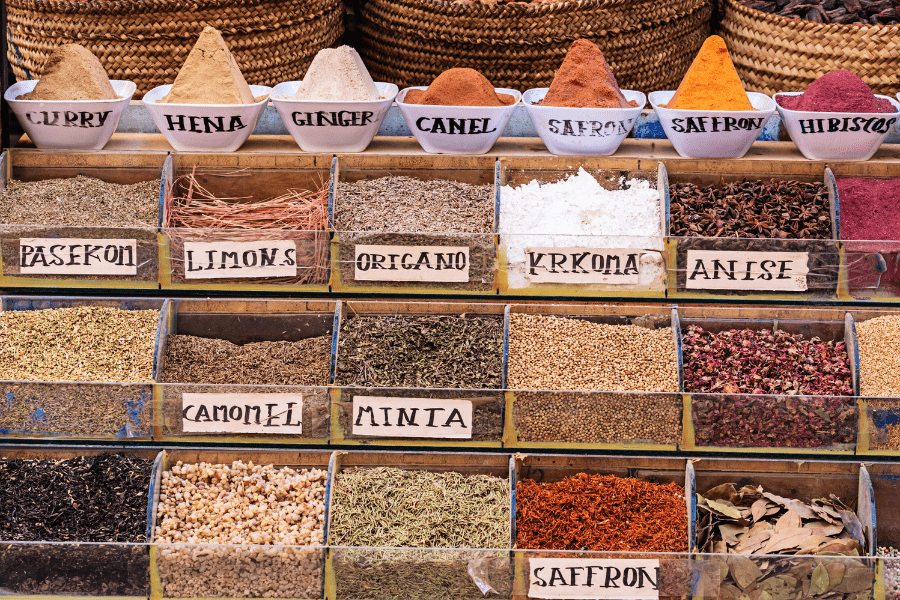
Herbs and Spices: Key Components In An Anti-inflammatory Diet
Herbs and spices are powerful allies in an anti-inflammatory diet, offering both flavor and health benefits. These plant-based ingredients contain potent antioxidants, minerals, and vitamins that help balance inflammation and protect against chronic diseases.
Some Common Herbs For An Anti-Inflammatory Diet
Rosemary (Rosmarinus officinalis L.): Rich in phytonutrients like caffeic acid, carnosic acid, and rosmarinic acid, rosemary has shown benefits in reducing inflammation associated with asthma, atherosclerosis, and liver toxicity (de Oliveira, 2019) .
Basil (Ocimum basilicum L.): This herb offers antioxidant, immunomodulatory, and anti-inflammatory properties, making it useful for conditions involving inflammation and immune dysregulation (Kamelnia, 2023).
Oregano (Origanum vulgare): Contains carvacrol and thymol, which have antibacterial and antifungal properties. Its leaves are rich in anti-inflammatory compounds like phenols and rosmarinic acid, benefiting digestive health.
Mint (Mentha spp.): Particularly peppermint, helps reduce inflammation by suppressing pro-inflammatory mediators and increasing anti-inflammatory prostaglandins. It’s known to soothe digestive issues, with studies showing peppermint oil can reduce IBS symptoms by up to 75% (Cappello, 2007).
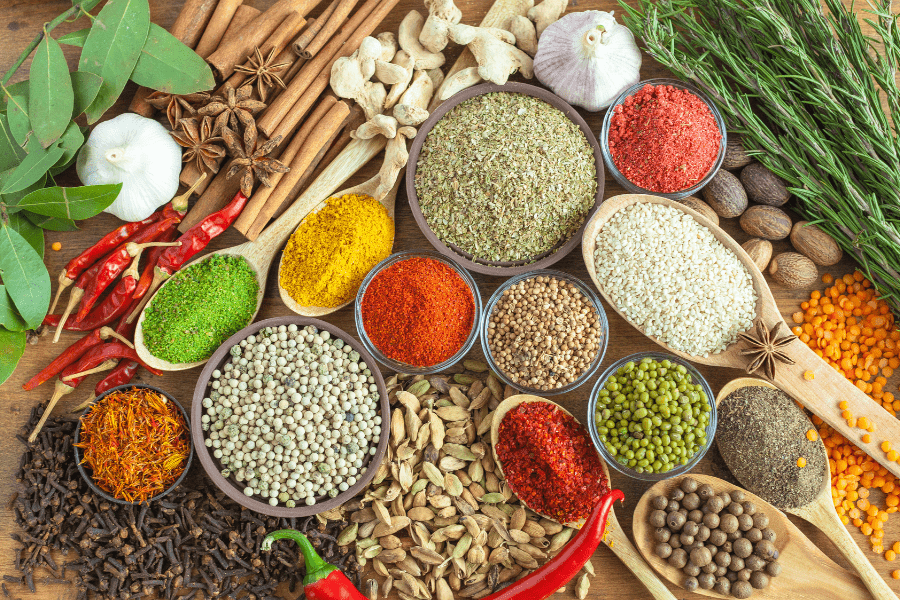
Powerful Spices for an Anti-Inflammatory Diet
- Cardamom (Elettaria cardamomum): Contains various phytonutrients with anti-inflammatory properties, benefiting digestive, oral, lung, liver, and heart health.
- Fennel seeds (Foeniculum vulgare): Rich in polyphenol antioxidants that help reduce the risk of chronic diseases (Chen, 2012).
- Coriander (Coriandrum sativum): Antioxidant-rich with potential to lower blood sugar and reduce arthritis-related inflammation (Scandar, 2023).
- Black pepper: Contains piperine, which enhances the absorption of other anti-inflammatory compounds.
Incorporating Herbs and Spices into Your Diet
- Add fresh herbs to salads, pasta dishes, and smoothies
- Use dried herbs in soups, stews, and baked goods
- Brew herbal teas using fresh herbs
- Create herb-infused oils for cooking and dressing
- Make custom spice rubs for proteins
For optimal benefits, add herbs and spices towards the end of cooking to preserve their health-promoting properties (Isbill, 2020).
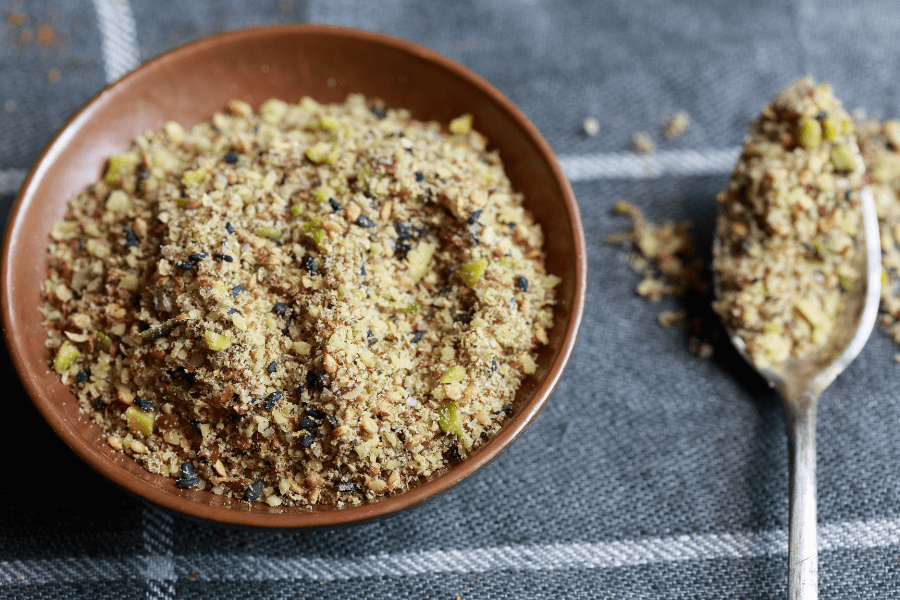
Explore an Egyptian condiment that is used as a dip or topping. Click the button below for my Dukkah recipe.
Growing Your Own Anti-Inflammatory Indoor Garden
Consider growing herbs like basil, chives, mint, oregano, parsley, rosemary, and thyme at home.
These can thrive in small indoor spaces with adequate water and sunlight. Choose a pot with good drainage and place it in a south-facing window for at least six hours of sunlight daily.
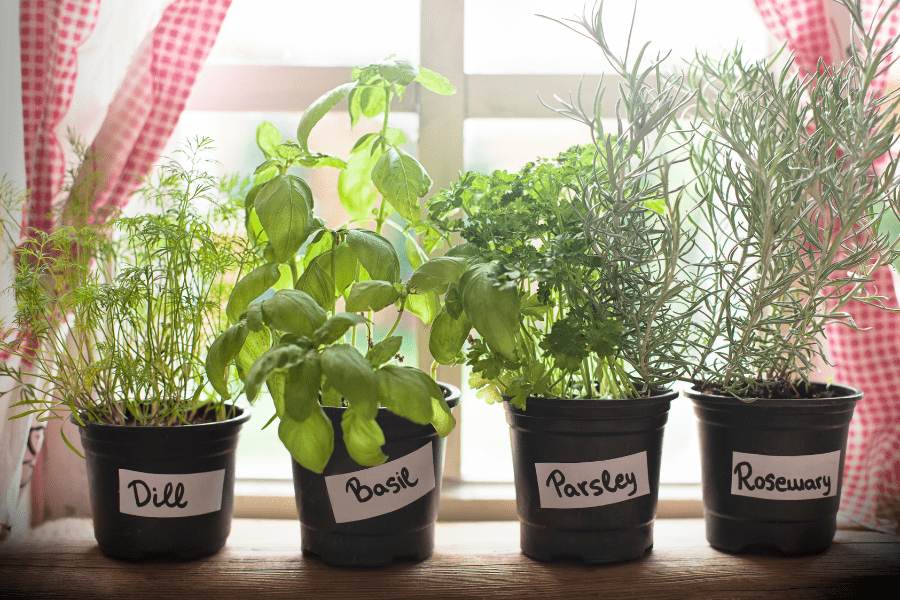
By incorporating a variety of herbs and spices into your diet, you can enhance flavor while supporting balanced inflammatory responses and overall health.
References:
- Cappello, G., Spezzaferro, M., Grossi, L., Manzoli, L., & Marzio, L. (2007). Peppermint oil (Mintoil) in the treatment of irritable bowel syndrome: a prospective double blind placebo-controlled randomized trial. Digestive and liver disease : official journal of the Italian Society of Gastroenterology and the Italian Association for the Study of the Liver, 39(6), 530–536. https://doi.org/10.1016/j.dld.2007.02.006
- Chen, C. H., & deGraffenried, L. A. (2012). Anethole suppressed cell survival and induced apoptosis in human breast cancer cells independent of estrogen receptor status. Phytomedicine : international journal of phytotherapy and phytopharmacology, 19(8-9), 763–767. https://doi.org/10.1016/j.phymed.2012.02.017
- de Oliveira, J. R., Camargo, S. E. A., & de Oliveira, L. D. (2019). Rosmarinus officinalis L. (rosemary) as therapeutic and prophylactic agent. Journal of biomedical science, 26(1), 5. https://doi.org/10.1186/s12929-019-0499-8
- Isbill, J., Kandiah, J., & Kružliaková, N. (2020). Opportunities for Health Promotion: Highlighting Herbs and Spices to Improve Immune Support and Well-being. Integrative medicine (Encinitas, Calif.), 19(5), 30–42.
- Kamelnia, E., Mohebbati, R., Kamelnia, R., El-Seedi, H. R., & Boskabady, M. H. (2023). Anti-inflammatory, immunomodulatory and anti-oxidant effects of Ocimum basilicum L. and its main constituents: A review. Iranian journal of basic medical sciences, 26(6), 617–627. https://doi.org/10.22038/IJBMS.2023.67466.14783
- Scandar, S., Zadra, C., & Marcotullio, M. C. (2023). Coriander (Coriandrum sativum) Polyphenols and Their Nutraceutical Value against Obesity and Metabolic Syndrome. Molecules (Basel, Switzerland), 28(10), 4187. https://doi.org/10.3390/molecules28104187