
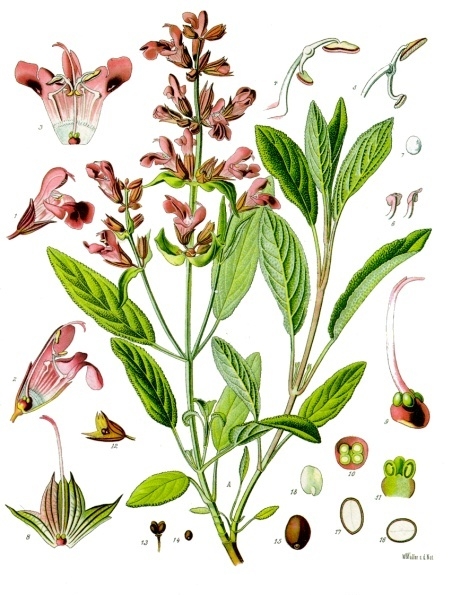
Salvia officinalis L. ~ Garden Sage Monograph
Salvia officinalis has been cultivated in European medicinal gardens without interruption since at least the ninth century, when the Capitulare de Villis — Charlemagne’s imperial plant mandate — required it by name in every estate garden across the Frankish empire. It is listed in Chapter 70 alongside a carefully chosen roster of plants that the Carolingian medical mind considered indispensable: not decorative, not incidental, but foundational to the practice of medicine in a pre-pharmaceutical world.
This monograph examines Salvia officinalis as that tradition understood it — through Galenic temperament, planetary attribution, and the long empirical record of clinical use — while integrating current phytochemical and pharmacological research. For the European regulatory assessment, the European Medicines Agency’s Committee on Herbal Medicinal Products has published a final EU herbal monograph on Salvia officinalis L., folium (revised 2016), which confirms traditional use for dyspeptic complaints and excessive perspiration and represents the most authoritative current regulatory synthesis of the evidence base.
I. Quick Reference
| Accepted Name | Salvia officinalis L. |
| Common Names | Garden Sage, Common Sage, True Sage, Culinary Sage; Sauge officinale (Fr.); Salvia (It., Sp.); Salbei (Ger.) |
| Synonyms | Salvia officinalis L. var. officinalis; Salvia gallica Jord.; Salvia minor Garsault |
| Family | Lamiaceae (Mint Family) |
| Subfamily / Tribe | Nepetoideae / Mentheae |
| Genus | Salvia L. — the largest genus in Lamiaceae, with ~900–1,000 species |
| Species Authority | Carl Linnaeus, Species Plantarum (1753) |
| Native Range | Northern Mediterranean basin: Dalmatian coast (modern Croatia/Bosnia), Italy, southern France, northern Iberia |
| Naturalized Range | Widely naturalized across Europe, the Americas, Asia, and Australia |
| Plant Parts Used | Leaves (fresh and dried); flowering tops; essential oil; rarely, roots (historical) |
| Harvest Season | Leaves: pre-bloom, late spring. Flowering tops: early bloom, June–July. Dry in shade; do not over-heat. |
| Constituent Sensitivity | Volatile oils degrade rapidly above 40°C / 104°F; harvest and process cool |
| Planetary Ruler | Jupiter (primary); Solar affinity strong in pre-Galenic and Renaissance sources |
| Temperament | Hot and Dry, Second Degree (Galen, Dioscorides, Culpeper consensus) |
| Element | Fire |
| Organ Affinities | Brain, liver, uterus, digestive tract, mouth and throat |
| Capitulare de Villis | Chapter 70 — listed as salvia, among the first-named herbs; foundational to the ACB garden canon |
II. Botanical Description & Identification
2.1 Habit and Growth Form
Salvia officinalis is a woody-based evergreen perennial subshrub, typically reaching 30–80 cm in height and spreading to 90 cm across. In its native Mediterranean habitat it grows on rocky, well-drained limestone soils in open, sunny exposures. In cultivation — and in gardens such as the one at Clugnat — it persists reliably for many years when given adequate drainage and sun. The stems are square in cross-section, as is characteristic of the Lamiaceae, and become woody and somewhat gnarled at the base after two or three seasons.
2.2 Leaves
The leaves are the primary medicinal and culinary organ. They are petiolate, ovate to oblong-lanceolate, 2–8 cm in length, and deeply wrinkled (rugose) on both surfaces. The texture is distinctive: thick, densely glandular, and covered with fine whitish hairs (tomentose), which give the foliage its characteristic grey-green color. This dense pubescence is not merely ornamental — it serves to trap volatile oil-bearing trichomes against the leaf surface, concentrating the aromatics and protecting the plant from desiccation in its native rocky, arid habitat. Fresh leaves have a strong, warm, slightly resinous, camphorous aroma. Dried correctly, the scent sharpens and the camphor note becomes more pronounced.
2.3 Flowers
Flowers are borne in whorls of 4–8 on terminal racemes, typically appearing in June and July. They are bilabiate — two-lipped — as is typical of the Lamiaceae, with the upper lip forming a hood and the lower lip divided into three lobes. Color is variable: wild-type plants bear violet-blue to blue-purple flowers, but cultivated forms include white, pink, and bicolor variants. The calyx is also glandular and aromatic. The flowers are pollinated primarily by bumblebees, which must push past the anther mechanism to reach the nectar — Salvia is famously studied for its pollinator lever mechanism, among the most elegant in the plant kingdom.
2.4 Identification Notes for Foragers and Gardeners
Garden sage is unlikely to be confused with dangerous plants by anyone who has smelled it — the aroma is unmistakable. However, some points of identification are worth establishing for clinical documentation:
- Salvia officinalis L. vs. ornamental salvias: Many Salvia species are grown in gardens. S. officinalis specifically has grey-green, rugose, strongly aromatic leaves. Tropical salvias (S. elegans, S. guaranitica, etc.) have smoother, less fragrant foliage.
- Salvia officinalis L. vs. S. lavandulifolia (Spanish sage): Very similar in appearance; Spanish sage is native to Spain and southern France and has narrower leaves. The two species overlap considerably in traditional use and are sometimes used interchangeably in contemporary research, but should be distinguished botanically.
- Salvia officinalis L. vs. S. fruticosa (Greek sage / Cretan sage): Another close relative, widely used in the eastern Mediterranean. Often sold in the herb trade simply as ‘sage.’ Contains higher camphor and 1,8-cineole, lower thujone than garden sage — clinically not equivalent.
For the purposes of this monograph, all content refers strictly to Salvia officinalis L. unless otherwise specified.
III. Historical & Ethnobotanical Record
3.1 Classical Antiquity
Dioscorides (c. 50–70 CE)
Pedanius Dioscorides — the Greek physician whose De Materia Medica remained the foundational pharmacopoeia of Europe and the Islamic world for fifteen centuries — describes Salvia officinalis L. e (elelisphakon and sphakos; the Latin salvia appears in later translations) as hot and dry in temperament and assigns it a broad range of applications. He records its use for promoting urine and menses, treating wounds and ulcers, for cleaning and healing the mouth, for coughs and hoarseness, and as an emmenagogue. He distinguishes between wild and cultivated forms, noting that the wild is stronger in action — a distinction that reflects the Galenic principle that plants growing in harsher conditions develop more concentrated qualities.
Galen (c. 129–216 CE)
Galen confirms the hot-and-dry temperament of Salvia officinalis L. explicitly. In his system, sage falls into the second degree of heat and the second degree of dryness — meaning it is warm and drying enough to be medicinally active, but not so extreme as to be dangerous in normal therapeutic use. He uses it primarily for its action on the brain (warming and clearing), the digestive tract (carminative, tonic), and for its wound-healing properties. Galen’s temperament assignment for sage remained essentially unchanged through Avicenna, the Arab pharmacopoeia, the medieval herbalists, and into the early modern period — a consensus of roughly fifteen hundred years.
Pliny the Elder (23–79 CE)
Historia Naturalis records sage under the names salvia and salviana — names already implying the healing action — and notes its use for snake bite, as a diuretic, for stopping bleeding, and for preserving memory. Pliny’s accounts are less clinically precise than Galen’s, but they confirm the widespread Mediterranean reputation of sage as a broadly useful, warming, restorative herb.
3.2 The Carolingian Record
Capitulare de Villis (c. 795–800 CE)
Salvia officinalis L. is listed in Chapter 70 of the Capitulare de Villis — the imperial edict issued under Charlemagne that specified which plants were to be grown on the crown estates of the Frankish realm. It appears near the beginning of the herb list, in the company of plants with well-established classical pedigrees: costmary, fenugreek, wormwood, horehound, fennel. This placement is not alphabetical and is almost certainly meaningful — the plants that open the list are those with the strongest classical documentation and the broadest practical utility.
Sage’s inclusion in Chapter 70 is therefore doubly significant for the At Charlemagne’s Behest project. It confirms that garden sage was considered essential to a properly equipped Carolingian household. And its name — salvia — carries the classical authority of fifteen centuries of European and Mediterranean use. This is not a plant that needed to be introduced to the Frankish world. It was already there, already understood, already standard.
Strabo’s Hortulus (c. 840 CE)
The Benedictine monk Walafrid Strabo, writing his poem Hortulus (‘The Little Garden’) at the monastery of Reichenau on Lake Constance, describes Salvia officinalis L. with evident affection. He calls it salvia and writes of its grey leaves, its healing qualities, and its divine usefulness. Strabo’s poem is not a medical text — it is a gardener’s meditation — but its inclusion of sage, described with the same vocabulary of warming and cleansing that runs through the Galenic tradition, confirms that the classical understanding of this plant passed intact into the Carolingian monastery garden.
The School of Salerno (10th–12th centuries)
The Regimen Sanitatis Salernitanum, the famous health manual produced by the medical school at Salerno, contains one of the most quoted lines in herbal history: Cur moriatur homo, cui salvia crescit in horto? — ‘Why should a man die, in whose garden sage grows?’ This is rhetorical excess, not clinical instruction, but it encodes the genuine esteem in which Salvia officinalis L. was held by medieval European medicine. The Salernitan physicians, who translated Arabic medical texts and integrated Greek clinical tradition into a working medical school, placed sage at the very top of their therapeutic hierarchy.
3.3 Islamic Golden Age
Avicenna / Ibn Sina (980–1037 CE)
Avicenna’s Canon of Medicine — the most comprehensive and systematically organized medical text between Galen and the sixteenth century — treats Salvia officinalis L. (al-maryamiyyah) with characteristic precision. He confirms hot and dry in the second degree, and extends the clinical applications in a direction particularly relevant to contemporary herbalism: he notes sage’s action on the brain and nervous system, its use for tremors and palsy, its benefit for memory and cognition, and its warming action on the cold, phlegmatic constitution. Avicenna’s neurological applications for sage anticipate the direction that twenty-first-century research has taken by nearly a thousand years.
3.4 Medieval European Herbalism
Hildegard of Bingen (1098–1179 CE)
Hildegard, writing in her Physica and Causae et Curae, treats sage as hot and dry, warming the stomach, calming the digestive tract, and drying excessive moisture in the head and brain. Her framework is Galenic in its broad outlines but filtered through a vigorously Christian cosmology in which the healing properties of plants are expressions of the viriditas — the greening power — implanted in creation by God. She prescribes sage for phlegmatic conditions of the stomach and head, which maps precisely onto the mainstream classical tradition.
John Gerard (1597) and Nicholas Culpeper (1653)
Both of the major English herbalists of the sixteenth and seventeenth centuries treat sage as a Jupiter herb, hot and dry in the second degree, and extend the list of indications further into the early modern period. Culpeper specifically recommends it for trembling of the limbs, for palsies, for the memory, for the mouth and throat, and — in a recommendation that reads like something from a contemporary women’s health text — for stopping excessive menstruation and assisting during labor.
Gerard confirms the classical applications for the brain, liver, and digestive system and adds a characteristic note about the grey-green leaves being useful for cleaning the teeth. The continuity of the tradition from Dioscorides through Culpeper — sixteen centuries — is unusual even among well-documented medicinal plants.
IV. Galenic Energetics & Temperament
4.1 Temperament Summary Table
| Quality | Degree | Primary Source | Clinical Implication |
| Heat | Second | Galen, Dioscorides, Avicenna, Culpeper | Warms cold, phlegmatic constitutions; disperses cold stagnation |
| Dryness | Second | Galen, Hildegard, Culpeper | Dries excess moisture; reduces phlegm, dampness in head and gut |
| Element | Fire | Consistent tradition | Activating, ascending, clarifying; moves stagnant energy upward |
| Planetary Ruler | Jupiter (Solar affinity) | Culpeper primary; earlier sources Solar or Jovian | Expansive, generative, hepatic, brain-clarifying; vitality-restoring |
4.2 Analytical Notes on Temperament
The consensus on Salvia officinalis L.’s temperament is unusually clean by historical standards. Across Dioscorides, Galen, Avicenna, Hildegard, Gerard, and Culpeper, the assignment of hot and dry in the second degree is essentially uniform — a consensus that spans more than fifteen centuries, three linguistic traditions (Greek, Arabic, Latin-vernacular), and the full span of Mediterranean and northern European medicine.
This consistency is itself clinically significant. When a plant’s temperament assessment holds this steady across independent traditions working from both direct observation and inherited text, it is reasonable to treat the assessment as reflecting something real about the plant’s physiological action.
The second degree of heat and dryness is an important qualifier. Sage is not hot in the third or fourth degree — it is not ginger or black pepper, not cayenne or mustard. It is warming without being aggressive. This is precisely why it can be used over extended periods and in populations that cannot tolerate strong heat — the elderly, the chronically depleted, the phlegmatic individual who runs cold and damp. The second degree allows for sustained tonic action rather than acute stimulation.
4.3 Planetary Attribution: Jupiter and Solar Affinity
Culpeper assigns sage firmly to Jupiter, a placement that makes coherent sense within the astro-herbalism framework. Jupiter rules the liver, the blood, and the expansive, generative principle in the body. Sage’s historical applications for the liver (tonic, hepatoprotective), for the blood (as a general vitality restorative), and for the brain (warming, clarifying, memory-supporting) are all Jovian in their direction. Jupiter also governs the capacity to assimilate and distribute — which maps neatly onto sage’s action in the digestive tract.
The Solar affinity present in pre-Culpeper sources is not contradictory. The Sun rules the heart, the vital spirit, and the capacity for heat and light — and sage’s strongly aromatic, volatile, warming quality has a solar character. Some astro-herbalism practitioners work with both planetary attributions, using sage as a Jovian herb when the application is hepatic, tonic, or cognitively restorative, and as a Solar herb when the application is acute, warming, and dispersing. For the ACB project, the Jovian attribution is primary, but the Solar affinity is worth noting for clinical flexibility.
4.4 Organ Affinities and the Galenic Framework
Within the Galenic organ system, Salvia officinalis L.’s primary affinities are:
- Brain and Nervous System: Warming and drying to the cold, damp brain; clearing phlegmatic obstruction; strengthening memory. This is the application Avicenna develops most fully and the one that modern neuropharmacology has most directly confirmed.
- Liver: Tonic, hepatoprotective; Jovian in its action; supports the liver’s capacity to generate and distribute blood. Modern research has confirmed hepatoprotective phenolic activity.
- Uterus and Reproductive System: Emmenagogue, drying to excess uterine moisture; historically used to suppress lactation post-weaning, to reduce night sweats in menopausal women, and (with great care) to facilitate labor. The estrogenic activity identified in modern research provides a partial mechanistic explanation.
- Digestive Tract: Carminative, antispasmodic, bitter tonic, antimicrobial. The combination of volatile oils and phenolic bitters makes sage one of the most comprehensively digestive herbs in the Western canon. Galen, Hildegard, and Culpeper all emphasize this application.
- Mouth and Throat: Astringent, antimicrobial, vulnerary; traditional as a gargle for sore throats and as a tooth powder for gum disease. The antimicrobial constituents (thymol, carvacrol, rosmarinic acid) provide direct support for these uses.
V. Astro-Herbalism Analysis
5.1 Jupiter and the Sage Signature
In the Sajah Popham’s School of Evolutionary Herbalism framework that informs this project, the astro-herbalism analysis moves beyond simple planetary assignment to ask: what is the evolutionary and spiritual narrative of this plant’s relationship with its planetary ruler? For sage and Jupiter, the narrative is coherent and deep.
Jupiter governs expansion, abundance, the overarching pattern that organizes the individual toward right relationship with the cosmos. In the body, Jupiter rules the liver — the great organ of distribution, the metabolic center that processes what enters and decides what gets sent where. Jupiter also governs the principle of wisdom, of accumulated experience becoming structured understanding.
Salvia officinalis L., in this framework, is precisely the plant that embodies this principle: it has been used continuously across fifteen centuries of organized European medicine, it has survived every pharmacological revolution and dietary fashion, and it has done so because it works. Its actions are measurable, consistent, and broad. It does not perform one narrow biochemical trick — it supports the body’s own organizational capacity. That is a Jovian plant.
5.2 The ACB Personal Chart Resonance
As documented in my ACB natal chart analysis, my natal chart is phlegmatic-dominant, with Saturn in Virgo providing the clinical, discerning, structuring edge. Sage as the ACB synthesis plant is not merely thematic — it is astrologically apt. The Jovian warmth of sage counters the cool, damp tendency of the phlegmatic constitution. Saturn in Virgo benefits from Jovian expansiveness — the precision and discrimination of Saturn are supported, not undermined, by Jupiter’s organizational breadth. Sage doesn’t dissolve the analytical capacity; it warms and enlivens it. The plant that belongs on the desk of a clinical herbalist who tends to run cold and damp, who works with precision and reserve, is precisely sage — warming, clarifying, hepatic, and cognitively restorative.
5.3 The Doctrine of Signatures
The doctrine of signatures — the traditional reading of a plant’s morphological characteristics as indicators of its medicinal action — applies to sage with unusual clarity:
- Grey-green color: The cool, silver-grey of sage leaf, produced by dense white hairs over green tissue, signals the interplay of moisture-control and vital warmth. In the signature tradition, grey-silver leaves often indicate action on the brain and nervous system, and on the phlegmatic constitution.
- Rugose (wrinkled) texture: Deeply wrinkled leaves in the signature tradition indicate action on the brain (which is itself deeply folded and wrinkled). This is a signature that appears in multiple independent herbal traditions for plants with cognitive action.
- Persistent evergreen habit: Sage holds its leaves through winter — a plant that does not retreat, does not go dormant, maintains its substance through cold and difficulty. In the signature tradition this indicates tonic action on vitality and longevity. The Salernitan question — ‘Why should a man die in whose garden sage grows?’ — is, in part, a signature reading.
- Strong, complex aroma: The density of volatile oils in sage leaf is immediately perceptible to the nose. In the signature tradition, strongly aromatic plants work on the nervous system, the brain, and on conditions of cold, damp stagnation. The nose knows — and sage does not hide what it does.
VI. Phytochemical Profile
6.1 Overview
Salvia officinalis is among the most thoroughly studied aromatic herbs in Western phytochemistry. Its chemical complexity is substantial — the following sections cover the primary constituent families, their major individual compounds, and the clinical implications of each. The balance of constituents varies with growing conditions, harvest timing, plant age, and processing method; this document reflects the profile of properly cultivated and harvested Salvia officinalis L.
6.2 Volatile Oil (Essential Oil)
The essential oil of sage is the most studied and clinically significant constituent family. Yield ranges from 1.0–3.0% of dry leaf weight, depending on cultivar and growing conditions. The principal components:
| Compound | Typical Range | Clinical / Pharmacological Notes |
| α-Thujone + β-Thujone | 12–35% | The most studied and most debated sage constituent. Neurotoxic in excess (GABA-A receptor antagonism); convulsant at high doses. Also the primary constituent associated with antimicrobial, antifungal, and insect-repellent activity. Not present in significant amounts in aqueous extracts (teas); primary safety concern is isolated essential oil ingestion or prolonged high-dose tincture use. |
| 1,8-Cineole (Eucalyptol) | 3–14% | Mucolytic, anti-inflammatory, bronchodilatory; contributes to sage’s historical use for coughs and respiratory congestion. Also associated with cognitive enhancement — 1,8-cineole has direct acetylcholinesterase inhibitory activity. |
| Camphor | 5–22% | Stimulant, counterirritant; contributes to the characteristic sharp, cooling-then-warming sensory quality of sage. Elevates in stressed or aged plants. High camphor strains are generally less desirable for culinary use but not clinically excluded. |
| α-Pinene, β-Pinene | 1–6% | Anti-inflammatory, bronchodilatory; contribute to the resinous, piney top note of the essential oil. Pinenes have demonstrated acetylcholinesterase inhibitory activity, supporting the cognitive applications. |
| Borneol | 2–8% | Antimicrobial, antispasmodic; contributes to sage’s traditional use for muscle spasm and for oral and throat infections. |
| Linalool | 0.5–3% | Anxiolytic, sedative at higher concentrations; contributes to the smoothing of the more aggressive volatile notes in fresh sage. |
| β-Caryophyllene | 0.5–4% | Anti-inflammatory via CB2 receptor partial agonism; sesquiterpene constituent shared with many Lamiaceae; contributes to the herbal, slightly spicy background note. |
6.3 Phenolic Diterpenes (Abietane-Type)
This constituent family is responsible for much of sage’s antioxidant, hepatoprotective, and cytotoxic activity as identified in contemporary research. These are fat-soluble, heat-stable compounds that survive cooking and concentrated extraction.
| Compound | Notes |
| Carnosic acid | The dominant phenolic diterpene; potent lipophilic antioxidant; anti-inflammatory; demonstrates hepatoprotective activity in cell and animal models. Degrades on heating to form carnosol. |
| Carnosol | Degradation product of carnosic acid; retains and in some models exceeds the antioxidant activity of the parent compound. Demonstrates cytotoxic activity against several cancer cell lines in vitro. Anti-inflammatory via NF-κB pathway inhibition. |
| Rosmadial | Less studied; contributes to antioxidant pool. Structurally related to carnosic acid. |
| Ursolic acid | Pentacyclic triterpenoid (also classified separately); anti-inflammatory, hepatoprotective, hypoglycemic, cytotoxic in multiple cell lines. Shared with rosemary, oregano, and other Lamiaceae. |
6.4 Phenolic Acids
Water-soluble; present in aqueous extracts (teas and infusions). Primary clinical significance: antioxidant, anti-inflammatory, antimicrobial, and cognitively active.
| Compound | Notes |
| Rosmarinic acid | The most abundant phenolic acid in sage; potent antioxidant and anti-inflammatory; demonstrated acetylcholinesterase inhibitory activity — one of the key mechanisms underlying sage’s cognitive applications. Water-soluble; well-extracted in teas. |
| Caffeic acid | Antioxidant, anti-inflammatory; structural precursor to rosmarinic acid and many other hydroxycinnamic acids in the Lamiaceae. |
| Salvianolic acids (A, B, C, etc.) | A distinctive group of polyphenolic compounds found in the Salvia genus; potent antioxidants; cardioprotective and hepatoprotective activity demonstrated in multiple models. |
| Chlorogenic acid | Present in smaller amounts; contributes to overall antioxidant capacity; hypoglycemic activity. |
6.5 Flavonoids
Sage contains a broad range of flavonoids, including luteolin, apigenin, quercetin, and their glycosides. These compounds contribute anti-inflammatory, antioxidant, and estrogenic activity. Luteolin and apigenin in particular have been studied for anxiolytic and anti-inflammatory effects. The estrogenic flavonoids are relevant to sage’s traditional use in menopausal symptom management.
6.6 Tannins
Sage is moderately astringent due to the presence of both condensed tannins (proanthocyanidins) and hydrolyzable tannins (gallotannins, ellagitannins). These contribute the drying, tissue-contracting action that underlies the traditional use of sage as a gargle for sore throats, as a treatment for excessive sweating, and as an oral astringent for bleeding or inflamed gums.
6.7 Estrogenic Constituents
Sage contains several compounds with demonstrated estrogenic activity, including estriol (a naturally occurring phytoestrogen), certain flavonoids (luteolin, apigenin, quercetin), and diterpenoids with estrogen receptor affinity. This estrogenic activity is the proposed mechanistic basis for the traditional use of sage in managing menopausal hot flashes, reducing night sweats, and suppressing lactation — applications that have been studied in small clinical trials with positive results.
Clinical note: The estrogenic activity of Salvia officinalis L.e is mild and appears to operate by estrogen receptor modulation rather than direct hormonal supplementation. Nonetheless, it should be used with appropriate caution in individuals with estrogen-sensitive conditions, and discussed with the treating clinician when used alongside hormonal therapies.
VII. Pharmacological Activity & Research
7.1 Cognitive Function and Neuroprotection
This is the area of contemporary sage research that has received the most attention and has produced the most clinically relevant findings — and it is the area that shows the most striking correspondence between Galenic tradition and modern mechanism.
Acetylcholinesterase (AChE) inhibition is the primary mechanism under study. AChE is the enzyme that breaks down acetylcholine in the synaptic cleft; inhibiting it increases the availability of acetylcholine, which is essential for memory encoding and cognitive function. Multiple sage constituents — rosmarinic acid, the pinenes, 1,8-cineole, and certain diterpenes — have demonstrated AChE inhibitory activity in vitro. This is the same pharmacological target as several pharmaceutical drugs used in Alzheimer’s disease management (donepezil, rivastigmine, galantamine).
Clinical studies (primarily randomized controlled trials using standardized sage extracts or Salvia lavandulifolia essential oil, with some trials using S. officinalis) have demonstrated: improved immediate word recall, improved delayed word recall, reduced mental fatigue, improved attention and alertness, and a dose-dependent effect with higher doses generally producing stronger results. The Kennedy et al. studies (2006, 2017) at Northumbria University are the most frequently cited, using both acute and four-week administration protocols in healthy adult volunteers. Effect sizes are modest but consistent.
The Galenic tradition’s emphasis on Salvia officinalis L. as a plant for the brain — warming, clarifying, memory-supporting — maps with unusual precision onto the AChE inhibitory mechanism. A cold, damp brain, in Galenic terms, is a brain with insufficient metabolic warmth to clear phlegmatic obstruction. In neurochemical terms, a brain with insufficient cholinergic tone cannot encode and retrieve memories efficiently. The parallel is not metaphorical coincidence — it appears to be tracking a genuine physiological reality through two different descriptive frameworks.
7.2 Antimicrobial Activity
Sage essential oil has broad-spectrum antimicrobial activity, demonstrated against a wide range of gram-positive and gram-negative bacteria, fungi (including Candida albicans), and several viruses. The primary antimicrobial constituents are the monoterpene phenols and ketones: thymol, carvacrol, thujone, borneol, and camphor. The combination of these compounds appears to act synergistically — activity of the whole oil typically exceeds that of individual isolated components.
Practical clinical applications: sage tea and gargle for streptococcal and viral sore throats (supported by both tradition and a small number of clinical trials); sage as a preservative and antimicrobial in traditional food preparation (the historical use of sage to preserve meat and cheese is a direct application of this activity); sage essential oil in topical preparations for fungal skin conditions and infected wounds.
7.3 Menopause and Hormonal Applications
Several small to medium-scale clinical trials have investigated sage for menopausal symptoms, particularly hot flashes and night sweats. Results are generally positive: a 2011 trial by Bommer et al. (published in Advances in Therapy) found significant reduction in hot flash frequency and intensity over eight weeks using a standardized sage tablet preparation. A 2016 systematic review found consistent, if modest, evidence supporting sage for vasomotor symptoms in menopause.
The proposed mechanism — estrogenic activity via flavonoids and diterpenoids acting on estrogen receptors — is plausible and consistent with the plant’s phytochemical profile. The clinical tradition is ancient: Salvia officinalis L.’s use for suppressing lactation (a direct anti-estrogenic application in the context of weaning) and for regulating menstruation appears in Dioscorides, Galen, Avicenna, Hildegard, and Culpeper. The continuity and the mechanistic explanation are mutually reinforcing.
7.4 Anti-inflammatory and Antioxidant Activity
Sage extracts demonstrate substantial anti-inflammatory activity in multiple in vitro and animal models, primarily through inhibition of the COX-2 enzyme pathway (prostaglandin synthesis) and the NF-κB transcription pathway (a master regulator of inflammatory gene expression). Carnosol, carnosic acid, and rosmarinic acid are the primary active constituents in this regard. These findings are consistent with the traditional use of sage as a wound herb, an oral anti-inflammatory, and a digestive anti-inflammatory.
Antioxidant capacity has been measured by DPPH, ABTS, FRAP, and ORAC assays across numerous studies. Sage consistently ranks among the highest antioxidant herbs in the Western pharmacopoeia, with activity comparable to or exceeding rosemary (its close botanical and chemical relative), oregano, and thyme.
7.5 Digestive Applications
Sage’s digestive applications are among its most thoroughly traditional and clinically uncontroversial. The combination of bitter phenolics (stimulating bile production and gastric secretion), carminative volatile oils (reducing gas and intestinal spasm), and antimicrobial constituents (reducing pathogenic gut flora overgrowth) makes sage a comprehensively useful digestive herb. Modern digestive research has paid less attention to sage than to some other Lamiaceae (peppermint has attracted far more clinical trial investment), but the traditional evidence base here is wide and deep.
7.6 Hypoglycemic Activity
Several animal studies have demonstrated blood glucose-lowering activity for sage extracts, with proposed mechanisms including inhibition of intestinal glucose absorption and improved insulin sensitivity. One small clinical trial in type 2 diabetic patients showed a significant reduction in fasting blood glucose and HbA1c with sage supplementation. This is an area requiring further clinical investigation but is consistent with the plant’s Jovian, hepatic, metabolic character in the Galenic framework.
VIII. Traditional Preparations & Dosage
8.1 Standard Preparations
| Preparation | Method | Primary Applications |
| Standard Infusion | 1–2 tsp dried leaf per cup; steep 10–15 minutes covered; 1–3 cups daily | Cognitive support, digestive complaints, menopausal symptoms, sore throat (drunk or used as gargle), general tonic |
| Cold Infusion | 1–2 tsp dried leaf in cold water; steep 4–8 hours refrigerated; strain and drink | Preserves volatile oils and heat-sensitive phenolics; preferred for fresh-plant preparations; menopausal applications |
| Tincture (1:5, 40% alcohol) | 1–4 mL, three times daily | Cognitive support, hormonal regulation, digestive tonic; convenient for sustained use |
| Gargle / Mouth Wash | Strong infusion (double strength) or diluted tincture; gargle 30–60 seconds, 3–4x daily | Sore throat, pharyngitis, tonsillitis, gingivitis, mouth ulcers; well-supported by tradition and antimicrobial evidence |
| Culinary Use (fresh or dried) | As prepared; used in cooking | Digestive support with fatty meals; antimicrobial food preservation; general tonic via daily dietary use. The most accessible and historically continuous form of sage medicine. |
| Essential Oil (topical only) | 2–3 drops in 10 mL carrier oil; do not ingest essential oil | Topical antimicrobial, wound healing, insect repellent; massage for muscular aches. Internal use of essential oil is not recommended in contemporary clinical practice. |
| Honey Infusion / Electuary | Pack fresh leaves in raw honey; infuse 4–6 weeks; use by the teaspoon | Sore throat, cough, hoarseness; cognitively restorative winter tonic; historically documented preparation |
8.2 Historical Recipes of Note
Sage Wine (Medieval–Early Modern)
Sage leaves macerated in wine — white wine preferred — was a standard preparation in medieval and early modern European domestic medicine. The wine acted as both solvent and preservative, extracting the fat-soluble diterpenes and volatile oils that an aqueous infusion would not capture as efficiently. Sage wine appears in multiple medieval household compendia and is referenced by Hildegard, the Salernitan tradition, and numerous early modern domestic medicine books. It was used as a digestive tonic, a warming restorative, and — taken in small amounts before meals — as an appetite stimulant. This is a preparation that could be reconstructed for the ACB historical record without difficulty.
Sage Tooth Powder (Medieval–19th century)
Dried sage leaf, ground to a fine powder, was one of the most consistently recorded tooth-care preparations in the Western domestic tradition. Used by rubbing directly onto the gums and teeth with a finger or cloth, it combined the astringent tannins (for gum tightening), the antimicrobial volatile oils (for oral pathogen control), and the abrasive powder (for mechanical cleaning). This preparation appears in sources from the medieval period through to the nineteenth century and represents an ideal historical reconstruction.
IX. Contraindications & Safety
9.1 Absolute Contraindications
- Pregnancy: Salvia officinalis L. has well-documented emmenagogue and uterine-stimulating activity. Therapeutic doses are contraindicated throughout pregnancy. Culinary use in normal cooking quantities is generally considered safe.
- Epilepsy or seizure disorders: The thujone content of sage essential oil has GABA-A antagonist activity and is potentially convulsant at high doses. Isolated essential oil is contraindicated; high-dose tincture should be used with caution and medical consultation.
- Internal use of essential oil: Not recommended in contemporary clinical practice under any circumstances. Essential oil ingestion can cause thujone toxicity even in small amounts.
9.2 Relative Contraindications and Cautions
- Estrogen-sensitive conditions (estrogen-receptor-positive breast cancer, endometriosis, uterine fibroids): The estrogenic flavonoids and diterpenoids in sage may be contraindicated or require supervision. Discuss with the treating clinician.
- Lactation (if continued breastfeeding is desired): Sage has a traditional and likely pharmacologically grounded reputation for suppressing milk production. Avoid therapeutic doses during lactation if continued nursing is intended.
- Hypoglycemic medications: Additive blood glucose-lowering effects are possible. Monitor blood glucose when using sage therapeutically alongside antidiabetic medications.
- Anticoagulant medications: Sage contains vitamin K; theoretically may reduce the effectiveness of warfarin. Consistent culinary use is not a clinical concern; high-dose supplementation alongside anticoagulant therapy warrants discussion.
- Kidney disease: High doses of sage essential oil are nephrotoxic. Aqueous preparations at standard doses are not considered a concern, but therapeutic dose tinctures in individuals with compromised kidney function warrant caution.
9.3 A Note on Thujone and Dose
The thujone content of sage has attracted disproportionate concern in some contemporary herbalism and regulatory contexts, partly as a consequence of the thujone panic around absinthe in the early twentieth century. In clinical perspective, the relevant data is as follows: thujone is present in sage leaf in amounts that are clinically significant only in concentrated essential oil or very high-dose alcohol extracts. Standard aqueous infusions (teas) contain negligible thujone — it is not water-soluble. Standard tincture doses at 1:5, 40% alcohol, 1–4 mL three times daily are well within safety margins established by both traditional use and pharmacological assessment. The thujone concern is real for isolated essential oil and for abusive or extreme doses; it is not a basis for avoiding sage in normal therapeutic or culinary use.
X. Sage in the Carolingian Garden: An ACB Note
Sage’s place in the At Charlemagne’s Behest project is not merely archival. It is not included in this garden because the Capitulare de Villis said to plant it — though it did — and it is not analyzed in this monograph simply because it has fifteen centuries of documented use — though it does. Salvia officinalis L. is the ACB synthesis plant because it exemplifies what this project is about.
It is a plant that has held its position in European medicine without interruption from Dioscorides through Culpeper and into the twenty-first century. Every generation of European herbalists — Greek, Arab, Benedictine, Salernitan, English — looked at this plant, worked with it, documented what they found, and handed it forward. The tradition did not hold because people were credulous or because they lacked better options. It held because sage works, because it is verifiably active, and because its clinical applications are stable enough to survive every pharmacological revolution and remain recognizable to modern research.
At Charlemagne’s Behest is, in part, an argument that this kind of continuity matters — that fifteen hundred years of consistent clinical documentation across independent traditions is not anecdote but evidence of a different kind. The sage in this garden at Clugnat, in the Creuse, in France, is the same plant that Walafrid Strabo grew at Reichenau. The phytochemistry has not changed. The Galenic framework did not get everything right, but it got sage right. And the research is, decade by decade, explaining why.
XI. Materia Medica Summary
| Latin Binomial | Salvia officinalis L. |
| Family | Lamiaceae |
| Part Used | Leaf (primary); flowering tops; essential oil (topical only) |
| Taste | Aromatic, warm, slightly bitter, astringent |
| Temperament | Hot and Dry, Second Degree |
| Element | Fire |
| Planetary Ruler | Jupiter (Solar affinity) |
| Primary Affinities | Brain, liver, uterus, digestive tract, mouth and throat |
| Key Actions | Carminative, antimicrobial, antioxidant, anti-inflammatory, astringent, emmenagogue, antihidrotic, AChE inhibitor, estrogenic (mild), hepatoprotective |
| Key Constituents | Volatile oil (thujone, 1,8-cineole, camphor, borneol); phenolic diterpenes (carnosic acid, carnosol); phenolic acids (rosmarinic acid, salvianolic acids); flavonoids (luteolin, apigenin); tannins |
| Standard Dose | Infusion: 1–2 tsp dried leaf, 1–3 cups daily. Tincture (1:5, 40%): 1–4 mL three times daily |
| Contraindications | Pregnancy (therapeutic doses); epilepsy; essential oil ingestion; estrogen-sensitive conditions (relative); active lactation if nursing to continue |
| Interactions | Antidiabetic medications (additive); anticoagulants (high dose, theoretical); sedatives (additive at high dose) |
| Historical Consensus | Hot and dry, second degree: Dioscorides, Galen, Avicenna, Hildegard, Gerard, Culpeper — fifteen centuries of unbroken tradition |
| Capitulare Citation | Chapter 70: salvia — among the first herbs named; foundational Carolingian garden plant |
| Research Status | Cognitive function: small RCTs, positive; antimicrobial: strong in vitro; menopause: small trials, positive; anti-inflammatory/antioxidant: strong in vitro and animal; hypoglycemic: preliminary |
XII. Sources & Bibliography
Primary Historical Sources
Avicenna (Ibn Sina). Canon of Medicine (Al-Qanun fi al-Tibb). c. 1025 CE. Translated by O. Cameron Gruner. London: Luzac, 1930.
Capitulare de Villis vel Curtis Imperialibus. c. 771–800 CE. In Monumenta Germaniae Historica, Capitularia Regum Francorum, Vol. 1. Ed. Alfred Boretius. Hannover, 1883.
Culpeper, Nicholas. The Complete Herbal. London: Thomas Kelly, 1653. (Multiple modern editions.)
Dioscorides, Pedanius. De Materia Medica. c. 65 CE. Translated by Lily Y. Beck. Hildesheim: Olms-Weidmann, 2005.
Galen of Pergamon. De Simplicium Medicamentorum Temperamentis ac Facultatibus. c. 180 CE. In Opera Omnia, ed. C.G. Kühn. Leipzig, 1821–1833.
Gerard, John. The Herball, or Generall Historie of Plantes. London: John Norton, 1597.
Hildegard von Bingen. Physica. c. 1150 CE. Translated by Priscilla Throop. Rochester, VT: Healing Arts Press, 1998.
Strabo, Walafrid. Hortulus. c. 840 CE. Translated by Raef Payne. Pittsburgh: Hunt Botanical Library, 1966.
Phytochemistry & Pharmacology
Bommer, S., Klein, P., & Suter, A. (2011). First time proof of sage’s tolerability and efficacy in menopausal women with hot flushes. Advances in Therapy, 28(6), 490–500.
Kennedy, D.O., & Scholey, A.B. (2006). The psychopharmacology of European herbs with cognition-enhancing properties. Current Pharmaceutical Design, 12(35), 4613–4623.
Lopresti, A.L. (2017). Salvia (sage): A review of its potential cognitive-enhancing and protective effects. Drugs in R&D, 17(1), 53–64.
Lu, Y., & Foo, L.Y. (2001). Antioxidant activities of polyphenols from sage (Salvia officinalis). Food Chemistry, 75(2), 197–202.
Miura, K., Kikuzaki, H., & Nakatani, N. (2002). Antioxidant activity of chemical components from sage (Salvia officinalis L.) and thyme (Thymus vulgaris L.) measured by the oil stability index method. Journal of Agricultural and Food Chemistry, 50(7), 1845–1851.
Pereira, O.R., & Cardoso, S.M. (2013). Overview on Mentha and Salvia genus phytochemistry and biological properties. Natural Products Communications, 8(10), 1871–1878.
Raal, A., Orav, A., & Arak, E. (2007). Composition of the essential oil of Salvia officinalis L. from various European countries. Natural Product Research, 21(5), 406–411.
Savelev, S., Okello, E., Perry, N.S.L., Wilkins, R.M., & Perry, E.K. (2003). Synergistic and antagonistic interactions of anticholinesterase terpenoids in Salvia lavandulaefolia essential oil. Pharmacology Biochemistry and Behavior, 75(3), 661–668.
Astro-Herbalism and Vitalist Frameworks
Culpeper, Nicholas. Culpeper’s Complete Herbal & English Physician. Manchester: J. Gleave, 1826. (Planetary attributions throughout.)
Popham, Sajah. Evolutionary Herbalism: Science, Spirituality, and Medicine from the Heart of Nature. Berkeley: North Atlantic Books, 2019.
Wood, Matthew. The Earthwise Herbal: A Complete Guide to Old World Medicinal Plants. Berkeley: North Atlantic Books, 2008.
ACB Project References
Smith-Kizer, Carolyn. ‘At Charlemagne’s Behest: The Capitulare de Villis and the Living Galenic Garden.’ atcharlemagnesbehest.com. EP1 Pillar Post, 2025.
Smith-Kizer, Carolyn. Natal chart analysis and ACB synthesis plant identification. Internal ACB working document, 2025.