
Echinacea and Elder: Two Cold-Season Allies Compared
When the first sore throat of autumn arrives, most people reach for one of two bottles: echinacea or elderberry. Echinacea and elder are often sold side by side and spoken of as if they were interchangeable. They are not. One is a prairie root that came into herbal practice through the American Eclectic doctors of the 1880s; the other is the elder in every European hedgerow, a tree so useful that a seventeenth-century German physician wrote an entire book about it.1 They work differently, suit different people, and belong at different moments of a cold.
At a Glance
Echinacea
- Botanical name: Echinacea purpurea (L.) Moench; also E. angustifolia DC. and E. pallida (Nutt.) Nutt.
- Common names: purple coneflower, échinacée (French)
- Family: Asteraceae (the daisy family)
- Part used: root; for E. purpurea, also the fresh flowering herb
- Taste: bitter, then a pungent, tingling numbness on the tongue
- Galenic qualities: cooling and drying (by taste and action; no classical entry)
- Actions: immune stimulant, alterative (“blood cleanser”), antimicrobial, sialagogue
- Main cautions: daisy-family allergy, autoimmune disease, immunosuppressant drugs, long-term use
- Conservation status: wild echinacea is on the United Plant Savers at-risk list; buy cultivated
Elder
- Botanical name: Sambucus nigra L.
- Common names: elder, black elder, sureau noir (French)
- Family: Adoxaceae (formerly Caprifoliaceae)
- Part used: flowers and ripe, cooked berries
- Taste: flowers sweet and fragrant with a bitter edge; berries sour-sweet and astringent
- Galenic qualities: flowers open and release (gently diffusive); berries cooling
- Actions: flowers diaphoretic and anti-catarrhal; berries antiviral, antioxidant, mildly laxative
- Main cautions: never eat raw berries, leaves, bark or unripe fruit
- Conservation status: abundant; not at risk
The Plants
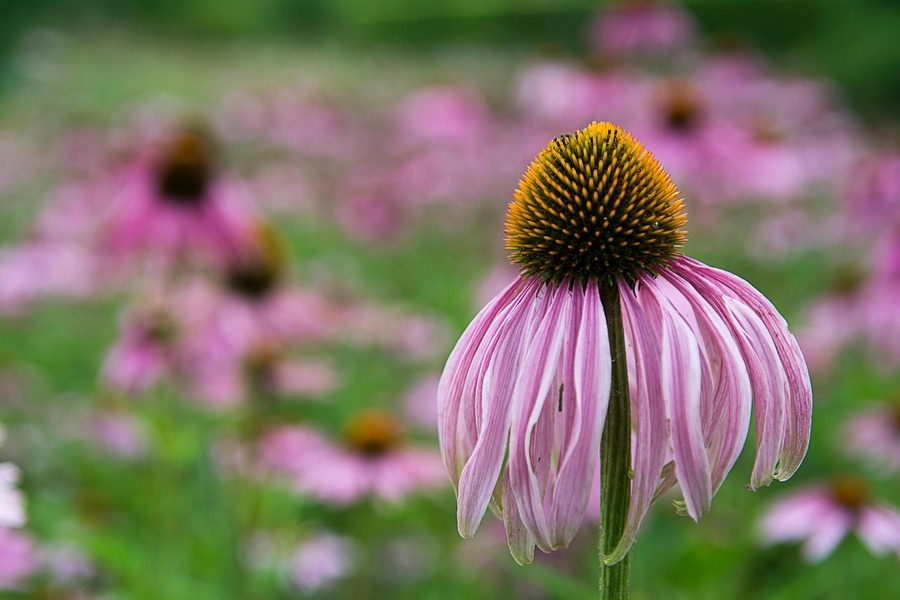
Echinacea is a stiff, hairy perennial of the North American prairie, 60–120 cm tall, with rough lance-shaped leaves and large daisy flowers whose rose-purple petals droop down from a high, domed cone of stiff orange-brown bracts. The cone is spiny to the touch, hence the name, from the Greek for hedgehog. E. purpurea, the species most grown in gardens, has fibrous roots; E. angustifolia has a single deep taproot.
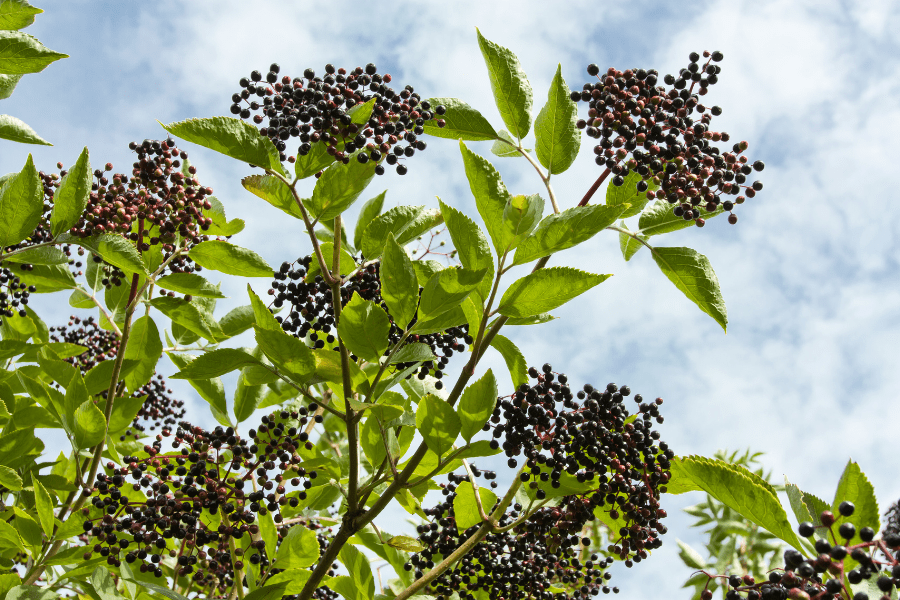
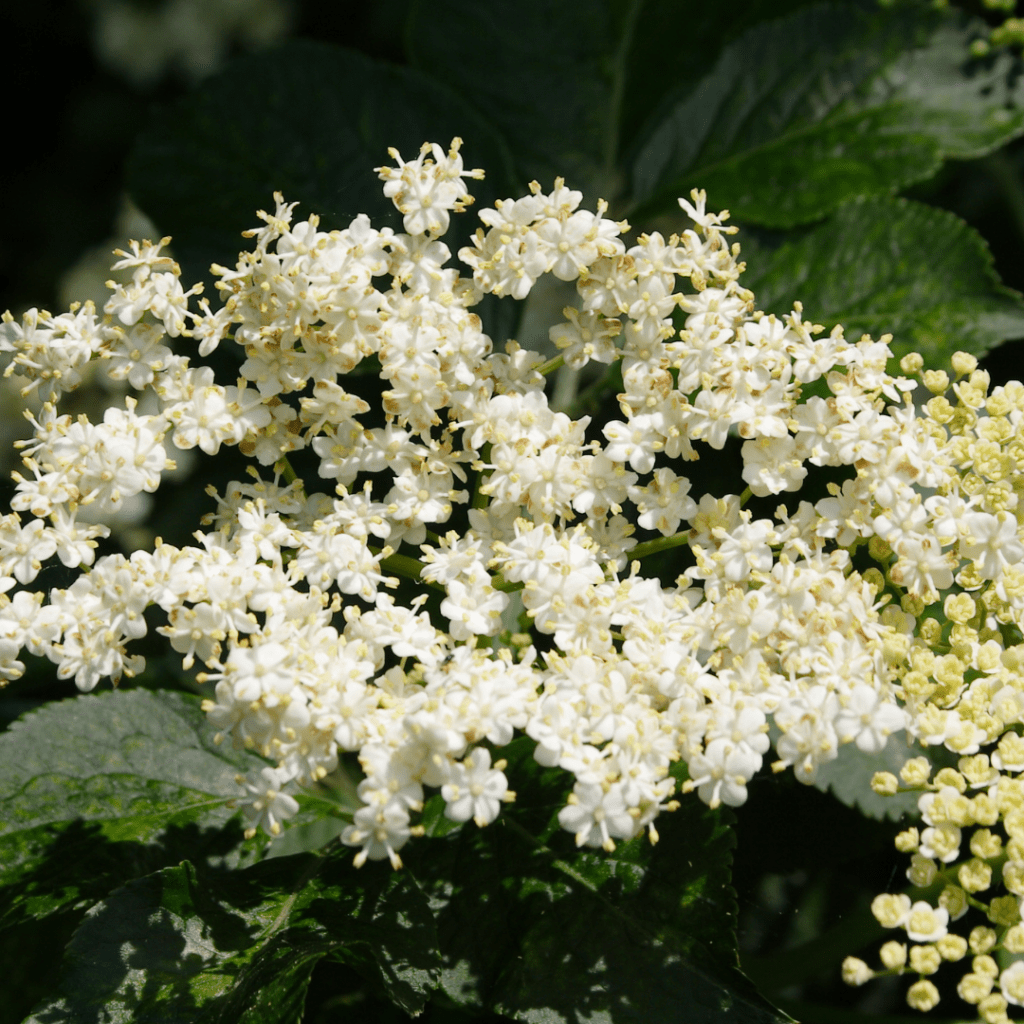
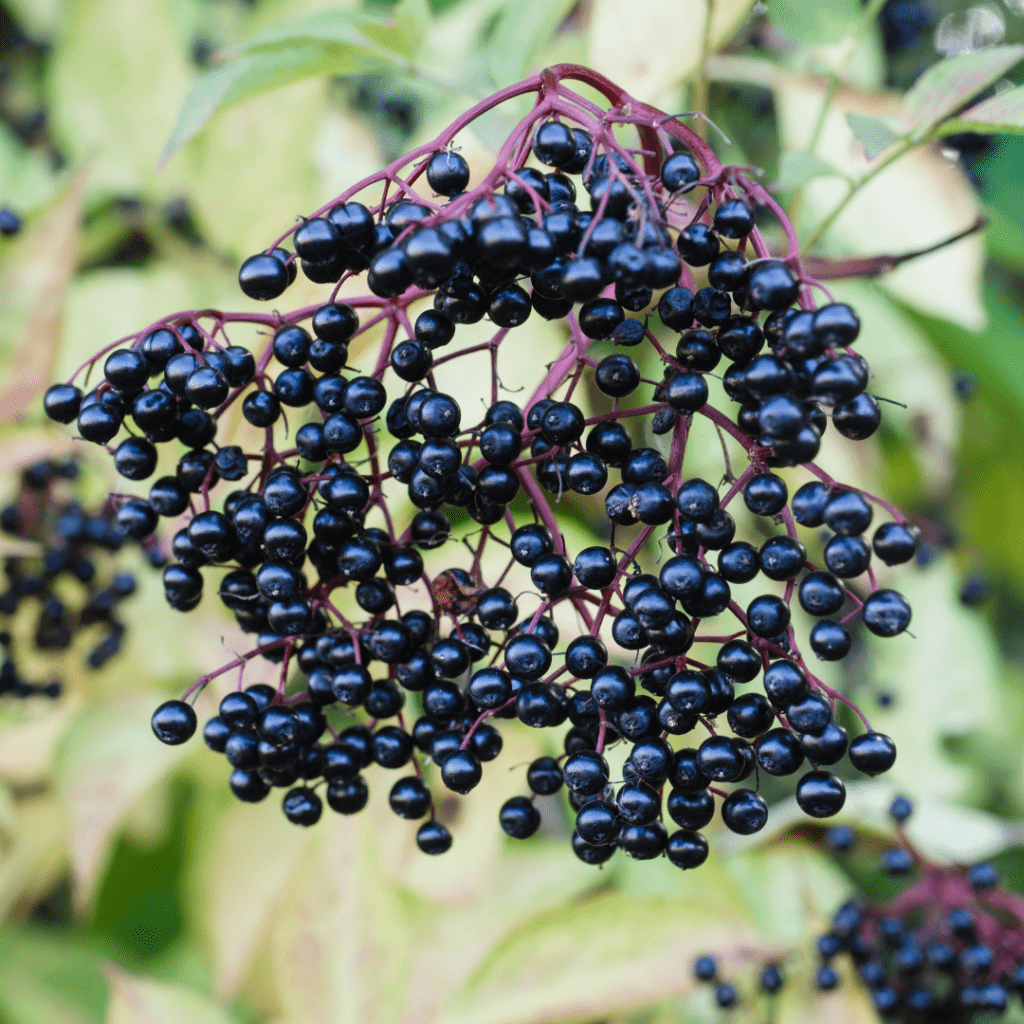
Elder is a shrub or small tree, 3–10 m tall, with corky, fissured bark and pithy young stems. The leaves are opposite and pinnate, with five to seven toothed leaflets, and smell unpleasant when crushed. In June it carries broad, flat umbels of creamy, intensely fragrant flowers; by September these have become heavy, drooping clusters of glossy purple-black berries. In the Creuse elder grows in nearly every hedge and on the edge of every old farmyard.
The Galenic Reading
Neither plant has a clean entry in Galen, so we read them by taste and action.
Echinacea is bitter and leaves a tingling, numbing pungency on the tongue that makes the mouth water. The Eclectic physicians used it as a “blood depurant” for septic, feverish, hot and putrid conditions, boils and infected wounds.2 That is a cooling, drying, cleansing herb, set against heat and corruption. It suits the choleric and sanguine person running hot with an acute infection, and it is a poor long-term tonic for the cold, depleted melancholic.
Elderflower is a relaxing, opening diaphoretic: it releases the surface, brings out a gentle sweat, and loosens catarrh. Like peppermint, it lets heat out rather than adding it, which makes it the classic first-stage fever tea for any constitution. Elderberry, sour and astringent, is cooling. It suits a hot, dry fever and a sore, inflamed throat, and is gentle enough for the elderly and, cooked, for children.
Uses
1. Echinacea for Colds: What the Evidence Really Says
The research on echinacea is honestly mixed. A 2007 meta-analysis found that echinacea reduced the odds of catching a cold by more than half and shortened colds by about a day and a half.3 But the more cautious Cochrane review of 2014 concluded that echinacea products had not been shown to shorten or ease colds, while some might reduce the risk of catching one slightly.4 The best single trial of regular use gave adults an E. purpurea preparation for four months and found fewer colds and fewer days of illness than on placebo.5
In children the picture is clearer, and not in echinacea’s favour: a large trial found no benefit for colds in children aged 2 to 11, and more rashes in the echinacea group.6
The European Medicines Agency recognises fresh E. purpurea herb for short-term use against the common cold, for no more than ten days at a time.7 In my experience the key is timing: take it at the very first scratch in the throat, in good doses, for a few days, and then stop.
2. Elderberry for Colds and Flu
Elderberry’s evidence is more encouraging, though not unanimous. In a small Norwegian trial, people with influenza who took elderberry syrup recovered about four days sooner than those on placebo.8 A trial in air travellers found that those taking elderberry who did catch a cold had shorter, milder colds.9 A meta-analysis of the controlled trials concluded that elderberry substantially reduced upper respiratory symptoms.10 But a well-run American trial of people arriving at hospital emergency departments with confirmed influenza found no benefit at all.11 Elderberry seems most useful taken early, in the first day or two.
3. Elderflower for Fevers and Catarrh
Elderflower is the gentler, older herb, and the one I reach for first. A hot infusion of elderflower, often with peppermint and yarrow, is the traditional English and French tea for the first shivery stage of a cold: drink it hot, go to bed, and let the sweat come. It also dries up a streaming nose and loosens catarrh in the sinuses.
4. Which, When?
- First shivery, feverish hours: hot elderflower tea, to open the pores and let the fever work.
- First scratchy throat, if you run hot: echinacea, in good doses, for a few days only.
- Confirmed cold or flu, any constitution: elderberry syrup, started early.
- Children: cooked elderberry syrup and elderflower tea, rather than echinacea.
Constituents
- Echinacea: alkamides (the tingling compounds), caffeic acid derivatives such as cichoric acid and echinacoside, and polysaccharides
- Elderberry: anthocyanins (cyanidin-3-glucoside and cyanidin-3-sambubioside), flavonoids including quercetin and rutin, and organic acids; raw berries also contain the cyanogenic glycoside sambunigrin, destroyed by cooking
- Elderflower: flavonoids (rutin, quercetin), phenolic acids, triterpenes and a little volatile oil
Preparations and Dosage
- Echinacea tincture: commonly 2–4 ml up to three times a day at the onset of a cold, for no more than ten days.12
- Elderberry syrup: simmer 1 cup of ripe destemmed berries (or ½ cup dried) in 2 cups of water for 30–45 minutes, mash, strain, and stir in honey to taste once it has cooled a little. Keep refrigerated for up to a month. Adults take a tablespoon three or four times a day while ill.
- Elderflower tea: 1–2 teaspoons of dried flowers per cup of boiling water, covered, 10 minutes. Drink hot.
- Classic fever tea: equal parts elderflower, peppermint and yarrow.

Harvesting, Growing and Sustainability
Elder needs no growing; it will find you. Pick the flower heads on a dry morning in June, as soon as the flowers open fully, and dry them face-down on paper, then rub off the florets and discard the stalks. Gather the berries in September when the whole cluster has turned black and hangs downward, strip them with a fork, and remove every bit of green stem. Leave plenty for the birds.
Echinacea grows well in a sunny Creuse border and is a lovely garden plant. E. purpurea is easy from seed; harvest the roots of plants three or four years old in autumn, or the flowering tops in summer. Wild echinacea, especially E. angustifolia, has been heavily overharvested in North America and is on the United Plant Savers at-risk list, so buy only cultivated echinacea.
Safety and Interactions
- Raw elder is toxic. Raw or unripe berries, leaves, bark and stems contain compounds that release cyanide; a group in California fell ill after drinking juice pressed from berries, leaves and stems.13 Always cook the berries and remove all green parts.
- Echinacea and allergy: do not use if you are allergic to daisy-family plants; people with hay fever, asthma or eczema should ask their doctor first.14
- Echinacea and the immune system: not advised in autoimmune disease, immune deficiency, or alongside immunosuppressant drugs.15
- Echinacea in children: not advised under twelve in Europe.16
- Elderberry and medications: may add to the effect of diuretics and diabetes medication; talk to your doctor if you take either.
- Pregnancy and breastfeeding: avoid medicinal doses of both unless your practitioner advises otherwise.
Common Questions
Can I take echinacea and elderberry together?
Yes, many combination products do. For most adults it is reasonable for a few days at the onset of a cold. Mind the echinacea cautions above.
Can I take echinacea all winter?
European guidance says no more than ten days at a time. It works best as a short, early course, not a daily tonic.
Is elderberry safe for children?
Cooked elderberry syrup is widely given to children, but use a properly prepared syrup and child-sized doses, and never raw berries.
Which suits which constitution?
Echinacea suits people running hot with an acute infection. Elderflower suits everyone in the first feverish hours. Elderberry, cooling and gentle, suits hot sore throats and fevers, and the young and old.
© 2024 Carolyn Smith-Kizer
If this work is useful to you, you can buy me a coffee — buymeacoffee.com/cskizer

Notes
- Martin Blochwich, Anatomia Sambuci (Leipzig, 1631); English translation by Christopher Irvine, Anatomia Sambuci: The Anatomy of the Elder (London, 1655). ↩
- Harvey Wickes Felter and John Uri Lloyd, King’s American Dispensatory, 18th ed., 3rd rev. (Cincinnati: Ohio Valley Co., 1898), s.v. “Echinacea.” ↩
- Sachin A. Shah et al., “Evaluation of Echinacea for the Prevention and Treatment of the Common Cold: A Meta-Analysis,” Lancet Infectious Diseases 7, no. 7 (2007): 473–80, https://doi.org/10.1016/S1473-3099(07)70160-3. ↩
- Marlies Karsch-Völk et al., “Echinacea for Preventing and Treating the Common Cold,” Cochrane Database of Systematic Reviews, no. 2 (2014): CD000530, https://doi.org/10.1002/14651858.CD000530.pub3. ↩
- M. Jawad et al., “Safety and Efficacy Profile of Echinacea purpurea to Prevent Common Cold Episodes: A Randomized, Double-Blind, Placebo-Controlled Trial,” Evidence-Based Complementary and Alternative Medicine 2012 (2012): 841315, https://doi.org/10.1155/2012/841315. ↩
- James A. Taylor et al., “Efficacy and Safety of Echinacea in Treating Upper Respiratory Tract Infections in Children: A Randomized Controlled Trial,” JAMA 290, no. 21 (2003): 2824–30, https://doi.org/10.1001/jama.290.21.2824. ↩
- European Medicines Agency, Committee on Herbal Medicinal Products, European Union Herbal Monograph on Echinacea purpurea (L.) Moench, herba recens, EMA/HMPC/48704/2014 (London: EMA, 2015). ↩
- Z. Zakay-Rones et al., “Randomized Study of the Efficacy and Safety of Oral Elderberry Extract in the Treatment of Influenza A and B Virus Infections,” Journal of International Medical Research 32, no. 2 (2004): 132–40, https://doi.org/10.1177/147323000403200205. ↩
- Evelin Tiralongo, Shirley S. Wee, and Rodney A. Lea, “Elderberry Supplementation Reduces Cold Duration and Symptoms in Air-Travellers: A Randomized, Double-Blind Placebo-Controlled Clinical Trial,” Nutrients 8, no. 4 (2016): 182, https://doi.org/10.3390/nu8040182. ↩
- Joanna Hawkins et al., “Black Elderberry (Sambucus nigra) Supplementation Effectively Treats Upper Respiratory Symptoms: A Meta-Analysis of Randomized, Controlled Clinical Trials,” Complementary Therapies in Medicine 42 (2019): 361–65, https://doi.org/10.1016/j.ctim.2018.12.004. ↩
- Michael Macknin et al., “Elderberry Extract Outpatient Influenza Treatment for Emergency Room Patients Ages 5 and Above: A Randomized, Double-Blind, Placebo-Controlled Trial,” Journal of General Internal Medicine 35, no. 11 (2020): 3271–77, https://doi.org/10.1007/s11606-020-06170-w. ↩
- European Medicines Agency, Echinacea purpurea herba recens. ↩
- Centers for Disease Control, “Poisoning from Elderberry Juice — California,” Morbidity and Mortality Weekly Report 33, no. 13 (1984): 173–74. ↩
- European Medicines Agency, Echinacea purpurea herba recens. ↩
- European Medicines Agency, Echinacea purpurea herba recens. ↩
- European Medicines Agency, Echinacea purpurea herba recens. ↩
Bibliography
Blochwich, Martin. Anatomia Sambuci. Leipzig, 1631. Translated by Christopher Irvine as Anatomia Sambuci: The Anatomy of the Elder. London, 1655.
Centers for Disease Control. “Poisoning from Elderberry Juice — California.” Morbidity and Mortality Weekly Report 33, no. 13 (1984): 173–74.
European Medicines Agency, Committee on Herbal Medicinal Products. European Union Herbal Monograph on Echinacea purpurea (L.) Moench, herba recens. EMA/HMPC/48704/2014. London: EMA, 2015.
Felter, Harvey Wickes, and John Uri Lloyd. King’s American Dispensatory. 18th ed., 3rd rev. Cincinnati: Ohio Valley Co., 1898.
Hawkins, Joanna, Colby Baker, Lindsey Cherry, and Elizabeth Dunne. “Black Elderberry (Sambucus nigra) Supplementation Effectively Treats Upper Respiratory Symptoms: A Meta-Analysis of Randomized, Controlled Clinical Trials.” Complementary Therapies in Medicine 42 (2019): 361–65. https://doi.org/10.1016/j.ctim.2018.12.004.
Jawad, M., R. Schoop, A. Suter, P. Klein, and R. Eccles. “Safety and Efficacy Profile of Echinacea purpurea to Prevent Common Cold Episodes: A Randomized, Double-Blind, Placebo-Controlled Trial.” Evidence-Based Complementary and Alternative Medicine 2012 (2012): 841315. https://doi.org/10.1155/2012/841315.
Karsch-Völk, Marlies, Bruce Barrett, David Kiefer, Rudolf Bauer, Karin Ardjomand-Woelkart, and Klaus Linde. “Echinacea for Preventing and Treating the Common Cold.” Cochrane Database of Systematic Reviews, no. 2 (2014): CD000530. https://doi.org/10.1002/14651858.CD000530.pub3.
Macknin, Michael, Colin Wolski, Ian Wolski, et al. “Elderberry Extract Outpatient Influenza Treatment for Emergency Room Patients Ages 5 and Above: A Randomized, Double-Blind, Placebo-Controlled Trial.” Journal of General Internal Medicine 35, no. 11 (2020): 3271–77. https://doi.org/10.1007/s11606-020-06170-w.
Shah, Sachin A., Stephen Sander, C. Michael White, Mike Rinaldi, and Craig I. Coleman. “Evaluation of Echinacea for the Prevention and Treatment of the Common Cold: A Meta-Analysis.” Lancet Infectious Diseases 7, no. 7 (2007): 473–80. https://doi.org/10.1016/S1473-3099(07)70160-3.
Taylor, James A., Wendy Weber, Leanna Standish, et al. “Efficacy and Safety of Echinacea in Treating Upper Respiratory Tract Infections in Children: A Randomized Controlled Trial.” JAMA 290, no. 21 (2003): 2824–30. https://doi.org/10.1001/jama.290.21.2824.
Tiralongo, Evelin, Shirley S. Wee, and Rodney A. Lea. “Elderberry Supplementation Reduces Cold Duration and Symptoms in Air-Travellers: A Randomized, Double-Blind Placebo-Controlled Clinical Trial.” Nutrients 8, no. 4 (2016): 182. https://doi.org/10.3390/nu8040182.
Zakay-Rones, Z., E. Thom, T. Wollan, and J. Wadstein. “Randomized Study of the Efficacy and Safety of Oral Elderberry Extract in the Treatment of Influenza A and B Virus Infections.” Journal of International Medical Research 32, no. 2 (2004): 132–40. https://doi.org/10.1177/147323000403200205.