
Borago officinalis L.: Herbal Monograph
Borago officinalis L., or borage, is the cooling, moistening herb of the blue starflower. This herbal monograph sets out its botany, energetics, constituents, traditional uses and cautions, with references.
In short: Borage, Borago officinalis, the blue starflower, is a cool and moist herb whose seed oil is rich in gamma-linolenic acid (GLA). It supports the skin, a balanced inflammatory response and a steady mood. It carries traces of pyrrolizidine alkaloids, so it is not for pregnancy or breastfeeding, liver concerns or bleeding disorders.
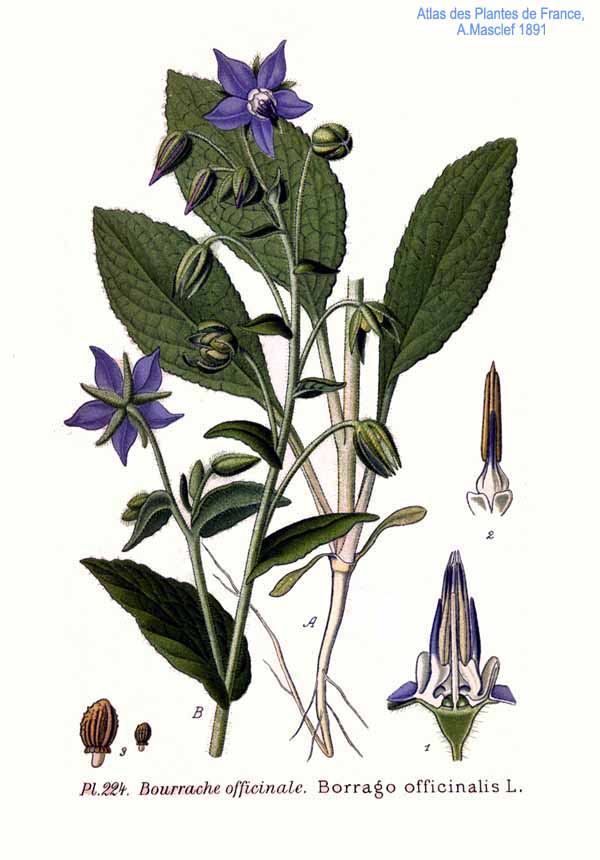
Family
Boraginaceae
Actions
Cooling, moistening, nutritive, soothing
Energetics
Cool and moist
Chemical Constituents
- Gamma-linolenic acid (GLA)
- Alpha-linolenic acid (ALA)
- Linoleic acid
- Mucilage
- Tannins
- Saponins
- Pyrrolizidine alkaloids (in trace amounts)
Studies of borage seeds have measured their oil, fatty acids and phenolic compounds in detail1.
Part of Plant Used
Leaves, flowers, seeds (for oil)
Uses
- Supports skin health
- Promotes a healthy inflammatory response
- Supports hormonal balance
- Provides nutritional support
- Supports respiratory wellness
- Promotes healthy mood balance
Research has shown that borage seed oil, rich in gamma-linolenic acid (GLA), may support skin health and promote a balanced inflammatory response2.
Contraindications
- Pregnancy and breastfeeding
- Liver concerns
- Bleeding disorders
Side Effects
- Potential for gastrointestinal discomfort in some individuals
- Possible skin reactions in sensitive individuals
Interactions with Other Drugs
- May interact with blood-thinning preparations
- May interact with preparations that affect liver function
Because borage seed oil may slow blood clotting and the plant carries traces of liver-toxic alkaloids, tell your doctor or pharmacist about it if you take blood thinners or drugs that affect the liver.
Dosage
- Dried herb: 2-4 grams daily
- Tincture (1:5 in 45% alcohol): 2-4 mL, three times daily
- Tea: 1-2 teaspoons of dried herb steeped in 8 oz hot water for 10-15 minutes, up to 3 times daily
- Borage seed oil: 1-3 grams daily
In one study, healthy older adults took borage oil capsules supplying 360 or 720 mg of GLA a day for two months2.
How to Take It
Oral consumption as tea, tincture, or capsules. Topical application of oil or infused oil.
Duration of Use
Short-term use (2-4 weeks) is generally considered appropriate. For longer-term use, consult with a qualified medical practitioner.
Risks
- Contains small amounts of pyrrolizidine alkaloids, which may affect liver health with long-term use or in large quantities
- Potential for allergic reactions in individuals sensitive to plants in the Boraginaceae family
Tests of commercial borage seed oils have found pyrrolizidine alkaloids absent or at very low levels, but choose an oil certified free of them3,4.
Recipes
- Borage Leaf Tea
- 1-2 teaspoons dried borage leaves
- 8 oz hot water
Steep for 10-15 minutes, strain, and enjoy.
- Borage Flower Honey
- 1 cup fresh borage flowers
- 1 cup raw honey
Gently fold flowers into honey, let infuse for 2 weeks in a sealed jar, strain.
- Borage-Infused Oil
- 1 cup dried borage leaves
- 2 cups carrier oil (e.g., olive or jojoba)
Combine in a jar, let sit for 4-6 weeks, shaking daily. Strain and use topically.
- Borage Seed Oil Blend
- 1 tsp borage seed oil
- 1 tbsp carrier oil (e.g., almond or coconut)
Mix and apply topically to support skin health.
Remember to always consult with a qualified medical practitioner before incorporating new herbs into your wellness routine, especially if you have existing health concerns or are taking other preparations.
© 2024 Carolyn Smith-Kizer
If this work is useful to you, you can buy me a coffee — buymeacoffee.com/cskizer

Notes
- Baya Mhamdi, Wissem Aidi Wannes, Soumaya Bourgou, and Brahim Marzouk, “Biochemical Characterization of Borage (Borago officinalis L.) Seeds,” Journal of Food Biochemistry 33, no. 3 (2009): 331–41.
- Thorolf Brosche and Dieter Platt, “Effect of Borage Oil Consumption on Fatty Acid Metabolism, Transepidermal Water Loss and Skin Parameters in Elderly People,” Archives of Gerontology and Geriatrics 30, no. 2 (2000): 139–50, https://doi.org/10.1016/S0167-4943(00)00046-7.
- Thomas Langer and Chlodwig Franz, “Pyrrolizidine Alkaloids in Commercial Samples of Borage Seed Oil Products by GC-MS,” Scientia Pharmaceutica 65, no. 4 (1997): 321–28.
- Giulio Vacillotto et al., “A Rapid and Highly Specific Method to Evaluate the Presence of Pyrrolizidine Alkaloids in Borago officinalis Seed Oil,” Journal of Mass Spectrometry 48, no. 10 (2013): 1078–82, https://doi.org/10.1002/jms.3251.
Bibliography
Brosche, Thorolf, and Dieter Platt. “Effect of Borage Oil Consumption on Fatty Acid Metabolism, Transepidermal Water Loss and Skin Parameters in Elderly People.” Archives of Gerontology and Geriatrics 30, no. 2 (2000): 139–50.
Langer, Thomas, and Chlodwig Franz. “Pyrrolizidine Alkaloids in Commercial Samples of Borage Seed Oil Products by GC-MS.” Scientia Pharmaceutica 65, no. 4 (1997): 321–28.
Mhamdi, Baya, Wissem Aidi Wannes, Soumaya Bourgou, and Brahim Marzouk. “Biochemical Characterization of Borage (Borago officinalis L.) Seeds.” Journal of Food Biochemistry 33, no. 3 (2009): 331–41.
Vacillotto, Giulio, Donata Favretto, Roberta Seraglia, Rita Pagiotti, Pietro Traldi, and Luisa Mattoli. “A Rapid and Highly Specific Method to Evaluate the Presence of Pyrrolizidine Alkaloids in Borago officinalis Seed Oil.” Journal of Mass Spectrometry 48, no. 10 (2013): 1078–82.