
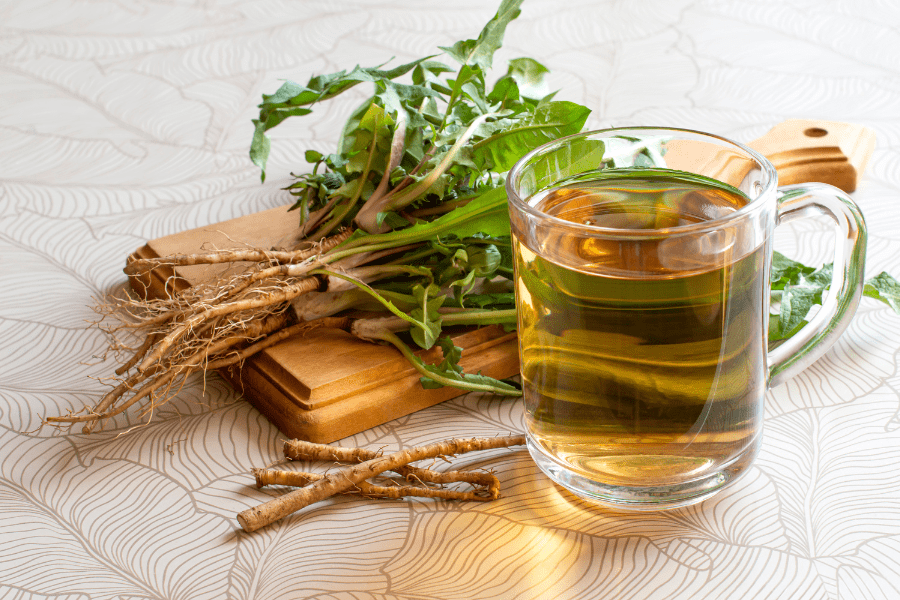
Alterative Herbs: A Wise Woman’s Galenic Guide to Cleansing the Blood
Long before anyone spoke of “detox,” the old herbals were full of plants that “cleanse the blood.” The nineteenth-century Eclectic and Physiomedical doctors gave them a name, alterative herbs, or alteratives: herbs that gradually alter the state of the body, nudging it back toward health by improving digestion, the work of the liver and kidneys, the lymph and the skin.1 They work slowly, over weeks and months, and they are among the gentlest and most nourishing plants we have.
I came to them through the wise woman tradition, and later through my own health after cancer. Here I want to read them the older way, through Galen, for whom keeping the blood clean was one of the main tasks of the physician.
At a Glance
- What they are: herbs that slowly improve the body’s own clearing and renewing, through the liver, kidneys, lymph and skin
- Older names: blood purifiers, blood cleansers, spring tonics
- Key European alteratives: burdock root, dandelion root and leaf, red clover blossom, cleavers and nettle
- Galenic qualities: mostly cooling and cleansing, some gently moistening, some drying
- Season: spring above all, with a second round in autumn
- How they are taken: long infusions, decoctions, spring greens and broths, for weeks at a time
- Main cautions: daisy-family allergy, diuretic and diabetes medication, blood thinners, hormone-sensitive conditions (red clover), pregnancy
The Galenic Reading
For Galen, blood was made in the liver from the food we eat, and good health depended on the body clearing away what it did not need. When it could not, the leftover humours lingered and spoiled: in the blood as heat and heaviness, in the skin as eruptions, and in the joints as stiffness and swelling. The physician’s task was to find which clearing organ, the bowels, the kidneys, the skin or the liver itself, was most burdened, and to support it with herbs of the right quality.2
That is exactly what alteratives do, and it is why they belong to spring. After a winter of salt meat, little fresh food and little movement, the old households turned to the first bitter greens and roots, dandelion, nettle, cleavers and burdock, to clear what the winter had stored.3
- Choleric (hot and dry): the cooling alteratives, burdock, dandelion and red clover, suit hot, angry skin and an overworked liver especially well.
- Sanguine (hot and moist): an excellent match. Cooling, cleansing herbs relieve fullness and heat in the blood.
- Melancholic (cold and dry): choose the moistening, nourishing ones, burdock root and red clover, and avoid long courses of drying bitters.
- Phlegmatic (cold and moist): pair alteratives with a warming herb such as ginger or fennel, and favour the drying ones, dandelion and cleavers.
The Herbs
Burdock Root (Arctium lappa)
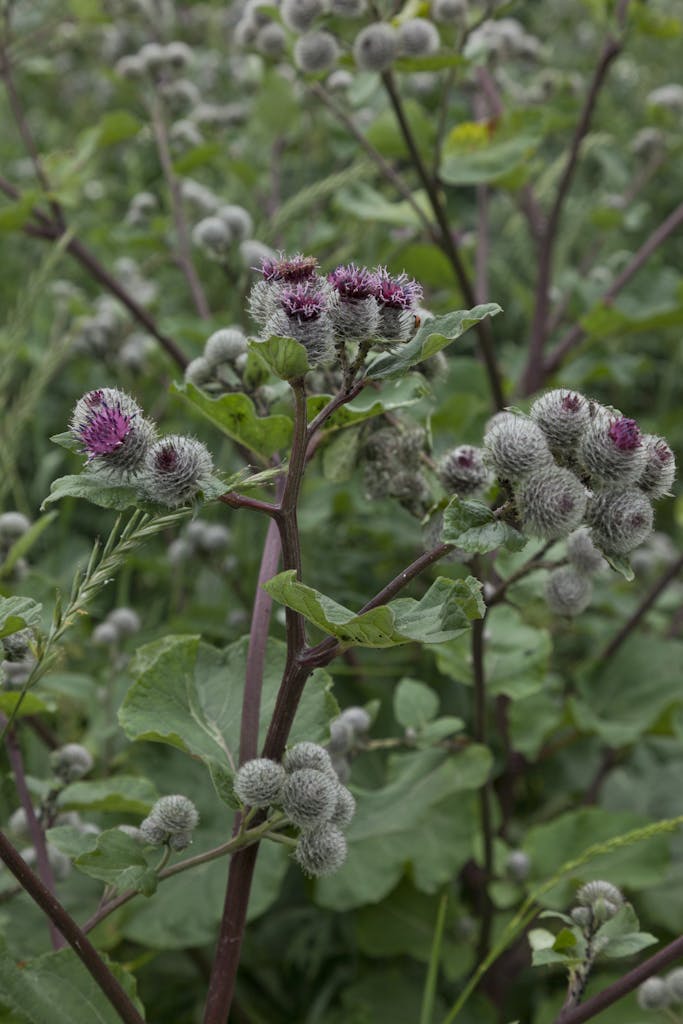
Burdock is the queen of the alteratives. Culpeper wrote that “Venus challengeth this herb for her own,” and Venus is the cool, moist planet of the skin and the kidneys.4 The root is sweet, slightly bitter and oily, cooling and gently moistening. The European Medicines Agency accepts burdock root as a traditional herbal product for temporary loss of appetite, for increasing the flow of urine, and for skin conditions.5 Laboratory and animal studies suggest anti-inflammatory and antioxidant activity, though good human trials are still missing.6 In France and Japan the young root is also a vegetable.
Dandelion Root and Leaf (Taraxacum officinale)
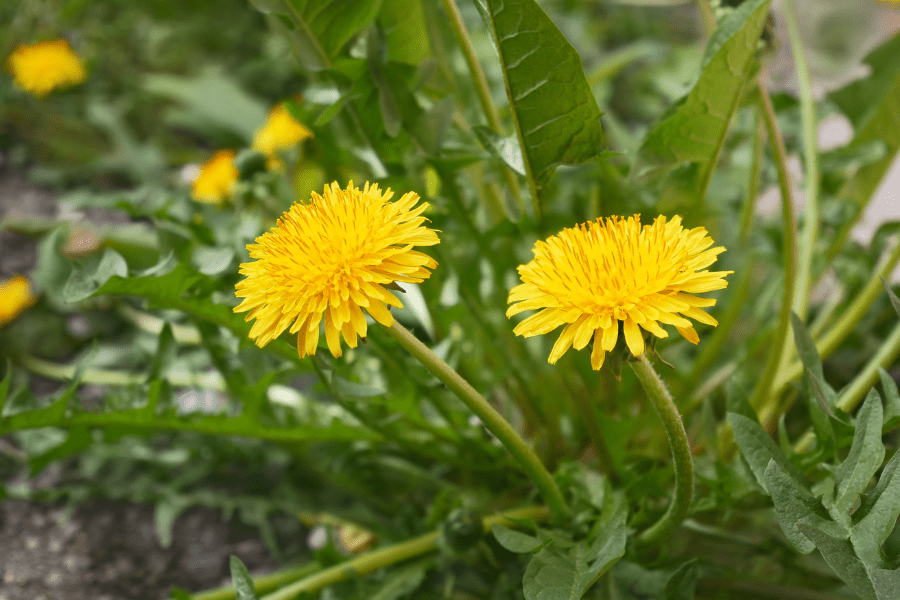
Culpeper placed dandelion under Jupiter, the planet of the liver.7 The bitter root works on the liver and digestion; the leaf, rich in potassium, works on the kidneys, as its French name pissenlit makes plain. The European Medicines Agency accepts dandelion as a traditional herbal product for loss of appetite, for indigestion, and for increasing the flow of urine.8 It is cooling and drying, and the young spring leaves are one of the oldest salads in Europe.
Red Clover Blossom (Trifolium pratense)
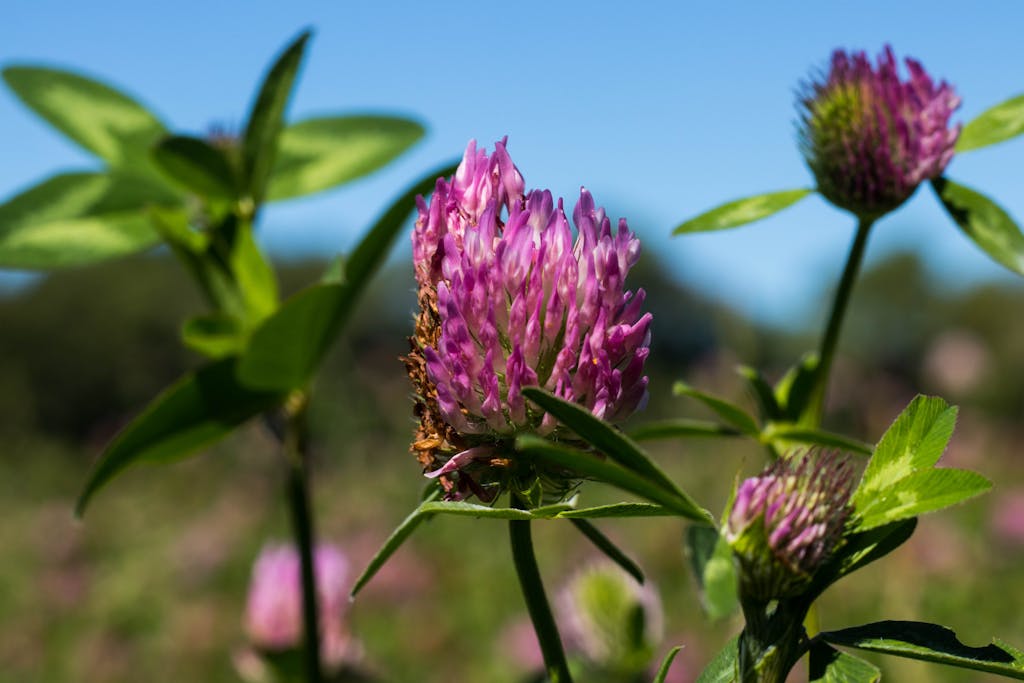
Red clover is sweet, cooling and gently moistening, a traditional herb for the lymph and the skin and a favourite of the wise woman tradition, usually taken as a long infusion. It contains isoflavones, plant compounds structurally similar to oestrogen, which is the reason for the cautions below.9
Cleavers (Galium aparine)
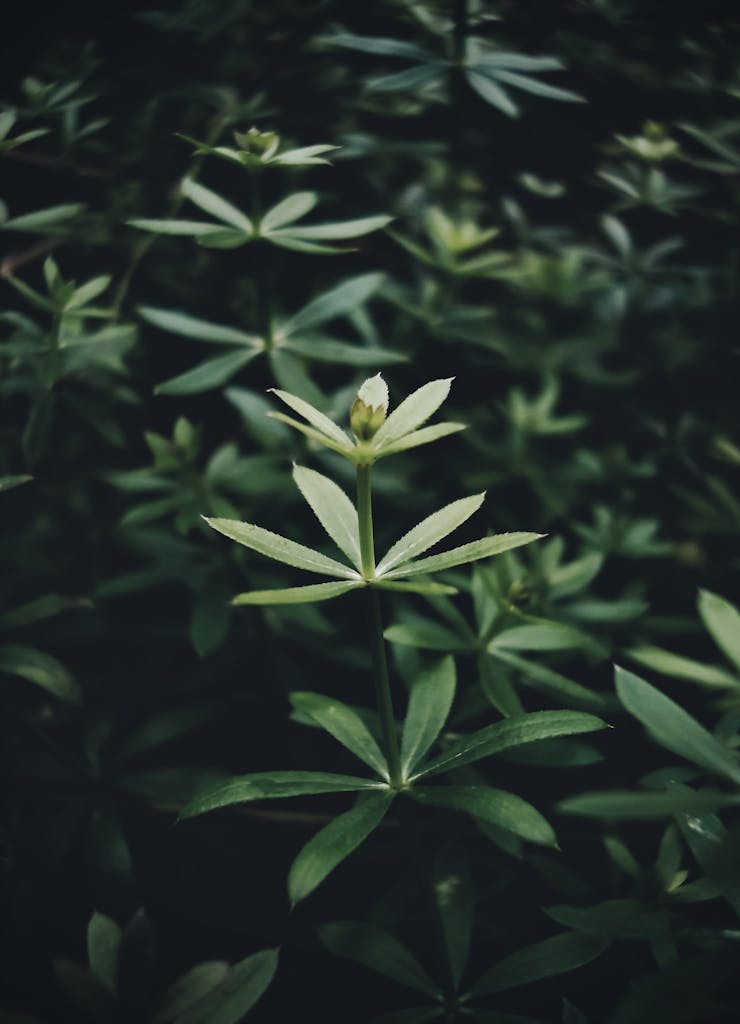
Cleavers, the sticky goosegrass of every hedge, is a cooling, gently drying spring herb for the lymph and the kidneys. It is best fresh, as a cold infusion or a juice, because drying and heat take much of its virtue away. It is one of the plants I look for first each spring.
Nettle (Urtica dioica)
Nettle is the great mineral tonic of spring, gently drying and nourishing at once. I have written about it at length in its own monograph.
A Personal Account: Alterative Herbs in My Own Recovery
After cancer, I developed lymphedema in my left leg. I also learned I had lipedema, a chronic condition in which fat builds up symmetrically under the skin, mostly in the lower body.10
Alongside standard lymphedema care, I took two alteratives every day. Each morning I steeped 2 teaspoons of dried red clover blossoms in hot water for 15 minutes. Twice a day I simmered 2 teaspoons of dried burdock root in water for 20 minutes and drank the decoction.
Over six months I noticed a gradual easing of the heaviness and discomfort in my leg. The lipedema did not go away, but the pain and tenderness that came with it lessened. This is one woman’s experience, not a study, and the herbs did their work alongside my medical care, not instead of it. Anyone living with these conditions should work with their own doctors to plan their care.
Preparations and Dosage
- Burdock root decoction: 1–2 teaspoons of dried, chopped root in 250 ml of cold water. Bring to a simmer and simmer, covered, for 15–20 minutes. Strain. One or two cups a day.
- Dandelion root decoction: the same way, or roast the root first for a dark, coffee-like drink. Take before meals for digestion.
- Dandelion leaf: eat the young leaves in spring salads, or infuse 1–2 teaspoons of dried leaf per cup.
- Red clover long infusion: a large handful (about 15 g) of dried blossoms in a litre jar of boiling water, lidded and left overnight. Strain and drink over the day.
- Cleavers cold infusion: a handful of fresh, chopped cleavers in a jar of cold water overnight. Strain and drink the next day.
- Spring broth: simmer nettle tops, dandelion leaves and a little burdock root in a good bone or vegetable broth. The kitchen way of taking alteratives.
- How long: alteratives are slow. Give them six to eight weeks, then take a week or two off and see how you feel.

Harvesting and Sustainability
All of these alteratives are common, even weedy, plants, and that is part of their charm. Dig burdock roots in the autumn of the first year, before the plant sends up its flowering stalk; they are long, so loosen the soil well. Dig dandelion roots in autumn, when they are sweetest and most bitter at once, and pick the leaves in early spring before flowering. Gather red clover blossoms on a dry, sunny day when fully open, and dry them quickly before they brown. Gather cleavers in spring while they are young and green. Avoid roadsides and sprayed fields.
Safety and Interactions
- Daisy-family allergy: burdock and dandelion belong to the daisy family. People allergic to ragweed, chamomile, marigolds or daisies may react to them, and dandelion on the skin can trouble people with eczema.11
- Medications: dandelion might interact with diabetes medication, blood thinners and water pills.12 Burdock may also lower blood sugar. If you take any of these, talk to your doctor first.
- Red clover and hormones: because of its isoflavones, anyone with a hormone-sensitive condition should ask their doctor before taking red clover. Red clover supplements may be unsafe in pregnancy and breastfeeding.13
- Pregnancy: keep to food amounts of dandelion and nettle, and avoid medicinal courses of burdock and red clover unless your midwife or doctor agrees.
- Identification: young burdock leaves can be confused with poisonous foxglove and other plants. Be certain of every root you dig.
Common Questions
Are alteratives the same as detox?
No. Alteratives don’t flush anything out in a hurry. They slowly support the organs that clear the body every day, which is what Galen meant by keeping the blood clean.
How soon will I notice a difference?
Usually after several weeks. Alteratives are the slowest and gentlest of the herb groups.
Which is the best alterative to start with?
Dandelion leaf and root, because they are safe, common, cheap and work on both the liver and the kidneys. Add burdock root for the skin.
Which constitution benefits most?
In Galenic terms, the hot types, choleric and sanguine, because most alteratives are cooling and cleansing. Cold types can use them too, paired with a warming herb.
© 2024 Carolyn Smith-Kizer
If this work is useful to you, you can buy me a coffee — buymeacoffee.com/cskizer

Notes
- David Hoffmann, Medical Herbalism: The Science and Practice of Herbal Medicine (Rochester, VT: Healing Arts Press, 2003). ↩
- Carolyn Smith-Kizer, “The Galenic Spring Protocol ~ More Than Detox,” At Charlemagne’s Behest, https://atcharlemagnesbehest.com/galenic-spring-protocol. ↩
- Smith-Kizer, “Galenic Spring Protocol.” ↩
- Nicholas Culpeper, The Complete Herbal, Project Gutenberg eBook 49513 (2015), https://www.gutenberg.org/ebooks/49513, s.v. “Burdock”. ↩
- European Medicines Agency, Committee on Herbal Medicinal Products, Community Herbal Monograph on Arctium lappa L., radix, EMA/HMPC/246763/2009 (London: European Medicines Agency, 2011), https://www.ema.europa.eu/en/medicines/herbal/arctii-radix. ↩
- Yuk-Shing Chan et al., “A Review of the Pharmacological Effects of Arctium lappa (Burdock),” Inflammopharmacology 19, no. 5 (2011): 245–54, https://doi.org/10.1007/s10787-010-0062-4. ↩
- Nicholas Culpeper, The Complete Herbal, Project Gutenberg eBook 49513 (2015), https://www.gutenberg.org/ebooks/49513, s.v. “Dandelion”. ↩
- European Medicines Agency, Committee on Herbal Medicinal Products, Community Herbal Monograph on Taraxacum officinale Weber ex Wigg., radix cum herba, EMA/HMPC/212895/2008 Corr. 1 (London: European Medicines Agency, 2011), https://www.ema.europa.eu/en/medicines/herbal/taraxaci-radix-cum-herba. ↩
- National Center for Complementary and Integrative Health, “Red Clover: Usefulness and Safety,” last updated April 2025, https://www.nccih.nih.gov/health/red-clover. ↩
- Karen L. Herbst, “Rare Adipose Disorders (RADs) Masquerading as Obesity,” Acta Pharmacologica Sinica 33, no. 2 (2012): 155–72, https://doi.org/10.1038/aps.2011.153. ↩
- National Center for Complementary and Integrative Health, “Dandelion: Usefulness and Safety,” last updated November 2024, https://www.nccih.nih.gov/health/dandelion. ↩
- NCCIH, “Dandelion.” ↩
- NCCIH, “Red Clover.” ↩
Bibliography
Chan, Yuk-Shing, et al. “A Review of the Pharmacological Effects of Arctium lappa (Burdock).” Inflammopharmacology 19, no. 5 (2011): 245–54. https://doi.org/10.1007/s10787-010-0062-4.
Culpeper, Nicholas. The Complete Herbal. Project Gutenberg eBook 49513, 2015. https://www.gutenberg.org/ebooks/49513.
European Medicines Agency, Committee on Herbal Medicinal Products. Community Herbal Monograph on Arctium lappa L., radix. EMA/HMPC/246763/2009. London: European Medicines Agency, 2011.
European Medicines Agency, Committee on Herbal Medicinal Products. Community Herbal Monograph on Taraxacum officinale Weber ex Wigg., radix cum herba. EMA/HMPC/212895/2008 Corr. 1. London: European Medicines Agency, 2011.
Herbst, Karen L. “Rare Adipose Disorders (RADs) Masquerading as Obesity.” Acta Pharmacologica Sinica 33, no. 2 (2012): 155–72. https://doi.org/10.1038/aps.2011.153.
Hoffmann, David. Medical Herbalism: The Science and Practice of Herbal Medicine. Rochester, VT: Healing Arts Press, 2003.
National Center for Complementary and Integrative Health. “Dandelion: Usefulness and Safety.” Last updated November 2024. https://www.nccih.nih.gov/health/dandelion.
National Center for Complementary and Integrative Health. “Red Clover: Usefulness and Safety.” Last updated April 2025. https://www.nccih.nih.gov/health/red-clover.
Smith-Kizer, Carolyn. “The Galenic Spring Protocol ~ More Than Detox.” At Charlemagne’s Behest. https://atcharlemagnesbehest.com/galenic-spring-protocol.