
Cinnamomum verum Ceylon Cinnamon: Herbal Monograph
Cinnamomum verum Ceylon cinnamon is the true cinnamon, a warming, drying bark. This herbal monograph sets out its botany, energetics, constituents, traditional uses and cautions, with references.
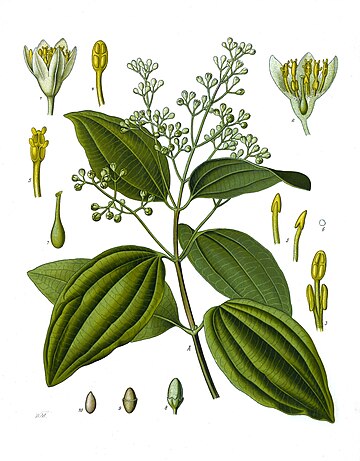
Family
Lauraceae
Actions
Carminative, antimicrobial, antioxidant, anti-inflammatory, blood sugar regulating (Ranasinghe et al., 2013)
Energetics
Warming, drying (Frawley & Lad, 2001)
Chemical Constituents
- Essential oils (cinnamaldehyde, eugenol, linalool)
- Polyphenols (rutin, catechin, epicatechin)
- Terpenes (limonene, α-pinene)
- Mucilage
- Tannins
- Resins
Cinnamaldehyde is considered the primary active compound responsible for many of Ceylon cinnamon‘s biological activities (Nabavi et al., 2015).
Part of Plant Used
Inner bark
Uses
- Supports healthy blood sugar levels
- Promotes cardiovascular health
- Supports digestive wellness
- Promotes healthy inflammatory response
- Supports cognitive function
- Promotes oral health
A comprehensive review by Ranasinghe et al. (2013) highlighted Ceylon cinnamon’s potential in supporting various aspects of health, particularly in metabolic and cardiovascular wellness.
Contraindications
- Pregnancy (in medicinal doses)
- Bleeding disorders
- Scheduled surgery (within two weeks)
Side Effects
- Potential for allergic reactions in sensitive individuals
- May cause irritation of the mouth or skin in some people
- Theoretical risk of liver toxicity at very high doses (more associated with Cassia cinnamon)
While generally well-tolerated, these side effects have been noted in some individuals (Ulbricht et al., 2011).
Interactions with Other Drugs
- May interact with diabetes medications
- May interact with blood-thinning preparations
- Theoretical interaction with hepatotoxic drugs
Caution is advised when combining Ceylon cinnamon with these types of preparations due to potential interactions (Bandara et al., 2012).
Dosage
- Powdered bark: 1-4 grams daily
- Tea: 1-2 grams of powder steeped in hot water, 1-3 times daily
- Tincture (1:5): 2-4 mL, three times daily
Clinical studies have used a wide range of doses, typically 1-6 grams of cinnamon powder daily for various applications (Allen et al., 2013).
Mode of Administration
Oral consumption as powder, tea, capsules, or liquid extract. Topical application in essential oil blends (diluted).
Duration of Administration
Can be used long-term when consumed in food amounts. For therapeutic use, consult with a qualified herbalist.
Risks
- Potential for increased bleeding risk at high doses
- May lower blood sugar levels
- Theoretical risk of liver toxicity at very high doses (more associated with Cassia cinnamon)
A review by Ranasinghe et al. (2013) emphasized the importance of distinguishing between Ceylon cinnamon and Cassia cinnamon, as the latter contains higher levels of coumarin, which may pose health risks in large amounts.
Recipes
- Ceylon Cinnamon Tea
- 1 teaspoon Ceylon cinnamon powder
- 1 cup hot water
- Honey to taste (optional)
Steep for 10 minutes, strain if necessary, and enjoy.
- Blood Sugar Support Blend
- 1 part Ceylon cinnamon powder
- 1 part ground fenugreek seeds
- 1/2 part ground ginger
Mix herbs. Take 1 teaspoon of the mixture with warm water before meals.
- Cinnamon-Infused Honey
- 1/4 cup Ceylon cinnamon sticks, broken into pieces
- 1 cup raw honey
Combine in a jar, let sit for 2 weeks, shaking daily. Strain and use as desired.
From the Spice Road to the Stillroom
Cinnamon is one of the oldest traded preparations we have. “Sweet cinnamon” goes into the holy anointing oil of Exodus 30:23, and the Song of Songs (4:14) lists it among the choice spices. Herodotus passed on the merchants’ tale of great birds that built their nests from cinnamon sticks — a story told to keep the source a secret and the price high.
Know which cinnamon you have. Ceylon cinnamon (C. verum) rolls into thin, papery, many-layered quills and tastes delicate. Cassia (C. cassia), the common supermarket kind, forms one thick, hard curl. It is much higher in coumarin, which can strain the liver if you take it daily in medicinal amounts (Wang et al., 2013). For regular use, buy Ceylon, and buy whole sticks. They are harder to adulterate and keep far longer than powder.
In the Galenic picture, cinnamon is warming and drying. It suits the cold, damp phlegmatic person with slow digestion and cold hands. A hot, choleric constitution needs much less of it.
Ways I use it
- Stick decoction: simmer one stick in a cup of water for 10–15 minutes.
- Morning coffee spice: grind cinnamon, black pepper and rose petals together. This is a blend I have used for years, from Kitty Morse’s North Africa: The Vegetarian Table.
- Winter simmer pot: cinnamon sticks, orange peel and cloves on the back of the stove.
- Digestive formula: cinnamon, ginger, fennel and peppermint.
- Warming circulation formula: cinnamon, ginger, a pinch of cayenne and hawthorn berry.
Remember to always consult with a qualified herbalist before incorporating new herbs into your wellness routine, especially if you have existing health concerns or are taking other preparations.
Return to: A Wise Woman’s Guide to Reducing Inflammation with Herbs, Foods, and Lifestyle
© 2024 Carolyn Smith-Kizer
If this work is useful to you, you can buy me a coffee — buymeacoffee.com/cskizer

References
Allen, R. W., Schwartzman, E., Baker, W. L., Coleman, C. I., & Phung, O. J. (2013). Cinnamon use in type 2 diabetes: an updated systematic review and meta-analysis. The Annals of Family Medicine, 11(5), 452-459. https://doi.org/10.1370/afm.1517
Bandara, T., Uluwaduge, I., & Jansz, E. R. (2012). Bioactivity of cinnamon with special emphasis on diabetes mellitus: a review. International Journal of Food Sciences and Nutrition, 63(3), 380-386. https://doi.org/10.3109/09637486.2011.627849
Frawley, D., & Lad, V. (2001). The Yoga of Herbs: An Ayurvedic Guide to Herbal Medicine. Lotus Press.
Nabavi, S. F., Di Lorenzo, A., Izadi, M., Sobarzo-Sánchez, E., Daglia, M., & Nabavi, S. M. (2015). Antibacterial effects of cinnamon: From farm to food, cosmetic and pharmaceutical industries. Nutrients, 7(9), 7729-7748. https://doi.org/10.3390/nu7095359
Ranasinghe, P., Pigera, S., Premakumara, G. S., Galappaththy, P., Constantine, G. R., & Katulanda, P. (2013). Medicinal properties of ‘true’ cinnamon (Cinnamomum zeylanicum): a systematic review. BMC Complementary and Alternative Medicine, 13, 275. https://doi.org/10.1186/1472-6882-13-275
Ulbricht, C., Seamon, E., Windsor, R. C., Armbruester, N., Bryan, J. K., Costa, D., Giese, N., Gruenwald, J., Iovin, R., Isaac, R., Serrano, J. M., Tanguay-Colucci, S., Weissner, W., Yoon, H., & Zhang, J. (2011). An evidence-based systematic review of cinnamon (Cinnamomum spp.) by the Natural Standard Research Collaboration. Journal of Dietary Supplements, 8(4), 378-454. https://doi.org/10.3109/19390211.2011.560870
Wang, Y.-H., Avula, B., Nanayakkara, N. P. D., Zhao, J., & Khan, I. A. (2013). Cassia cinnamon as a source of coumarin in cinnamon-flavored food and food supplements in the United States. Journal of Agricultural and Food Chemistry, 61(18), 4470–4476. https://doi.org/10.1021/jf4005862