
What the Soldier Carries
On bellis, yarrow, and the long memory of a plant soldiers carried into the field
At a functional medicine conference this year, two clinicians who work with special-operations veterans described a concept they call Personal Protective Nutrition and Personal Protective Lifestyle — PPN and PPL for short.
The idea is simple: a service member faces known, repeated exposures (blast overpressure, heavy-metal residue at the firing range, chronic sleep disruption), and there are specific, controllable things a person can carry with them, in the body and in the pack, to stand between themselves and those exposures — what the soldier carries. It is presented as a new framework. It is not a new idea.
The daisy in the field: what the soldier carries
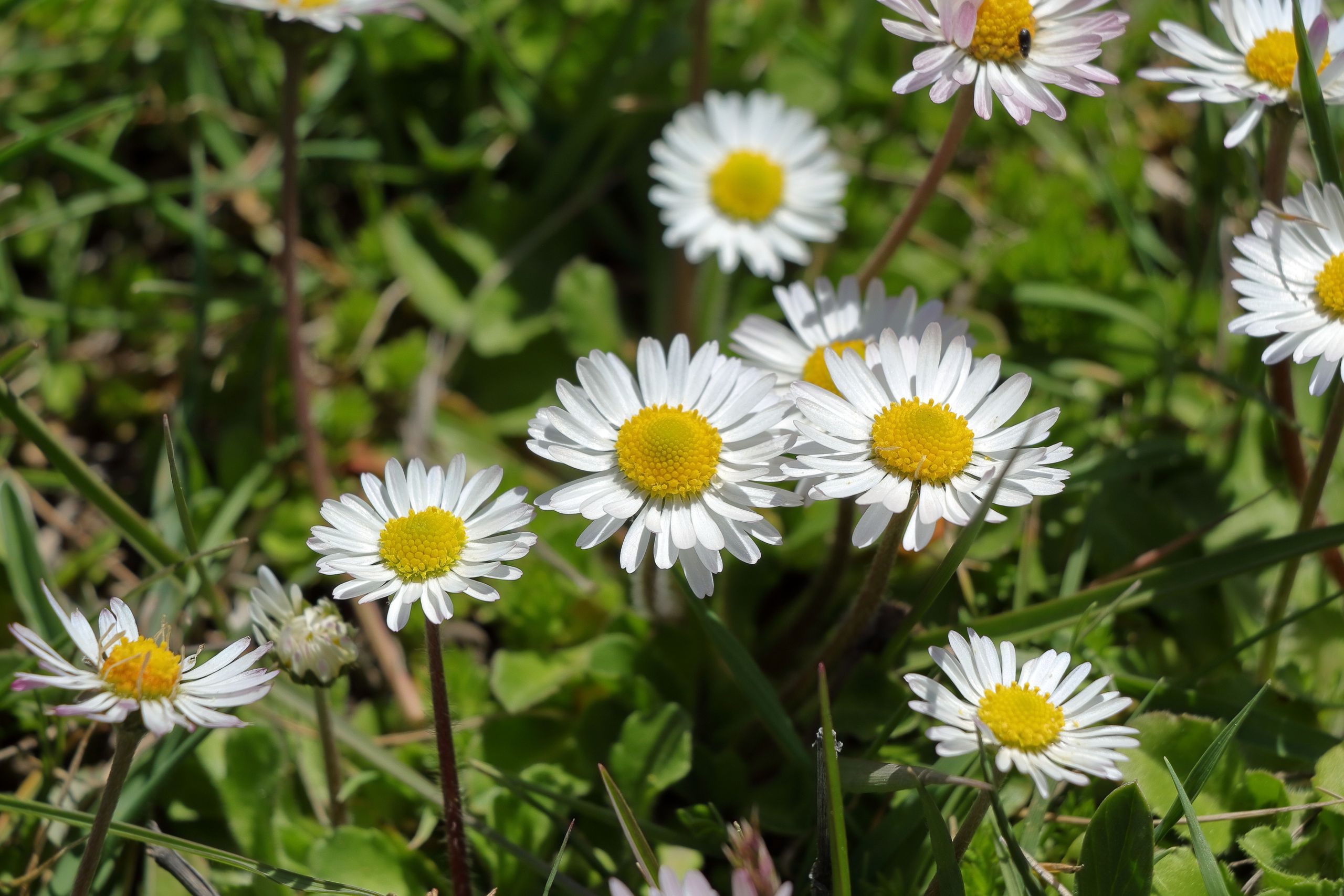
Pliny the Elder’s Natural History devotes part of its twenty-sixth book to plant responses to swellings and tumors, and among the entries sits a modest, familiar flower: the plant called bellis — the common daisy — grouped there alongside mugwort as a resolving agent for scrofulous swelling.¹ The plant’s Latin name has two competing derivations: from bellus, handsome, or from bellum, war. Herbal historians have long favored the second reading.
Writing in 1891, W. T. Fernie summarized centuries of accumulated tradition by tracing the name to “fields of battle”, on account of the plant’s long-standing reputation for closing the wounds of soldiers.² Whichever etymology is correct, the daisy’s older English name preserves the same association: bruisewort. A plant this common, this easily found underfoot in any field — including a field where men had just fought — became, by long habit, part of what a soldier reached for first — what the soldier carries.
The herb that took its name from a warrior
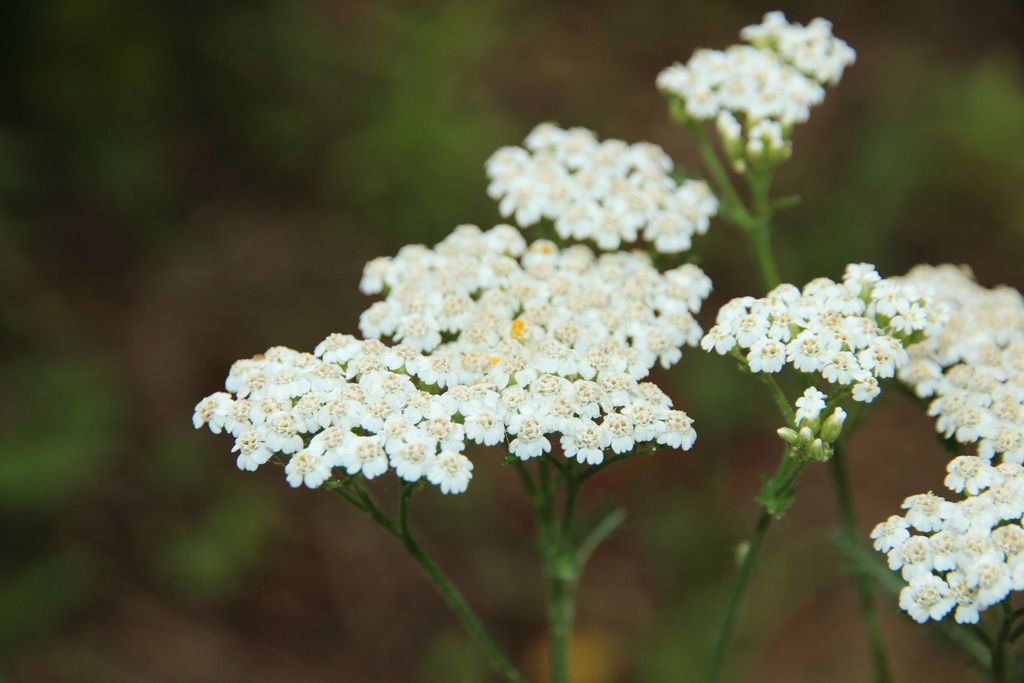
If the daisy’s battlefield reputation rests on folk etymology, yarrow’s rests on a name no one disputes. Achillea millefolium carries the name of Achilles directly, and the tradition holds that the centaur Chiron taught the young warrior to use the plant on the wound he gave King Telephus — a story repeated so consistently across the herbal literature, ancient and modern, that it has functioned as the plant’s origin story regardless of how firmly it can be traced to a single classical text.³
What is not in dispute is Dioscorides’ own attention to the plant: writing in the first century, he addressed yarrow’s use for the kind of gut affliction that, as one modern review of the genus notes in summarizing his account, killed as many soldiers on campaign as steel and lead did.⁴
The plant’s association with military exposure, in other words, runs wider in the classical sources than the wound alone — it extends to the digestive strain of sustained campaign life, a detail that sits closer to what Stepanenko and Dardia now call the “gut dysfunction” of the modern warfighter than most modern readers would expect.
The association did not end with antiquity. Fourteen centuries after Dioscorides, Rembert Dodoens organized his entire herbal not alphabetically but by vertue — grouping plants by what they did rather than merely what they were called — and set the wound-herbs, yarrow among them, into that functional company.⁵
A century further on, Nicholas Culpeper was characteristically blunt about what the plant did: writing in his Complete Herbal, he noted that yarrow “restrains violent bleedings” and that its leaves address running, moist wounds.⁶ Three authors, three centuries, three languages, and one continuous line of attention to the same plant for the same purpose.
The garden Charlemagne ordered
Here is where the thread runs directly through this project’s own ground. Chapter 70 of the Capitulare de Villis — Charlemagne’s ordinance for the management of the imperial estates, circa 800 — lists roughly ninety plants that royal gardens were required to grow, a list this site has already treated in full.⁷
Yarrow sits among them, not as an ornamental afterthought but as required inventory: a supply requirement, issued by imperial order, for an estate system that had to be ready for the same exposures a soldier or a field worker faced in any century. The plant a Greek myth put in the hands of a warrior at Troy, that a Roman naturalist filed under battlefield-adjacent remedies, and that a Renaissance and a seventeenth-century herbalist both kept in the wound-herb category, was also a plant a Carolingian estate manager was obligated to have on hand.
That is not four separate stories about one plant. It is one story about a single, unbroken expectation: that exposure is a constant of martial and agricultural life alike, and that the response to it — grow it, carry it, keep it close — does not need to be reinvented each time it is rediscovered.
What changes, and what does not
The vocabulary at this year’s conference was blast overpressure, performance biomarkers, and Personal Protective Nutrition. The vocabulary in Pliny was bellum and scrofulous swelling. The vocabulary in the Capitulare was simply an inventory list, a ruler’s plain instruction to keep certain plants within reach.
The underlying question — what does this environment cost the body, and what can a person carry against that cost before it happens — has not changed at all. What has gone missing, across the centuries in between, is not the practice but the memory of how continuous it is: the sense that a modern framework and an eighth-century garden order are answers to the same question, asked by people who never met and would not have recognized each other’s language, but who reached, in the end, for the same handful of plants.

©2026 Carolyn Smith-Kizer
If this work is useful to you, you can buy me a coffee — buymeacoffee.com/cskizer
Notes
1. Pliny the Elder, Natural History, trans. John Bostock and H. T. Riley (London: Taylor and Francis, 1855), bk. 26.
2. W. T. Fernie, “The History and Capabilities of Herbal Simples: XXVII. The Common Daisy” (1891), repr. National Library of Medicine, PMC5214242.
3. See, e.g., American Herbal Products Association, “Herbs in History: Yarrow,” ahpa.org, discussing the transmission and limits of the Achilles-Telephus tradition in the classical sources.
4. “A Review on Phytochemistry and Medicinal Properties of the Genus Achillea,” PMC3232110, summarizing Dioscorides’ account of Achillea and campaign dysentery.
5. Rembert Dodoens, A Niewe Herball, or Historie of Plantes, trans. Henry Lyte (London: Gerard Dewes, 1578).
6. Nicholas Culpeper, The Complete Herbal (London, 1653), as quoted in Herbal Reality, “Yarrow (Achillea millefolium),” herbalreality.com.
7. Charlemagne, Capitulare de Villis vel Curtis Imperii, cap. 70 (c. 800); see also Carolyn Smith-Kizer, “Capitulare de Villis REF 1,” atcharlemagnesbehest.com, for the full species treatment on this site.