
Dukkah Spice Blend: Egypt’s Pounded Nuts and Seeds
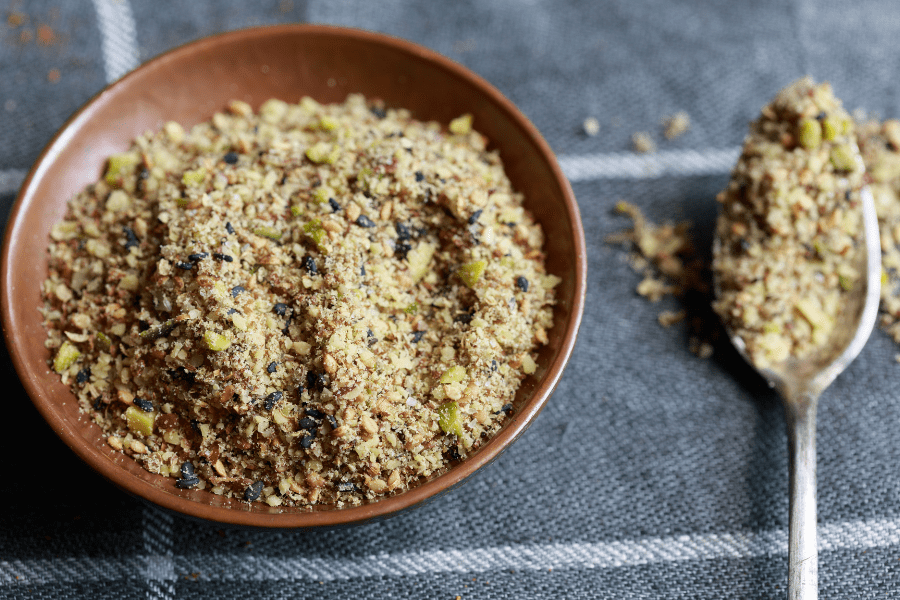
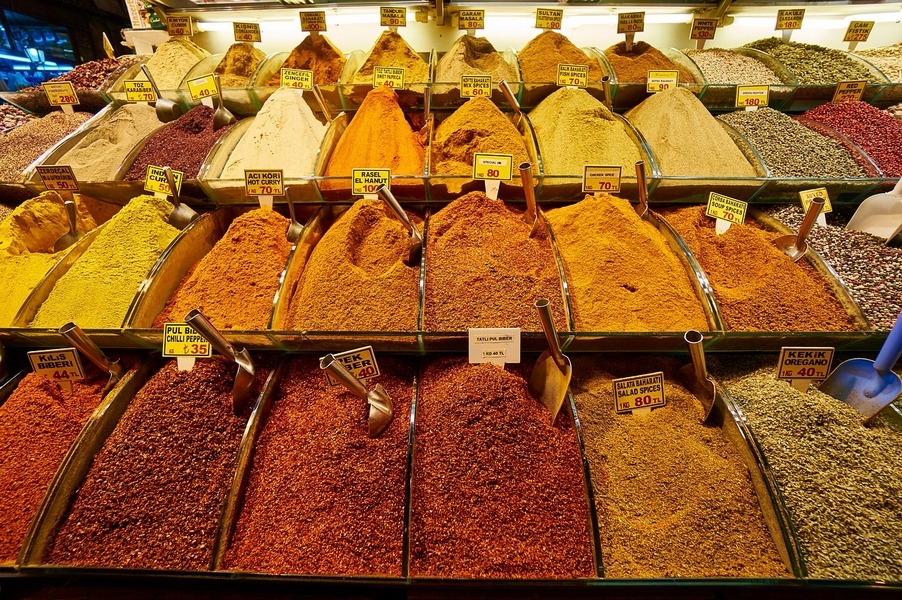
The dukkah spice blend of Egypt is a coarse, fragrant mixture of toasted nuts, seeds and spices, long sold by weight in the spice markets of Cairo, scooped into paper cones. You eat it in the simplest way imaginable: tear a piece of bread, dip it in olive oil, then dip it in the dukkah. The name comes from the Arabic for “to pound,” because everything is roasted and then pounded together into something halfway between a powder and a crumble.
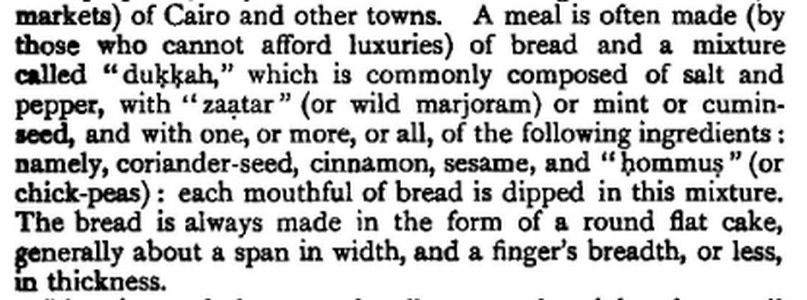
It is not a new fashion. In the 1830s the English scholar Edward William Lane, who lived in Cairo for years, described ordinary Egyptians eating their bread dipped, mouthful by mouthful, in exactly this kind of pounded seasoning.1
At a Glance
- What it is: toasted nuts (usually hazelnuts), sesame, coriander, cumin and pepper, pounded coarsely with salt
- Where from: Egypt
- Taste: nutty, toasty, warm and savoury
- Galenic qualities: warming spices, carried and softened by rich, moistening nuts and seeds
- Best for: the cold, dry melancholic constitution; anyone needing nourishing, easily digested richness
The Galenic Reading
Like za’atar, dukkah is a blend that balances itself. Cumin, coriander, fennel and black pepper are the classic warming, wind-dispelling seeds of the eastern kitchen; on their own they would be hot and drying. The hazelnuts and sesame are rich and oily, warm and moistening, and they soften and carry the spices. Toasting adds warmth throughout.
The result is warm and moist overall: nourishing, grounding and easy on the stomach. That makes it a particularly good food for the melancholic person, who runs cold and dry, and for the elderly and convalescent, for whom richness in small, tasty amounts is a gift. Phlegmatic types do well to lean on the spices and go lighter on the nuts; choleric types can skip the pepper.
The Traditional Variations
Every family and every vendor has their own dukkah. Nineteenth-century accounts mention marjoram, mint and chickpeas among the possibilities. Some cooks add nigella seed, dried thyme or mint; modern versions use almonds, pistachios, pine nuts, pumpkin or sunflower seeds. The simplest dukkah of all is just dried mint, salt and pepper.
From My Kitchen: Dukkah
- ½ cup hazelnuts
- ¼ cup sesame seeds
- 2 tablespoons coriander seeds
- 2 tablespoons cumin seeds
- 1 teaspoon fennel seeds
- 1 teaspoon black peppercorns
- 1 teaspoon dried thyme
- 1 teaspoon salt
- Toast the hazelnuts in a dry pan over medium heat until fragrant and lightly browned. Let them cool, then rub off as much of the papery skin as you can in a tea towel.
- In the same pan, toast the sesame seeds until golden. Set aside.
- Toast the coriander, cumin and fennel seeds together just until they smell wonderful, a minute or two. Do not let them darken. Let everything cool completely.
- Pound the hazelnuts coarsely in a mortar, or pulse briefly in a food processor.
- Add the seeds, peppercorns, thyme and salt and pound or pulse until the mixture looks like coarse breadcrumbs. Stop before it turns to paste.
- Store in an airtight jar for up to a month.
The secret is the toasting. Each nut and seed is toasted separately, because each takes a different time. The heat of the pan releases the aromatic oils that give dukkah its depth. Grind it too fine, or toast it too dark, and you lose it.
The Manners & customs of the modern Egyptians
Edward William Lane · 1908
Ways to Use It
- Bread, oil and dukkah: the classic. Warm bread, good olive oil, and a bowl of dukkah.
- On eggs: soft-boiled or fried.
- On salads and soups: a spoonful adds crunch and warmth.
- On roast vegetables: especially carrots, squash and cauliflower.
- As a crust: pressed onto fish or chicken before baking.
- On labneh or thick yoghurt with a drizzle of oil.
Common Questions
How do you pronounce dukkah?
DOO-kah. You will also see it spelled duqqa or dukka.
What can I use instead of hazelnuts?
Almonds, pistachios or pumpkin seeds all work well. Each changes the flavour, so experiment.
How long does homemade dukkah keep?
About a month in an airtight jar. The nuts can turn rancid, so make small batches.
Who should avoid it?
Anyone with a nut or sesame allergy. Otherwise it is a simple, nourishing food.
© 2024 Carolyn Smith-Kizer
If this work is useful to you, you can buy me a coffee — buymeacoffee.com/cskizer

Notes
- Edward William Lane, An Account of the Manners and Customs of the Modern Egyptians (London: Charles Knight, 1836; repr., London: J. M. Dent, Everyman’s Library, 1908). ↩
Bibliography
Lane, Edward William. An Account of the Manners and Customs of the Modern Egyptians. London: Charles Knight, 1836. Reprint, London: J. M. Dent, Everyman’s Library, 1908.