
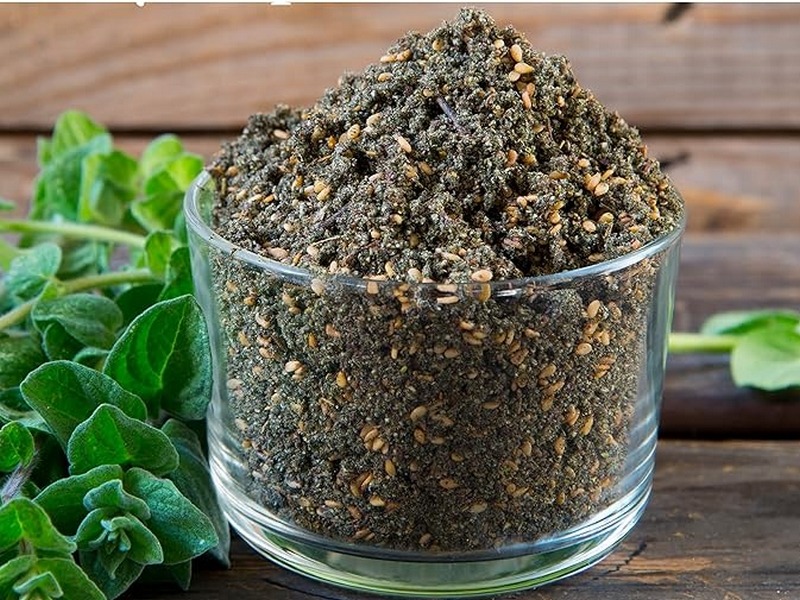
Za’atar Spice Blend: The Levant’s Herb, Sumac and Sesame Mix
Za’atar is two things at once: a plant and a seasoning. The plant is a wild, grey-leaved marjoram of the eastern Mediterranean hills, Origanum syriacum. The za’atar spice blend is that herb, or a blend of its cousins thyme, oregano and marjoram, mixed with toasted sesame, sour red sumac and salt. Across the Levant it sits on every breakfast table beside the olive oil and the bread.
For a reader of Scripture there is a lovely thread here. Many botanists identify the biblical ezov, the “hyssop” dipped in the blood at the first Passover (Exodus 12:22) and named in David’s prayer “Purge me with hyssop, and I shall be clean” (Psalm 51:7), as this same Syrian marjoram.1 The common hyssop of European gardens, Hyssopus officinalis, is a different plant that does not grow wild in the Holy Land.
At a Glance
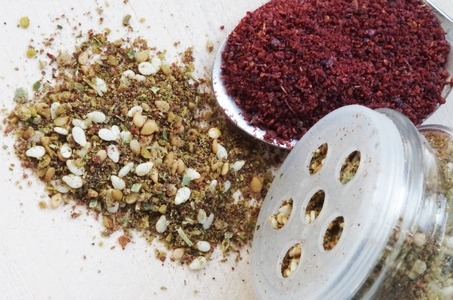
- What it is: a seasoning of za’atar herb (or thyme, oregano and marjoram), toasted sesame, ground sumac and salt
- Where from: the Levant: Lebanon, Syria, Palestine, Jordan
- Taste: herbal, tangy, nutty, savoury
- Galenic qualities: warming and drying herbs, balanced by cool, sour sumac and rich, moistening sesame and olive oil
- Best for: waking a cold, slow appetite; the phlegmatic constitution
The Ingredients
- Za’atar herb or its substitutes: thyme, oregano and marjoram are all mint-family herbs rich in aromatic oils, especially thymol and carvacrol. They are warming, drying and carminative.
- Sumac: the dried, ground red berries of Rhus coriaria, sour and lemony. Before lemons were common in the Mediterranean, sumac was the sour of the kitchen. Note that this is not the poison sumac of North America.
- Sesame seeds: toasted until golden, they bring richness, crunch, calcium and oil.
- Salt: to taste.
The Galenic Reading
Za’atar is a beautifully balanced blend, and a good example of how traditional cooks corrected one ingredient with another. The herbs are hot and dry: on their own they would be harsh and drying. The sumac is sour, astringent and cooling, and it cuts through grease and freshens the palate. The sesame, and the olive oil the blend is almost always eaten with, are warm and moistening, softening the dryness of the herbs.
The whole is gently warming, opening and appetising, a blend that wakes a sluggish morning stomach. It suits the phlegmatic person above all, and the melancholic person when eaten generously with olive oil. Choleric types do well with extra sumac and a lighter hand with the thyme.
What the Research Says
A 2023 review of za’atar’s ingredients found that its herbs and sumac are rich in antioxidant polyphenols and that, in laboratory and animal studies, they influence the gut microbiota and markers of inflammation. The authors call it a promising part of the Mediterranean diet while noting that human trials on the blend itself are still needed.2 I think of za’atar as food first: a delicious way to eat more aromatic herbs every day.
From My Kitchen: Za’atar
- ½ cup sesame seeds
- ¼ cup dried oregano (or za’atar herb, if you can find it)
- ¼ cup dried thyme
- 2 tablespoons dried marjoram
- ¼ cup ground sumac
- 1 teaspoon salt
- Toast the sesame seeds in a dry pan over medium heat, stirring, until golden and fragrant. Let them cool completely.
- Rub the dried herbs between your palms to crush them a little, and mix with the sumac and salt.
- Stir in the cooled sesame.
- Store in a tightly closed jar in a dark cupboard. It keeps its fragrance for two or three months.
Ways to Use It
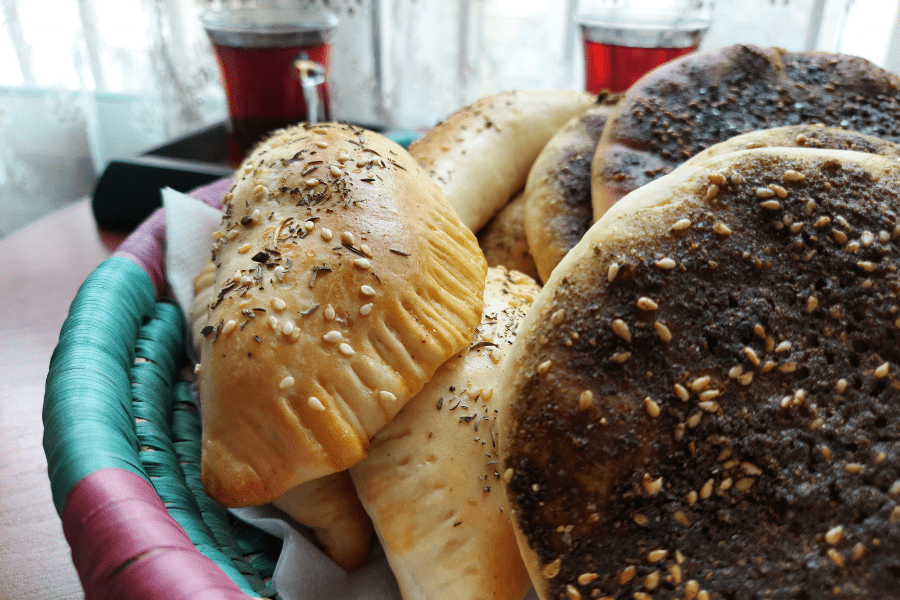
- Za’atar and oil: a saucer of olive oil, a saucer of za’atar, and warm bread to dip in one and then the other. This is the Levantine breakfast.
- Manaqish: flatbread spread with za’atar and olive oil before baking.
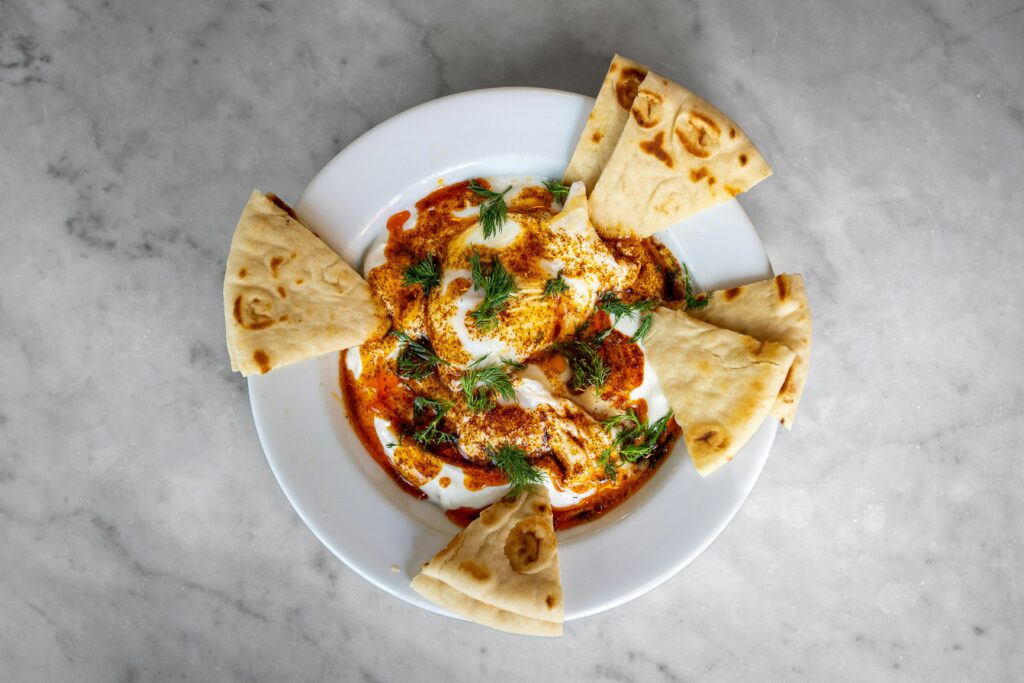
- Labneh: thick strained yoghurt, drizzled with olive oil and showered with za’atar.
- Eggs: on fried, scrambled or poached eggs.
- Roast vegetables and potatoes: toss with olive oil and za’atar before roasting.
- Fish and chicken: as a rub, with lemon and garlic.
- Fattoush: sprinkled over the bread salad.
Common Questions
Is za’atar the same as thyme?
Not quite. In Arabic “za’atar” names both the wild herb Origanum syriacum and the seasoning blend. Outside the Levant the blend is usually made with thyme, oregano and marjoram instead of the wild herb.
Is sumac safe? I thought sumac was poisonous.
Culinary sumac, Rhus coriaria, with its red berries, is a safe and ancient seasoning. The poisonous North American plant has white berries and belongs to a different genus.
Was za’atar really the hyssop of the Bible?
Many botanists identify the biblical ezov with Syrian marjoram, the true za’atar plant, rather than with European garden hyssop.
Who should avoid it?
Anyone allergic to sesame. Otherwise, za’atar is a food seasoning and safe for nearly everyone.
© 2024 Carolyn Smith-Kizer
If this work is useful to you, you can buy me a coffee — buymeacoffee.com/cskizer

Notes
- Michael Zohary, Plants of the Bible (Cambridge: Cambridge University Press, 1982), s.v. “Hyssop.” ↩
- Mohamad Khalil et al., “The Impact of Za’atar Antioxidant Compounds on the Gut Microbiota and Gastrointestinal Disorders: Insights for Future Clinical Applications,” Antioxidants 12, no. 2 (2023): 426, https://doi.org/10.3390/antiox12020426. ↩
Bibliography
Khalil, Mohamad, Hala Abdallah, Danute Razuka-Ebela, Maria Calasso, Maria De Angelis, and Piero Portincasa. “The Impact of Za’atar Antioxidant Compounds on the Gut Microbiota and Gastrointestinal Disorders: Insights for Future Clinical Applications.” Antioxidants 12, no. 2 (2023): 426. https://doi.org/10.3390/antiox12020426.
Zohary, Michael. Plants of the Bible. Cambridge: Cambridge University Press, 1982.