
Herbal Teas for an Upset Stomach: Seven, Read by Temperament
An upset stomach is the oldest reason there is for a cup of tea, and herbal teas for an upset stomach are some of the oldest kitchen knowledge we have. Long before anyone spoke of “digestive wellness,” every farmhouse in Europe kept a few dried bunches by the stove for exactly this: wind, cramp, queasiness, a meal that sat badly. Four of the seven herbs below were on Charlemagne’s list of plants to be grown on every royal estate: mint, fennel, marshmallow and mallow.1
What the Galenic tradition adds is the question of which stomach. A cold, slow stomach that sits heavy for hours wants a different cup from a hot, sour, burning one. I have grouped the seven teas accordingly.
Teas for the Cold, Slow Stomach
These are the warming carminatives: they wake a sluggish digestion, scatter wind and ease cramping. They suit the phlegmatic and melancholic constitutions, and anyone whose stomach feels heavy, bloated and slow.
1. Ginger
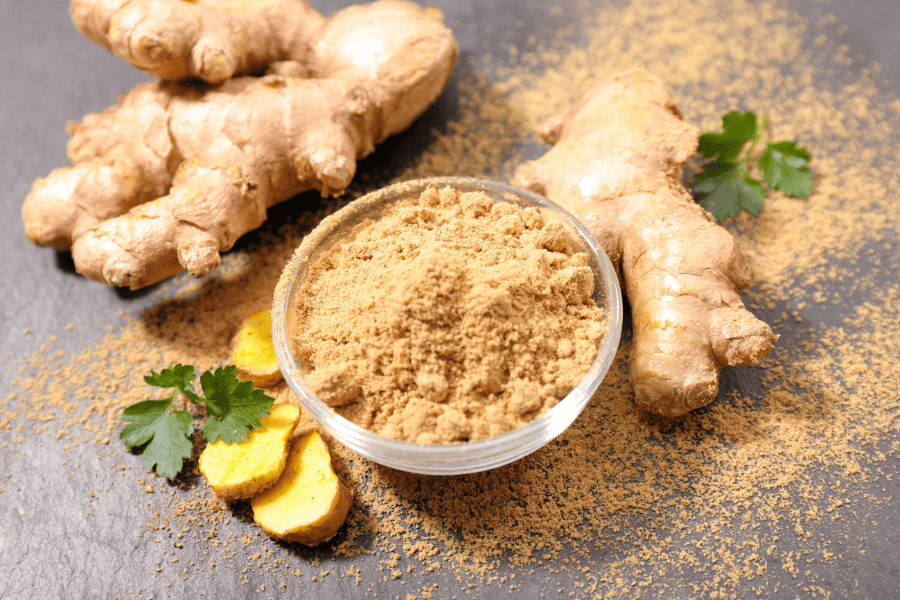
Ginger is hot and dry, the most warming of the seven. In a small trial in people with functional indigestion, ginger sped up the emptying of the stomach.2 It is also the best-studied herb for nausea; a meta-analysis found it eased the nausea of pregnancy.3 Slice a thumb-length of fresh root thinly, steep in boiling water, covered, for 10 minutes. Candied ginger slices are a pocket-sized alternative, and some of my clients’ daughters have used them for period cramps at school, where pills are not allowed. See the ginger monograph for more.
2. Fennel
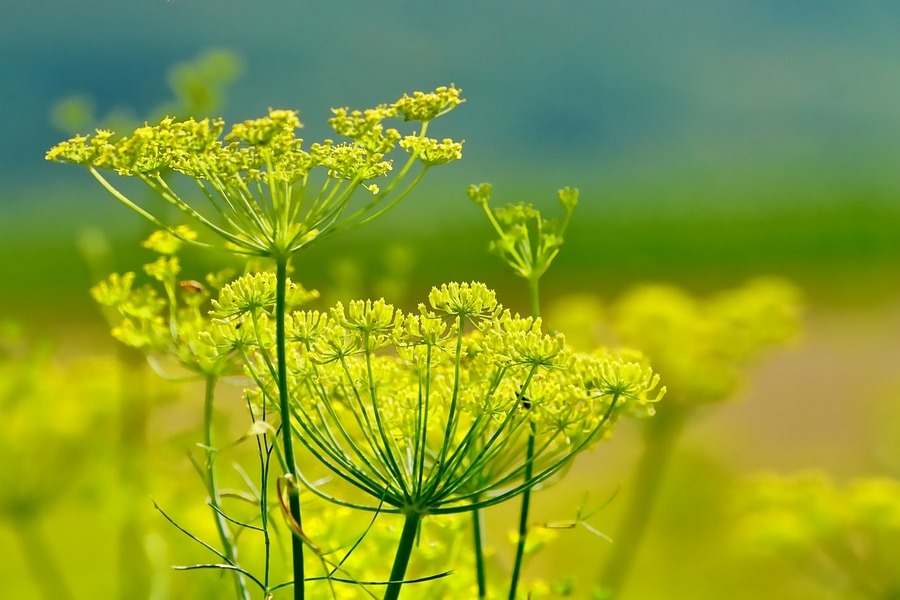
Fennel is warm and gently drying, with a sweet, anise-like taste that makes it the friendliest of the digestive seeds. It is the classic herb for wind and bloating, and gentle enough for children: in a controlled trial, a fennel seed oil emulsion relieved colic in infants.4 Crush a teaspoon of seed just before use and steep, covered, for 10 minutes. See my fennel monograph.
Teas for the Tense, Cramping Stomach
These are the relaxing carminatives. They release spasm and calm the nervous gut. They suit every constitution, and especially anyone whose digestion knots up with worry.
3. Peppermint
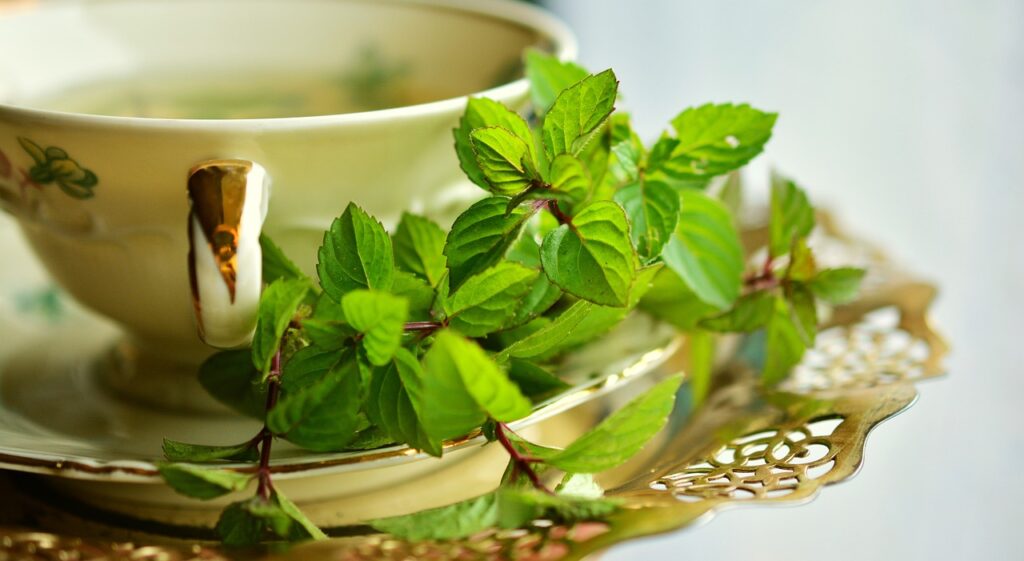
Peppermint feels cold but opens and disperses. Its oil relaxes the smooth muscle of the gut; enteric-coated peppermint oil is well proven for the cramping of irritable bowel syndrome.5 As a tea it eases wind and fullness after meals. Avoid it if you suffer from reflux, as it can relax the valve at the top of the stomach. See peppermint.
4. Chamomile
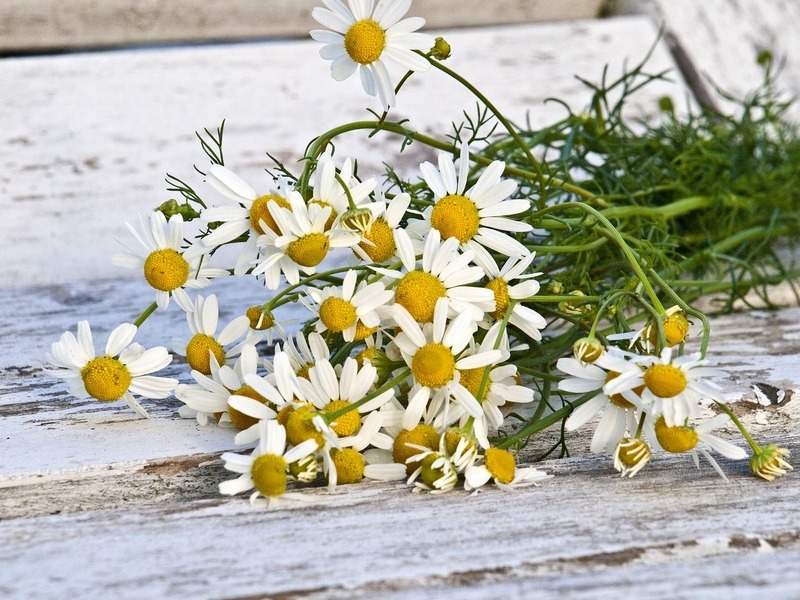
Chamomile is the gentlest of all: carminative, antispasmodic and calming at once.6 A combination of chamomile, fennel and lemon balm reduced crying time in colicky breastfed babies, which tells you how gentle these three are.7 Steep covered, so the blue oil stays in the cup. See chamomile.
5. Lemon Balm
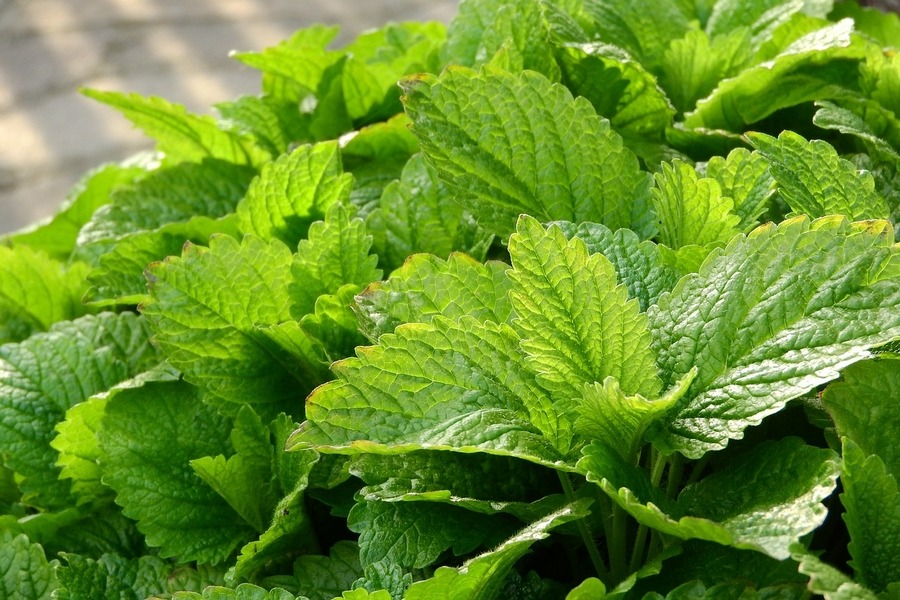
Lemon balm is for the stomach that churns with nerves. The old authors prized it above all for cheering the heart, and modern work agrees it calms: a single dose reduced the effects of laboratory-induced stress in healthy volunteers.8 Use fresh leaves if you can; their lemony oil fades quickly on drying.
Teas for the Hot, Sour, Burning Stomach
These are the soothing demulcents. Rather than warming or stimulating, they coat, cool and calm an irritated lining. They suit the choleric constitution, heartburn and the burning stomach.
6. Marshmallow Root
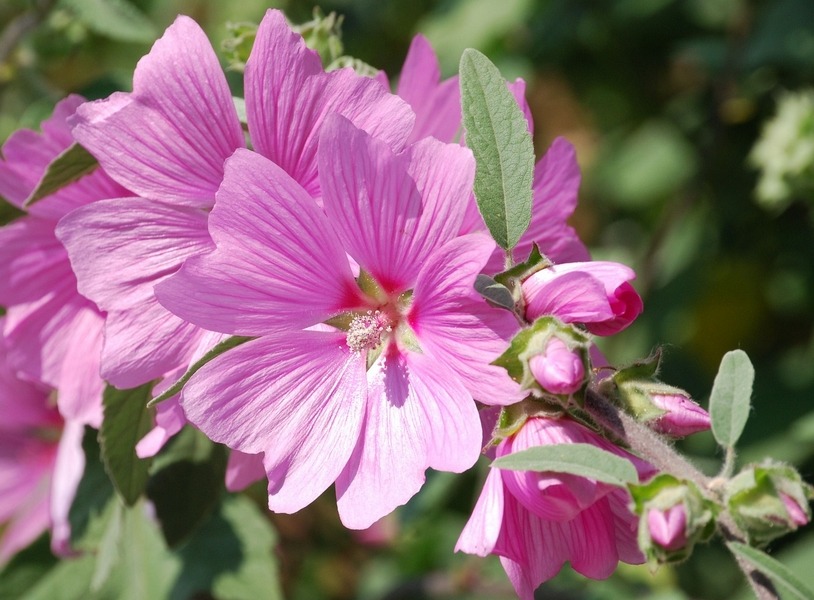
Marshmallow and its cousin the common mallow are the classical emollients: moistening, soft and soothing. The root is rich in mucilage, which in laboratory work clung to the surface of epithelial cells and supported their repair.9 Make it as a cold infusion: a tablespoon of chopped root in a cup of cool water, left for several hours or overnight, then strained. The result is slippery, mild and comforting.
7. Licorice Root
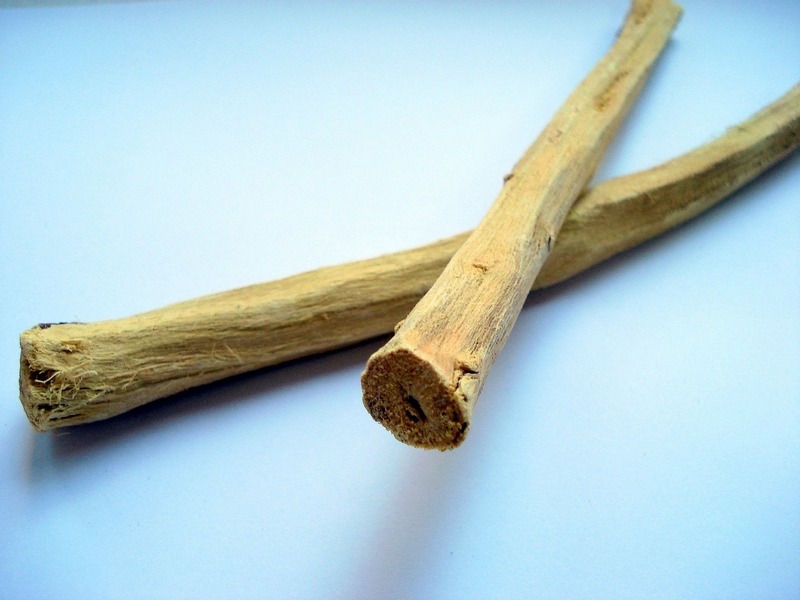
Licorice is sweet and moistening, a soothing, coating root for a sore, acid stomach. In a placebo-controlled trial, a licorice extract eased the symptoms of functional indigestion.10 Simmer a small piece of root for 10 minutes, or add a pinch to other blends to soften and sweeten them. Use it sparingly: regular large amounts of licorice can raise blood pressure and lower potassium.11 Avoid it if you have high blood pressure, heart or kidney disease, or are pregnant.
How I Brew a Medicinal Cup
- Use 1–2 teaspoons of dried herb (or a small handful of fresh) per cup.
- Use water just off the boil for leaves, flowers and seeds; simmer roots and barks.
- Always cover the cup while it steeps, to keep in the aromatic oils that do much of the work.
- Steep 10–15 minutes for a medicinal strength. The longer it steeps, the stronger it gets.
- Drink it warm, slowly, between or just after meals.

Safety
- Persistent or severe stomach pain, vomiting, blood in the stool or unexplained weight loss need a doctor, not a teapot.
- Peppermint can worsen reflux.
- Licorice should be used sparingly and avoided with high blood pressure, heart or kidney disease and in pregnancy.
- Chamomile and lemon balm are generally gentle, but anyone allergic to the daisy family should avoid chamomile.
- If you take regular medications, take medicinal teas at least an hour or two away from them, and mention them to your doctor.
Common Questions
Which tea is best for bloating?
Fennel first, then peppermint or ginger, depending on whether your stomach feels cold and slow (ginger, fennel) or tense and crampy (peppermint).
Which tea is best for heartburn?
Not peppermint. Try a cold infusion of marshmallow root, a little licorice, or chamomile.
Can children drink these teas?
Weak chamomile and fennel teas have a long history of use for children. Avoid licorice and strong peppermint, and ask your practitioner for very young children.
Can I blend them?
Yes. Chamomile with fennel and a pinch of peppermint is my everyday after-dinner cup.
© 2024 Carolyn Smith-Kizer
If this work is useful to you, you can buy me a coffee — buymeacoffee.com/cskizer

Notes
- Capitulare de villis, c. 70, in Capitularia regum Francorum, ed. Alfred Boretius, MGH Capitularia 1 (Hanover: Hahn, 1883), no. 32. See also the ACB Capitulare de Villis plant list. ↩
- M. L. Hu et al., “Effect of Ginger on Gastric Motility and Symptoms of Functional Dyspepsia,” World Journal of Gastroenterology 17, no. 1 (2011): 105–10, https://doi.org/10.3748/wjg.v17.i1.105. ↩
- Ernest Viljoen et al., “A Systematic Review and Meta-Analysis of the Effect and Safety of Ginger in the Treatment of Pregnancy-Associated Nausea and Vomiting,” Nutrition Journal 13 (2014): 20, https://doi.org/10.1186/1475-2891-13-20. ↩
- Igor Alexandrovich et al., “The Effect of Fennel (Foeniculum vulgare) Seed Oil Emulsion in Infantile Colic: A Randomized, Placebo-Controlled Study,” Alternative Therapies in Health and Medicine 9, no. 4 (2003): 58–61. ↩
- Nuha Alammar et al., “The Impact of Peppermint Oil on the Irritable Bowel Syndrome: A Meta-Analysis of the Pooled Clinical Data,” BMC Complementary and Alternative Medicine 19 (2019): 21, https://doi.org/10.1186/s12906-018-2409-0. ↩
- Diane L. McKay and Jeffrey B. Blumberg, “A Review of the Bioactivity and Potential Health Benefits of Chamomile Tea (Matricaria recutita L.),” Phytotherapy Research 20, no. 7 (2006): 519–30, https://doi.org/10.1002/ptr.1900. ↩
- Francesco Savino et al., “A Randomized Double-Blind Placebo-Controlled Trial of a Standardized Extract of Matricariae recutita, Foeniculum vulgare and Melissa officinalis (ColiMil) in the Treatment of Breastfed Colicky Infants,” Phytotherapy Research 19, no. 4 (2005): 335–40. ↩
- D. O. Kennedy, W. Little, and A. B. Scholey, “Attenuation of Laboratory-Induced Stress in Humans after Acute Administration of Melissa officinalis (Lemon Balm),” Psychosomatic Medicine 66, no. 4 (2004): 607–13. ↩
- Alexandra Deters et al., “Aqueous Extracts and Polysaccharides from Marshmallow Roots (Althea officinalis L.): Cellular Internalisation and Stimulation of Cell Physiology of Human Epithelial Cells in Vitro,” Journal of Ethnopharmacology 127, no. 1 (2010): 62–69. ↩
- K. R. Raveendra et al., “An Extract of Glycyrrhiza glabra (GutGard) Alleviates Symptoms of Functional Dyspepsia: A Randomized, Double-Blind, Placebo-Controlled Study,” Evidence-Based Complementary and Alternative Medicine 2012 (2012): 216970, https://doi.org/10.1155/2012/216970. ↩
- Mikkel R. Deutch et al., “Bioactive Candy: Effects of Licorice on the Cardiovascular System,” Foods 8, no. 10 (2019): 495, https://doi.org/10.3390/foods8100495. ↩
Bibliography
Alammar, Nuha, Lixing Wang, Behnam Saberi, et al. “The Impact of Peppermint Oil on the Irritable Bowel Syndrome: A Meta-Analysis of the Pooled Clinical Data.” BMC Complementary and Alternative Medicine 19 (2019): 21. https://doi.org/10.1186/s12906-018-2409-0.
Alexandrovich, Igor, Olga Rakovitskaya, Elena Kolmo, Tatyana Sidorova, and Sergey Shushunov. “The Effect of Fennel (Foeniculum vulgare) Seed Oil Emulsion in Infantile Colic: A Randomized, Placebo-Controlled Study.” Alternative Therapies in Health and Medicine 9, no. 4 (2003): 58–61.
Capitulare de villis. In Capitularia regum Francorum, edited by Alfred Boretius, no. 32. MGH Capitularia 1. Hanover: Hahn, 1883.
Deters, Alexandra, Janina Zippel, Nils Hellenbrand, Dirk Pappai, Christoph Possemeyer, and Andreas Hensel. “Aqueous Extracts and Polysaccharides from Marshmallow Roots (Althea officinalis L.): Cellular Internalisation and Stimulation of Cell Physiology of Human Epithelial Cells in Vitro.” Journal of Ethnopharmacology 127, no. 1 (2010): 62–69..
Deutch, Mikkel R., Daniela Grimm, Markus Wehland, Manfred Infanger, and Marcus Krüger. “Bioactive Candy: Effects of Licorice on the Cardiovascular System.” Foods 8, no. 10 (2019): 495. https://doi.org/10.3390/foods8100495.
Hu, M. L., et al. “Effect of Ginger on Gastric Motility and Symptoms of Functional Dyspepsia.” World Journal of Gastroenterology 17, no. 1 (2011): 105–10. https://doi.org/10.3748/wjg.v17.i1.105.
Kennedy, D. O., W. Little, and A. B. Scholey. “Attenuation of Laboratory-Induced Stress in Humans after Acute Administration of Melissa officinalis (Lemon Balm).” Psychosomatic Medicine 66, no. 4 (2004): 607–13..
McKay, Diane L., and Jeffrey B. Blumberg. “A Review of the Bioactivity and Potential Health Benefits of Chamomile Tea (Matricaria recutita L.).” Phytotherapy Research 20, no. 7 (2006): 519–30. https://doi.org/10.1002/ptr.1900.
Raveendra, K. R., Jayachandra, V. Srinivasa, et al. “An Extract of Glycyrrhiza glabra (GutGard) Alleviates Symptoms of Functional Dyspepsia: A Randomized, Double-Blind, Placebo-Controlled Study.” Evidence-Based Complementary and Alternative Medicine 2012 (2012): 216970. https://doi.org/10.1155/2012/216970.
Savino, Francesco, Francesco Cresi, Emanuela Castagno, Leandra Silvestro, and Roberto Oggero. “A Randomized Double-Blind Placebo-Controlled Trial of a Standardized Extract of Matricariae recutita, Foeniculum vulgare and Melissa officinalis (ColiMil) in the Treatment of Breastfed Colicky Infants.” Phytotherapy Research 19, no. 4 (2005): 335–40..
Viljoen, Ernest, Janicke Visser, Nelene Koen, and Alfred Musekiwa. “A Systematic Review and Meta-Analysis of the Effect and Safety of Ginger in the Treatment of Pregnancy-Associated Nausea and Vomiting.” Nutrition Journal 13 (2014): 20. https://doi.org/10.1186/1475-2891-13-20.