
Peppermint for Digestion: The Herb That Feels Cold
Peppermint is the herb almost everyone already owns, in a tea bag at the back of the cupboard. It deserves better than that. When people reach for peppermint for digestion, they are reaching for the herb modern research has tested most thoroughly, and the one whose classical reading is the most interesting, because it seems to contradict itself.
Mint is old in our tradition. Charlemagne’s Capitulare de villis ordered mint, horse mint, wild mint and pennyroyal grown on every royal estate,1 and Walahfrid Strabo gave mint its own verses in his little garden poem, the Hortulus, a generation later.2 Peppermint itself is younger: a natural cross between water mint and spearmint, first recorded in England in the 1690s. It inherited the whole mint tradition, and then concentrated it.
At a Glance
- Botanical name: Mentha × piperita L. (water mint × spearmint)
- Common names: peppermint, menthe poivrée (French)
- Family: Lamiaceae (the mint family)
- Part used: leaf and flowering tops; the distilled essential oil
- Taste: pungent, aromatic, then cool
- Galenic qualities: warming and drying in the classical reading of mints, though it feels cold
- Modern energetics: cooling, drying, dispersing
- Actions: carminative, antispasmodic, diaphoretic, mild cholagogue, anti-nausea, decongestant
- Main cautions: reflux, gallstones and liver disease (for the oil), young children (for the oil)
- Conservation status: widely cultivated; not at risk
The Plant
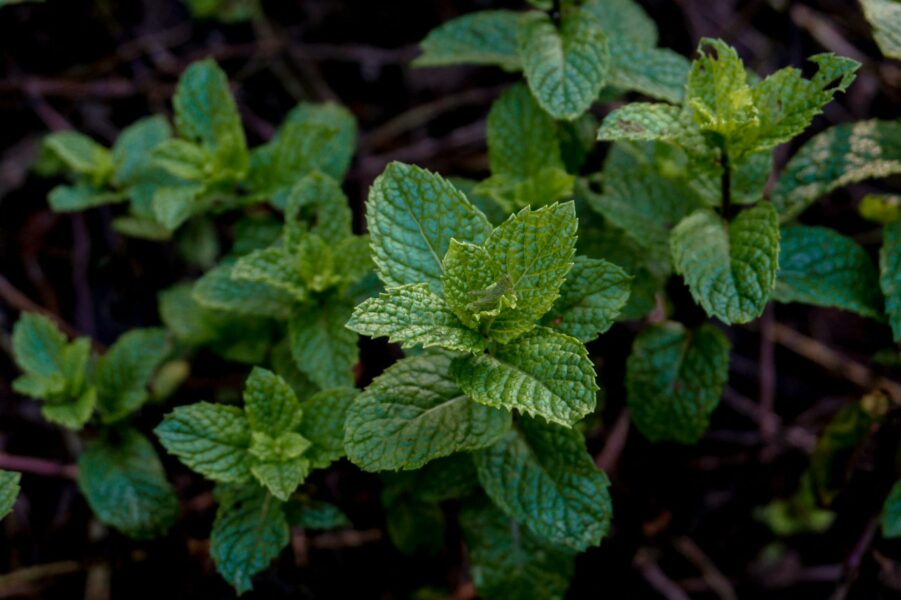
Peppermint is a vigorous perennial 30–90 cm tall, with the square stems of its family, often flushed purple. The leaves are opposite, lance-shaped, sharply toothed and dark green, sometimes with a purple tinge, on short stalks. In late summer it carries blunt spikes of tiny lilac flowers at the stem tips. Because it is a hybrid it sets little or no viable seed and spreads instead by fast-running stolons, which is why a single plant can colonise a garden bed within two seasons.
The Galenic Reading
Here is the puzzle. Taste peppermint and your mouth goes cold. Yet the classical authors, reading the mints by their pungency and their power to scatter wind and promote sweat, counted them among the warming, drying herbs. Modern herbal energetics calls peppermint cooling. Both are describing something real.
Peppermint is a diffusive herb. Its menthol stimulates the nerve endings that sense cold, so it feels cooling, but its action is to open, disperse and move outward: it relaxes spasm, drives wind downward and out, opens the pores and brings out a sweat. In practice it cools the person by letting heat escape. That is why it is the classic hot-weather tea and the classic tea for the first feverish stage of a cold.
- Choleric (hot and dry): excellent as a light infusion, for its cooling, spasm-relaxing effect on a tense, overheated stomach. But it can relax the valve at the top of the stomach, so choleric people prone to heartburn should watch for reflux.
- Sanguine (hot and moist): very good, especially after rich meals in summer.
- Phlegmatic (cold and moist): useful for wind and heaviness, but better blended with something truly warming, such as ginger or fennel, so it doesn’t chill a cold stomach further.
- Melancholic (cold and dry): helpful for cramping and wind, but drying. Pair it with chamomile or a little licorice.
Uses
1. Cramping, Wind and the Irritable Bowel
This is peppermint’s great modern triumph. The oil relaxes the smooth muscle of the gut wall, easing cramping, bloating and wind. A meta-analysis of twelve controlled trials found that enteric-coated peppermint oil capsules significantly improved overall symptoms and abdominal pain in irritable bowel syndrome compared with placebo.3 The European Medicines Agency recognises peppermint oil taken by mouth for the relief of minor spasms, flatulence and abdominal pain, especially in irritable bowel syndrome.4
2. Indigestion and Fullness
As a tea after meals, peppermint eases the heavy, gassy fullness of indigestion and gently increases the flow of bile.5 It pairs naturally with fennel and caraway, the other great wind-scattering seeds, which the Capitulare de villis also listed. My own after-dinner blend is peppermint, chamomile and a pinch of fennel seed.

3. Nausea
Peppermint has long been sipped or sniffed for queasiness and travel sickness. In hospital research on nausea after surgery, inhaled aromatherapy, often with peppermint oil, appeared to reduce the number of people needing anti-sickness drugs, though the evidence is of low quality.6 A cup of weak peppermint tea, or a single drop of oil on a handkerchief, is a gentle first step.
4. Colds and Headaches
Hot peppermint tea opens the pores and brings on a light sweat at the start of a cold, and the steam clears a stuffy nose. Traditionally it is blended with elderflower and yarrow for this purpose. Diluted peppermint oil rubbed on the forehead and temples is recognised in Europe for relieving mild tension headache.7
Constituents
Peppermint leaf contains:8
- Volatile oil (about 1–3% of the dried leaf): mainly menthol and menthone, with menthyl acetate, 1,8-cineole and menthofuran
- Flavonoids: eriocitrin, luteolin and hesperidin
- Phenolic acids: rosmarinic and caffeic acids
- Tannins and bitter principles
The tea carries the leaf’s gentler balance of oil, flavonoids and bitters. The capsules deliver concentrated oil, which is why the two behave differently.
Preparations and Dosage
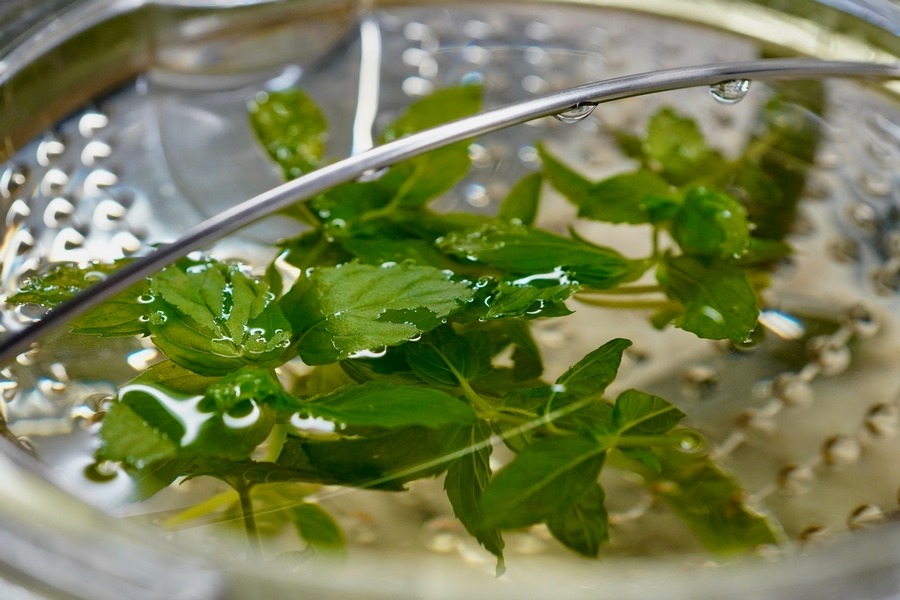
- Infusion: 1–2 teaspoons of dried leaf (or a small handful of fresh) per cup of just-boiled water. Cover while it steeps, 5–10 minutes, to keep the oil in the cup. Up to three cups a day, between or after meals.
- Enteric-coated oil capsules: the IBS trials typically used about 0.2–0.4 ml of oil (one or two capsules) up to three times a day.9 The coating carries the oil past the stomach, which reduces heartburn.
- After-dinner blend: 1 teaspoon peppermint, 1 teaspoon chamomile, ¼ teaspoon fennel seed per cup. Steep 5–7 minutes.
- Cold infusion: a handful of crushed fresh leaves and a few slices of lemon in a jug of cold water, overnight in the refrigerator.
- For headache: one or two drops of essential oil diluted in a teaspoon of carrier oil, rubbed on the temples. Keep away from the eyes. Never take the essential oil by mouth undiluted.

Harvesting, Growing and Sustainability
Peppermint grows almost too well in the Creuse. Give it moist, rich soil and some sun, and plant it in a large pot or a sunken bucket to stop it running through your beds. Since it rarely sets seed, start it from a rooted runner or a nursery plant, and choose by smell: good peppermint is sharp and clean, not musty.
Cut the stems just as the first flower buds appear, on a dry morning after the dew has lifted, when the oil content is highest. You can cut it back hard two or three times a summer. Hang in small bunches in a shaded, airy place, then strip and store the whole leaves in a dark glass jar. Peppermint is grown widely and is not at risk.
Safety and Interactions
- Heartburn and reflux: peppermint can relax the valve at the top of the stomach and make reflux worse. Heartburn is the commonest side effect of the oil.10 If you have reflux, try enteric-coated capsules or skip peppermint.
- Liver and gallbladder: peppermint oil preparations for the gut should not be used by people with gallstones or other bile problems, liver disease, or very low stomach acid.11
- Children: peppermint oil must never be used on or near the face of a baby or a child under two; in Europe the oil is not advised for digestive use under age eight.12 Weak peppermint tea is a different matter, but ask your practitioner for small children.
- Pregnancy: the tea in ordinary amounts is widely used; avoid the concentrated oil.
- Medications: peppermint oil may change how some medications are absorbed or processed by the liver. Take capsules at least two hours away from antacids, which dissolve the coating early.
Common Questions
Is peppermint warming or cooling?
Both, in a sense. It feels cold because menthol stimulates the nerves that sense cold, but it acts by opening, dispersing and releasing heat. The classical authors read the mints as warming; modern herbalists call peppermint cooling.
Tea or capsules?
Tea for everyday wind, fullness and after-dinner comfort. Enteric-coated capsules for irritable bowel cramping, which is where the strongest research lies.
Why does peppermint give me heartburn?
It relaxes the muscle at the top of the stomach, which can let acid rise. If that happens, use enteric-coated capsules or choose fennel or chamomile instead.
Which constitution benefits most?
Hot constitutions, choleric and sanguine, benefit most from its cooling, dispersing action. Cold types do better blending it with ginger or fennel.
© 2024 Carolyn Smith-Kizer
If this work is useful to you, you can buy me a coffee — buymeacoffee.com/cskizer

Notes
- Capitulare de villis, c. 70, in Capitularia regum Francorum, ed. Alfred Boretius, MGH Capitularia 1 (Hanover: Hahn, 1883), no. 32. See also the ACB Capitulare de Villis plant list. ↩
- Walahfrid Strabo, Hortulus, trans. Raef Payne (Pittsburgh: Hunt Botanical Library, 1966). ↩
- Nuha Alammar et al., “The Impact of Peppermint Oil on the Irritable Bowel Syndrome: A Meta-Analysis of the Pooled Clinical Data,” BMC Complementary and Alternative Medicine 19 (2019): 21, https://doi.org/10.1186/s12906-018-2409-0. ↩
- European Medicines Agency, Committee on Herbal Medicinal Products, Peppermint Oil: Summary for the Public, EMA/55625/2020 (Amsterdam: EMA, 2020), https://www.ema.europa.eu/en/documents/herbal-summary/peppermint-oil-summary-public_en.pdf. ↩
- Diane L. McKay and Jeffrey B. Blumberg, “A Review of the Bioactivity and Potential Health Benefits of Peppermint Tea (Mentha piperita L.),” Phytotherapy Research 20, no. 8 (2006): 619–33, https://doi.org/10.1002/ptr.1936. ↩
- Sonia Hines et al., “Aromatherapy for Treatment of Postoperative Nausea and Vomiting,” Cochrane Database of Systematic Reviews, no. 3 (2018): CD007598, https://doi.org/10.1002/14651858.CD007598.pub3. ↩
- European Medicines Agency, Peppermint Oil. ↩
- McKay and Blumberg, “Peppermint Tea.” ↩
- Alammar et al., “Impact of Peppermint Oil.” ↩
- European Medicines Agency, Peppermint Oil. ↩
- European Medicines Agency, Peppermint Oil. ↩
- European Medicines Agency, Peppermint Oil. ↩
Bibliography
Alammar, Nuha, Lixing Wang, Behnam Saberi, et al. “The Impact of Peppermint Oil on the Irritable Bowel Syndrome: A Meta-Analysis of the Pooled Clinical Data.” BMC Complementary and Alternative Medicine 19 (2019): 21. https://doi.org/10.1186/s12906-018-2409-0.
Capitulare de villis. In Capitularia regum Francorum, edited by Alfred Boretius, no. 32. MGH Capitularia 1. Hanover: Hahn, 1883.
European Medicines Agency, Committee on Herbal Medicinal Products. Peppermint Oil: Summary for the Public. EMA/55625/2020. Amsterdam: EMA, 2020. https://www.ema.europa.eu/en/documents/herbal-summary/peppermint-oil-summary-public_en.pdf.
Hines, Sonia, Elizabeth Steels, Anne Chang, and Kristen Gibbons. “Aromatherapy for Treatment of Postoperative Nausea and Vomiting.” Cochrane Database of Systematic Reviews, no. 3 (2018): CD007598. https://doi.org/10.1002/14651858.CD007598.pub3.
McKay, Diane L., and Jeffrey B. Blumberg. “A Review of the Bioactivity and Potential Health Benefits of Peppermint Tea (Mentha piperita L.).” Phytotherapy Research 20, no. 8 (2006): 619–33. https://doi.org/10.1002/ptr.1936.
Walahfrid Strabo. Hortulus. Translated by Raef Payne. Pittsburgh: Hunt Botanical Library, 1966.