
Turmeric in Galenic Herbalism: The Golden Root of the Liver
Turmeric in Galenic herbalism has an unusual standing: it is the one spice in this little series that Europe knew in antiquity. Dioscorides described an “Indian cyperus,” a root shaped like ginger that stained the saliva yellow when chewed, and the old commentators agreed it was turmeric.1 Its Latin name, curcuma, comes through Arabic from the Persian word for saffron, and for centuries European apothecaries sold it as a cheaper “Indian saffron.”
Today turmeric has become the most famous anti-inflammatory herb in the world, mostly in capsule form. I want to bring it back into the kitchen and the stillroom, and to read it the way our predecessors did.
At a Glance
- Botanical name: Curcuma longa L. (syn. C. domestica Valeton)
- Common names: turmeric, Indian saffron, haridra (Sanskrit), curcuma (French)
- Family: Zingiberaceae (the ginger family)
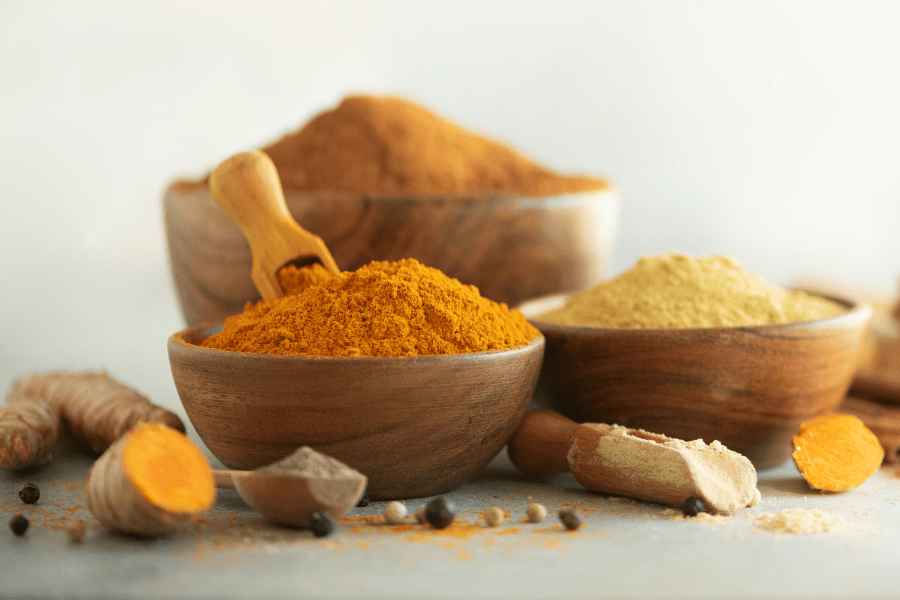
- Part used: rhizome, fresh or dried
- Taste: bitter, pungent, earthy
- Galenic qualities: warming and drying, an opening herb for the liver
- Modern energetics: warm, dry, bitter — the systems agree
- Actions: anti-inflammatory, cholagogue (increases bile flow), carminative, antioxidant, vulnerary (externally)
- Main cautions: gallstones and bile-duct obstruction, blood thinners, high-dose supplements and the liver, pregnancy
- Conservation status: a cultivated crop; not at risk
The Plant
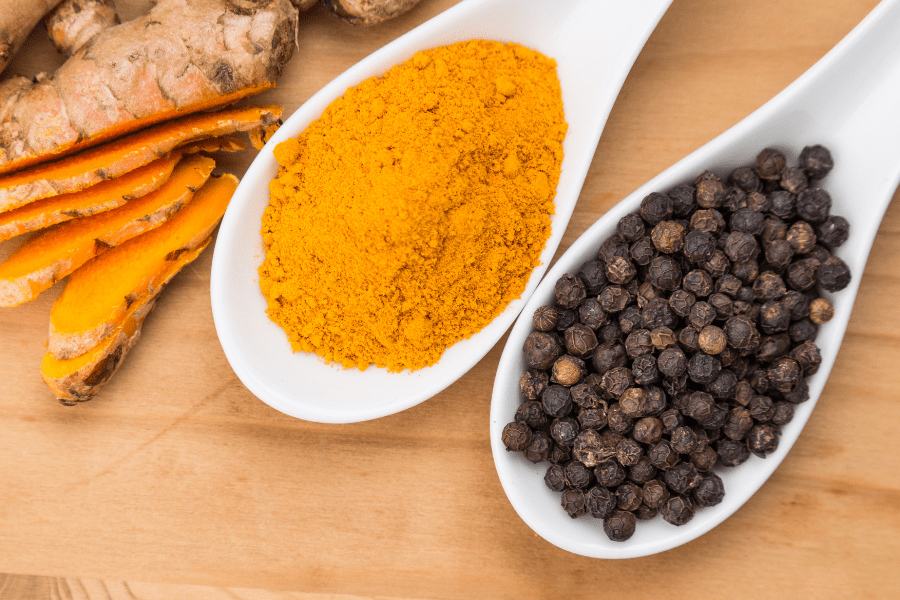
Turmeric is a leafy perennial about a metre tall, with no true stem above ground: what looks like a stem is a sheaf of rolled leaf bases. The long, broad, glossy leaves rise straight from the rhizome. In the rains it sends up a fat spike of pale green and white bracts, often flushed with pink, with small yellow flowers tucked between them. Underground lies the treasure, a knobbly, branching rhizome, brown-skinned and brilliant orange inside, much like its cousin ginger. Turmeric sets almost no seed and is propagated entirely from pieces of rhizome.
The Galenic Reading
A bitter, pungent, aromatic root is warming and drying, and bitterness in particular is the taste that opens the liver and moves bile. That is exactly how European physicians used turmeric for centuries: it was valued for “hepatic and other visceral diseases, and especially in jaundice.”2 Its yellow colour, which even tints the urine, made the link to the yellow bile of jaundice seem self-evident.
- Phlegmatic (cold and moist): an excellent match. Turmeric warms and dries a damp, sluggish digestion and a heavy, congested liver.
- Melancholic (cold and dry): helpful for its warmth and its action on a slow liver, but drying. Take it the Indian way, in warm milk with a little fat, to temper the dryness.
- Choleric (hot and dry): moderate amounts only. Turmeric is far gentler than cayenne, but choleric people already have plenty of bile; too much can provoke heartburn.
- Sanguine (hot and moist): useful in small amounts for its drying, cleansing action on the blood.
Turmeric is a year-round culinary herb, but its medicinal season is late winter and spring, when the Galenic liver is working hardest to clear what winter has stored.
Uses
1. Joints and Inflammation
This is turmeric’s modern claim to fame, and the evidence is reasonable. A meta-analysis of randomised trials found that turmeric extracts and curcumin, taken for eight to twelve weeks, reduced arthritis pain and stiffness about as well as common painkillers.3 In knee osteoarthritis, curcumin combined with boswellic acid from frankincense did better than curcumin alone.4 Curcumin is thought to calm several of the body’s inflammatory signalling pathways at once.5
2. Digestion and the Liver
This is the older use, and in my opinion the more important one. Turmeric increases the flow of bile, helps digest fats and eases wind and fullness after meals. A large Thai trial found curcumin capsules as effective as the acid-blocking drug omeprazole for functional indigestion over four weeks.6 That is a strikingly modern confirmation of the old Galenic use for a sluggish, overburdened digestion.
3. The Skin (External Use)
In India turmeric paste has been used on cuts, scrapes and blemishes for centuries, and a turmeric face mask is still part of many brides’ preparations. Its astringent, drying, antiseptic qualities suit oily, inflamed skin. It does stain, briefly, so work over an old towel.
4. Getting Turmeric into the Body
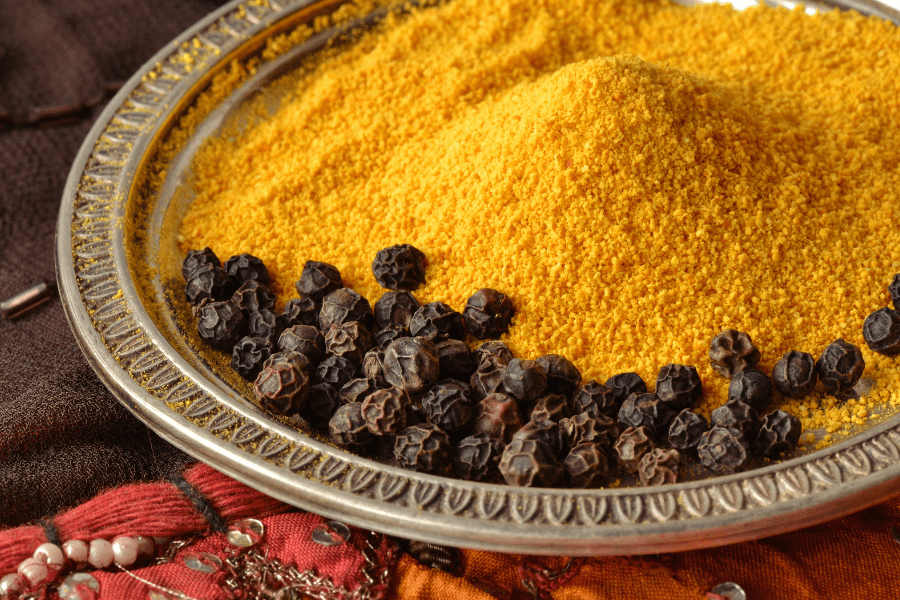
Curcumin on its own is poorly absorbed. In a small study, adding piperine from black pepper raised blood levels of curcumin in human volunteers about twentyfold.7 Curcumin also dissolves in fat, not water. The Indian kitchen solved this long ago: turmeric is almost always cooked in ghee or oil, with black pepper and ginger in the same pot.
Constituents
The rhizome contains:8
- Curcuminoids (about 2–5% of the dried root): curcumin, demethoxycurcumin and bisdemethoxycurcumin, which give the yellow colour
- Volatile oil: ar-turmerone, α- and β-turmerone and zingiberene, which give the earthy, gingery scent
- Starch, resins and bitter principles
Preparations and Dosage
- In food: ½–1 teaspoon of dried powder (about 1.5–3 g) a day, cooked in a little fat with black pepper. This is how I take it.
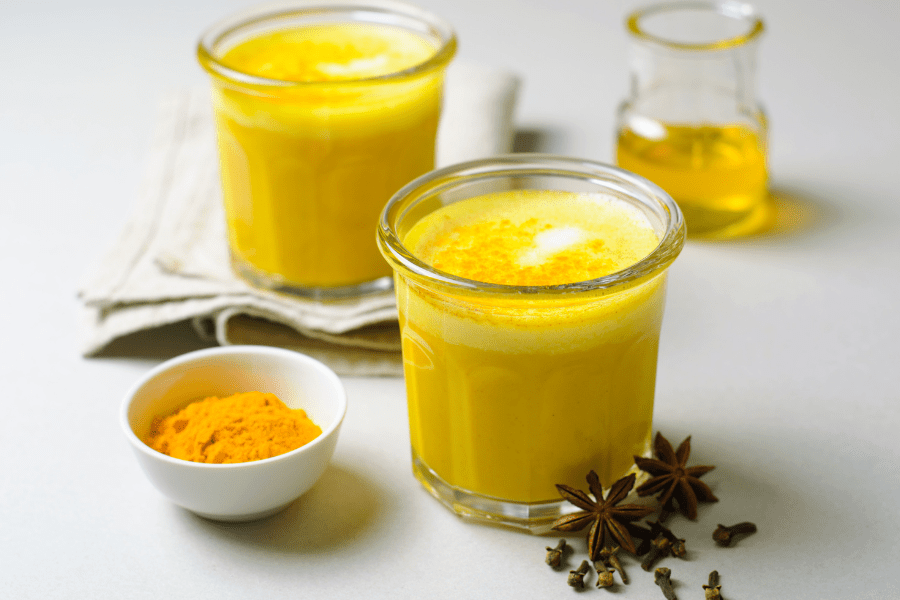
- Golden milk: warm a cup of milk with ½ teaspoon turmeric, a pinch of black pepper, a slice of ginger and a little cinnamon. Add a teaspoon of butter or ghee, and sweeten with honey. A good bedtime cup for a dry, cold constitution.
- Fresh root: grate 2–3 cm into soups, rice or eggs, or blend into a morning juice with ginger and lemon.
- Paste for the skin: mix powder with a little honey or yoghurt. Leave on for 10 minutes, then rinse.
- Supplements: the trials used roughly 0.5–2 g of curcumin or extract a day, usually for eight to twelve weeks.9

Harvesting, Growing and Sustainability
Turmeric needs heat, humidity and a long growing season. In the Creuse it will grow only as a pot plant: start a piece of fresh organic rhizome indoors in early spring, keep it warm and moist all summer, and dig it up when the leaves yellow in autumn. You will get a modest but lovely harvest. To dry, boil or steam the rhizomes briefly, slice them, and dry them thoroughly before grinding.
Turmeric is grown on a large scale in India and Southeast Asia and is not at risk. Choose organic, non-irradiated powder. Its colour should be a deep, bright orange-yellow; dull, brownish powder is old.
Safety and Interactions
- Gallstones and bile-duct obstruction: because turmeric increases the flow of bile, avoid medicinal doses if you have gallstones or a blocked bile duct.
- The liver: culinary turmeric is safe, but a growing number of cases of liver injury have been linked to high-dose turmeric and curcumin supplements, especially those formulated for higher absorption.10 If you take a supplement and notice dark urine, yellowing skin or eyes, or unusual fatigue, stop and see your doctor.
- Blood thinners: large amounts may add to their effect. Keep to culinary doses and tell your doctor.
- Diabetes medication: monitor blood sugar when taking medicinal doses.
- Pregnancy: culinary use is fine; avoid medicinal doses and supplements.
- General tolerance: curcumin is well tolerated in trials, with occasional mild stomach upset.11
Common Questions
Is the turmeric in my spice rack strong enough to help?
Used daily in cooking, with fat and black pepper, yes, it adds up. It is gentler than a high-dose supplement, and in my view safer.
Why black pepper?
Piperine from black pepper slows the breakdown of curcumin and greatly increases how much reaches the blood.
Are turmeric supplements safe for the liver?
Culinary turmeric is. High-dose supplements have been linked to rare cases of liver injury. If you use them, choose a reputable brand, don’t exceed the dose, and stop if you notice signs of liver trouble.
Which constitution benefits most?
In Galenic terms, the cold, damp phlegmatic type and anyone with a sluggish liver and heavy digestion, because turmeric is warming, drying and opening.
© 2024 Carolyn Smith-Kizer
If this work is useful to you, you can buy me a coffee — buymeacoffee.com/cskizer

Notes
- Jonathan Pereira, The Elements of Materia Medica and Therapeutics, 3rd American ed., vol. 2 (Philadelphia: Blanchard and Lea, 1854), s.v. “Curcuma longa.” ↩
- Pereira, Elements of Materia Medica. ↩
- James W. Daily, Mini Yang, and Sunmin Park, “Efficacy of Turmeric Extracts and Curcumin for Alleviating the Symptoms of Joint Arthritis: A Systematic Review and Meta-Analysis of Randomized Clinical Trials,” Journal of Medicinal Food 19, no. 8 (2016): 717–29, https://doi.org/10.1089/jmf.2016.3705. ↩
- Armen Haroyan et al., “Efficacy and Safety of Curcumin and Its Combination with Boswellic Acid in Osteoarthritis: A Comparative, Randomized, Double-Blind, Placebo-Controlled Study,” BMC Complementary and Alternative Medicine 18 (2018): 7, https://doi.org/10.1186/s12906-017-2062-z. ↩
- Susan J. Hewlings and Douglas S. Kalman, “Curcumin: A Review of Its Effects on Human Health,” Foods 6, no. 10 (2017): 92, https://doi.org/10.3390/foods6100092. ↩
- Pradermchai Kongkam et al., “Curcumin and Proton Pump Inhibitors for Functional Dyspepsia: A Randomised, Double Blind Controlled Trial,” BMJ Evidence-Based Medicine 30, no. 5 (2025): 358, https://ebm.bmj.com/content/30/5/358. ↩
- Guido Shoba et al., “Influence of Piperine on the Pharmacokinetics of Curcumin in Animals and Human Volunteers,” Planta Medica 64, no. 4 (1998): 353–56, https://doi.org/10.1055/s-2006-957450. ↩
- Hewlings and Kalman, “Curcumin.” ↩
- Daily, Yang, and Park, “Efficacy of Turmeric Extracts.” ↩
- “Turmeric,” in LiverTox: Clinical and Research Information on Drug-Induced Liver Injury (Bethesda, MD: National Institute of Diabetes and Digestive and Kidney Diseases, 2012–), https://www.ncbi.nlm.nih.gov/books/NBK548561/. ↩
- Hewlings and Kalman, “Curcumin.” ↩
Bibliography
Daily, James W., Mini Yang, and Sunmin Park. “Efficacy of Turmeric Extracts and Curcumin for Alleviating the Symptoms of Joint Arthritis: A Systematic Review and Meta-Analysis of Randomized Clinical Trials.” Journal of Medicinal Food 19, no. 8 (2016): 717–29. https://doi.org/10.1089/jmf.2016.3705.
Haroyan, Armen, et al. “Efficacy and Safety of Curcumin and Its Combination with Boswellic Acid in Osteoarthritis: A Comparative, Randomized, Double-Blind, Placebo-Controlled Study.” BMC Complementary and Alternative Medicine 18 (2018): 7. https://doi.org/10.1186/s12906-017-2062-z.
Hewlings, Susan J., and Douglas S. Kalman. “Curcumin: A Review of Its Effects on Human Health.” Foods 6, no. 10 (2017): 92. https://doi.org/10.3390/foods6100092.
Kongkam, Pradermchai, et al. “Curcumin and Proton Pump Inhibitors for Functional Dyspepsia: A Randomised, Double Blind Controlled Trial.” BMJ Evidence-Based Medicine 30, no. 5 (2025): 358. https://ebm.bmj.com/content/30/5/358.
National Institute of Diabetes and Digestive and Kidney Diseases. “Turmeric.” In LiverTox: Clinical and Research Information on Drug-Induced Liver Injury. Bethesda, MD: NIDDK, 2012–. https://www.ncbi.nlm.nih.gov/books/NBK548561/.
Pereira, Jonathan. The Elements of Materia Medica and Therapeutics. 3rd American ed. Vol. 2. Philadelphia: Blanchard and Lea, 1854.
Shoba, Guido, David Joy, Thangam Joseph, M. Majeed, R. Rajendran, and P. S. Srinivas. “Influence of Piperine on the Pharmacokinetics of Curcumin in Animals and Human Volunteers.” Planta Medica 64, no. 4 (1998): 353–56. https://doi.org/10.1055/s-2006-957450.