
Hibiscus sabdariffa: Roselle, the Cooling Sour Tea
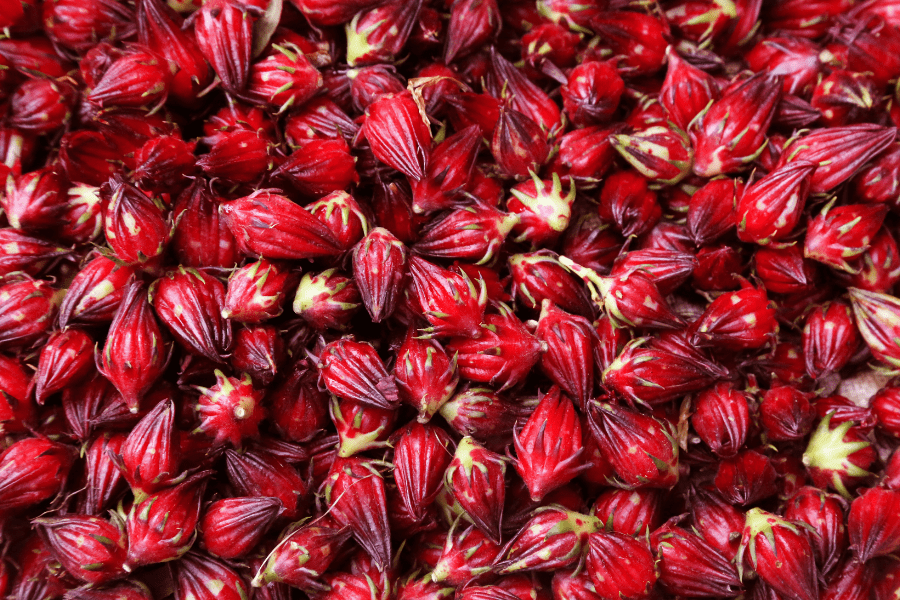
The first time I drank hibiscus tea it was out of a red-and-yellow box of Red Zinger, decades ago, and the colour alone delighted me. That ruby, sour cup of Hibiscus sabdariffa is made not from the petals but from the fleshy calyces, the cup of sepals that swells around the seed pod after the flower falls. Across the warm world it is a summer staple: karkadé in Egypt and the Sudan, bissap in Senegal and now in every Paris market, agua de jamaica in Mexico, sorrel at a Jamaican Christmas.
Like holy basil, hibiscus never reached Galen’s pharmacy. It is an African plant that came into European use only in modern times. But its taste speaks plainly, and the Galenic method reads it easily.
At a Glance
- Botanical name: Hibiscus sabdariffa L.
- Common names: roselle, sour tea, karkadé, bissap, oseille de Guinée (French)
- Family: Malvaceae (the mallow family)
- Part used: calyces; the young leaves are eaten as a vegetable
- Taste: sour, lightly astringent
- Galenic qualities: cooling and drying (by taste; no classical entry)
- Modern energetics: sour and cooling — the systems agree
- Actions: refrigerant, diuretic, mild hypotensive, antioxidant, mild laxative
- Main cautions: low blood pressure, blood-pressure and diabetes medication, pregnancy
- Conservation status: a cultivated crop; not at risk
The Plant
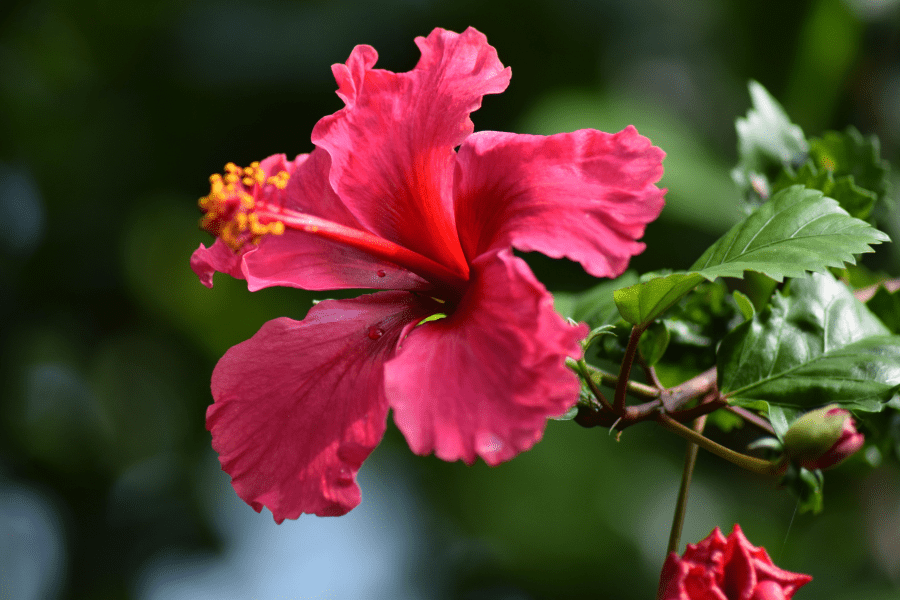
Roselle is a stout annual or short-lived shrub, 1–2 metres tall, with smooth reddish stems. The lower leaves are simple and oval; the upper ones are deeply cut into three to five narrow, toothed lobes. The flowers are typical hibiscus, pale yellow or cream with a dark crimson eye, and each lasts only a day. What follows is the treasure: a bright red, fleshy calyx, thick and crisp, wrapped around a velvety seed capsule. It is these calyces that are picked, the seed pod pushed out, and the cups dried for tea.
Roselle is native to West Africa and is now grown throughout the tropics. It is a short-day plant: it only flowers as the days shorten in autumn, after a long hot summer.1
The Galenic Reading
In Galenic taste theory, sourness is cold and cutting, and astringency is cold and drying. A sour, slightly astringent calyx is therefore a cooling and drying herb, the natural opposite of heat. Hibiscus belongs to the hot constitutions and the hot season:
- Choleric (hot and dry): the best match for its cooling. A cold infusion on a hot afternoon calms both temper and thirst. Because it is also drying, choleric types do well to sweeten it a little with honey, or blend it with a moistening herb such as marshmallow leaf.
- Sanguine (hot and moist): an excellent match. Cooling and drying is exactly what an overheated, overfull sanguine body needs, especially in high summer.
- Phlegmatic (cold and moist): occasional use only, and better warm than iced. Its gentle diuretic action helps with fluid retention, but too much cold sour drink chills an already cold stomach.
- Melancholic (cold and dry): the least suited. Cold and drying both work against this type.
Its mallow-family cousins, marshmallow and common mallow, were classed by the old authors as cold and moist. Roselle shares their coolness, but its sourness tips it toward dryness. Its season is summer, the choleric time of year.
Uses
1. Blood Pressure and the Heart
This is hibiscus’s best-studied use. In a six-week trial at Tufts University, adults with high-normal or mildly raised blood pressure drank three cups of hibiscus tea a day. Their systolic pressure fell by an average of about 7 mmHg, against about 1 mmHg for those drinking a placebo tea.2 A Mexican trial found a standardised hibiscus extract comparable to the blood-pressure drug captopril in people with mild to moderate hypertension.3 A meta-analysis of the controlled trials confirmed a significant fall in both systolic and diastolic pressure.4
The Galenic reading fits well: much raised blood pressure is a picture of heat and fullness, a sanguine or choleric excess, and a cooling, gently diuretic drink is the classical counter. Its anthocyanins and organic acids are thought to relax the blood vessels and to act a little like a mild diuretic.5
2. Cooling in Heat and Fever
Across Africa, the Middle East and Central America, roselle drinks are taken to cool the body in hot weather and to quench the thirst of fever. This refrigerant use is the oldest and widest of all, and it is exactly what the Galenic qualities predict.
3. The Liver and Fat Metabolism
In a twelve-week trial, overweight adults who took hibiscus extract lost a little weight and body fat and showed less fat in the liver than those on placebo.6 This is early work, but it agrees with the traditional use of sour, cooling plants for a liver that runs hot and full.
4. Gentle Diuretic and Laxative
Hibiscus is mildly diuretic and, in larger amounts, gently laxative.7 In my experience a cold glass of hibiscus is a pleasant way to move summer fluid retention in people who run warm.
Constituents
The calyces contain:8
- Anthocyanins: chiefly delphinidin-3-sambubioside and cyanidin-3-sambubioside, which give the deep red colour
- Organic acids: hibiscus acid, citric, malic and tartaric acids, the source of the sourness
- Flavonoids: quercetin, gossypetin and their glycosides
- Phenolic acids: protocatechuic and chlorogenic acids
- Polysaccharides: mucilage and pectin, which link it to its soothing mallow cousins
Preparations and Dosage
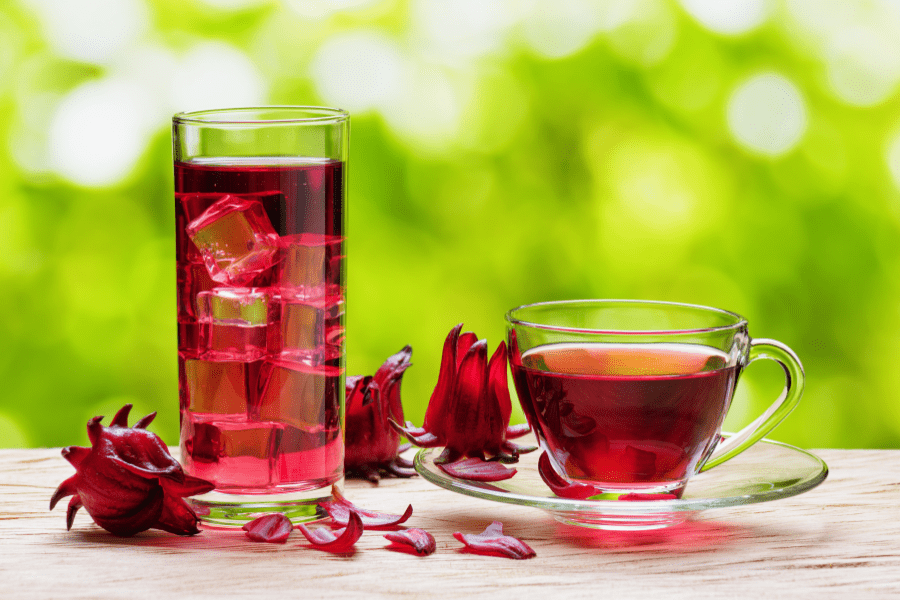
- Hot infusion: about 1.5–2 g dried calyces (roughly a tablespoon of whole calyces or a heaped teaspoon of cut) per cup of boiling water. Steep 5–10 minutes. The Tufts trial used three cups a day.9
- Cold infusion: a small handful of calyces in a litre of cold water, left overnight in the refrigerator. Smoother and less sharp than hot tea, and the best summer drink I know.
- Extract: standardised extracts have been used in trials for several weeks at a time.10
- In the kitchen: syrup, jelly, sorbet and gelato all take beautifully to hibiscus, and the young leaves can be cooked like a sour spinach.
Harvesting, Growing and Sustainability
Roselle needs a long, hot season and only flowers as the days shorten. In the Creuse it will not ripen its calyces outdoors; it needs a greenhouse or a very warm, sheltered wall, sown indoors in early spring, and even then the harvest comes late. Pick the calyces about ten days after the flower drops, while they are plump and crisp, push out the seed pod, and dry the cups quickly in a warm, airy, shaded place until they snap.
Roselle is a cultivated crop grown widely across the tropics and is not at risk. Buy whole, deep-red calyces from organic or fair-trade sources; dull brown ones are old.
Safety and Interactions
- Low blood pressure: use with care if your pressure already runs low.
- Blood-pressure medication and diuretics: hibiscus may add to their effect. Tell your doctor and monitor your readings.11
- Diabetes medication: monitor blood sugar if you drink it daily.
- Pregnancy and breastfeeding: avoid medicinal amounts; a culinary cup now and then is a different matter, but ask your midwife.
- Teeth: it is quite acidic. Rinse with water after drinking, and don’t sip it all day long.
- General tolerance: in the trials, hibiscus was well tolerated.12
Common Questions
Is hibiscus tea made from the flower petals?
No. It is made from the calyces, the fleshy red cup of sepals that forms around the seed pod after the flower falls.
Does hibiscus tea really lower blood pressure?
Several controlled trials have found a modest fall in blood pressure with daily hibiscus tea over several weeks. If you already take blood-pressure medication, talk to your doctor before adding it.
Hot or cold?
Both work. Cold infusion is smoother and more cooling, and suits hot constitutions and hot weather best.
Which constitution benefits most?
In Galenic terms, the hot types, choleric and sanguine, because hibiscus is cooling and drying. Cold, dry melancholic types should use it sparingly.
© 2024 Carolyn Smith-Kizer
If this work is useful to you, you can buy me a coffee — buymeacoffee.com/cskizer

Notes
- Inês Da-Costa-Rocha et al., “Hibiscus sabdariffa L. – A Phytochemical and Pharmacological Review,” Food Chemistry 165 (2014): 424–43, https://doi.org/10.1016/j.foodchem.2014.05.002. ↩
- Diane L. McKay et al., “Hibiscus sabdariffa L. Tea (Tisane) Lowers Blood Pressure in Prehypertensive and Mildly Hypertensive Adults,” Journal of Nutrition 140, no. 2 (2010): 298–303, https://doi.org/10.3945/jn.109.115097. ↩
- A. Herrera-Arellano et al., “Effectiveness and Tolerability of a Standardized Extract from Hibiscus sabdariffa in Patients with Mild to Moderate Hypertension: A Controlled and Randomized Clinical Trial,” Phytomedicine 11, no. 5 (2004): 375–82, https://doi.org/10.1016/j.phymed.2004.04.001. ↩
- Corina Serban et al., “Effect of Sour Tea (Hibiscus sabdariffa L.) on Arterial Hypertension: A Systematic Review and Meta-Analysis of Randomized Controlled Trials,” Journal of Hypertension 33, no. 6 (2015): 1119–27, https://doi.org/10.1097/HJH.0000000000000585. ↩
- Da-Costa-Rocha et al., “Hibiscus sabdariffa L.” ↩
- Hui-Chen Chang et al., “Hibiscus sabdariffa Extract Inhibits Obesity and Fat Accumulation, and Improves Liver Steatosis in Humans,” Food & Function 5, no. 4 (2014): 734–39, https://doi.org/10.1039/c3fo60495k. ↩
- Da-Costa-Rocha et al., “Hibiscus sabdariffa L.” ↩
- Da-Costa-Rocha et al., “Hibiscus sabdariffa L.” ↩
- McKay et al., “Hibiscus sabdariffa L. Tea.” ↩
- Herrera-Arellano et al., “Effectiveness and Tolerability.” ↩
- McKay et al., “Hibiscus sabdariffa L. Tea.” ↩
- Serban et al., “Effect of Sour Tea.” ↩
Bibliography
Chang, Hui-Chen, Chiung-Huei Peng, Dai-Ming Yeh, Erl-Shyh Kao, and Chau-Jong Wang. “Hibiscus sabdariffa Extract Inhibits Obesity and Fat Accumulation, and Improves Liver Steatosis in Humans.” Food & Function 5, no. 4 (2014): 734–39. https://doi.org/10.1039/c3fo60495k.
Da-Costa-Rocha, Inês, Bernd Bonnlaender, Hartwig Sievers, Ivo Pischel, and Michael Heinrich. “Hibiscus sabdariffa L. – A Phytochemical and Pharmacological Review.” Food Chemistry 165 (2014): 424–43. https://doi.org/10.1016/j.foodchem.2014.05.002.
Herrera-Arellano, A., S. Flores-Romero, M. A. Chávez-Soto, and J. Tortoriello. “Effectiveness and Tolerability of a Standardized Extract from Hibiscus sabdariffa in Patients with Mild to Moderate Hypertension: A Controlled and Randomized Clinical Trial.” Phytomedicine 11, no. 5 (2004): 375–82. https://doi.org/10.1016/j.phymed.2004.04.001.
McKay, Diane L., C.-Y. Oliver Chen, Edward Saltzman, and Jeffrey B. Blumberg. “Hibiscus sabdariffa L. Tea (Tisane) Lowers Blood Pressure in Prehypertensive and Mildly Hypertensive Adults.” Journal of Nutrition 140, no. 2 (2010): 298–303. https://doi.org/10.3945/jn.109.115097.
Serban, Corina, Amirhossein Sahebkar, Stefan Ursoniu, Florina Andrica, and Maciej Banach. “Effect of Sour Tea (Hibiscus sabdariffa L.) on Arterial Hypertension: A Systematic Review and Meta-Analysis of Randomized Controlled Trials.” Journal of Hypertension 33, no. 6 (2015): 1119–27. https://doi.org/10.1097/HJH.0000000000000585.