
Wild Oregano: Origanum vulgare, Joy of the Mountain
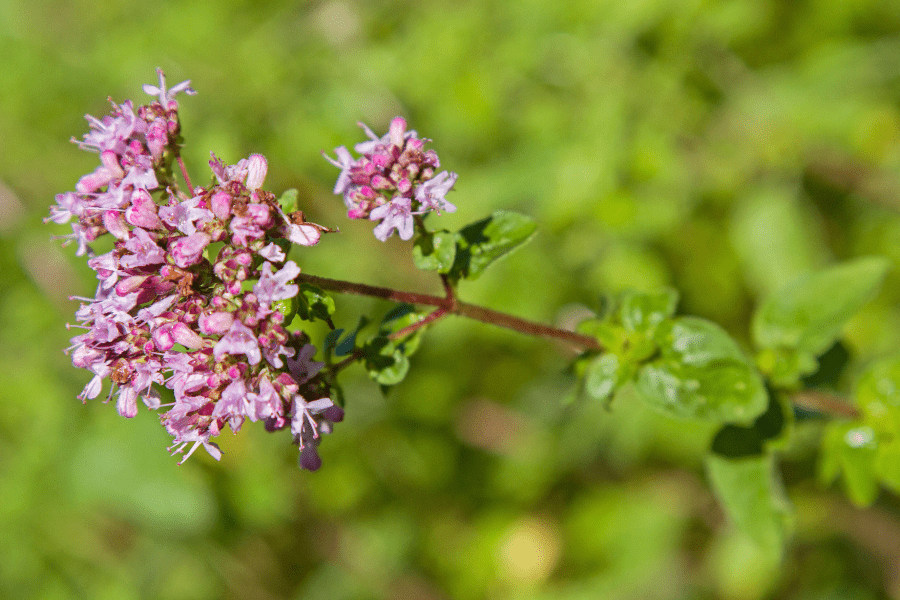
Wild oregano is the untamed cousin of the Carolingian garden. It does not appear on Charlemagne’s list in the Capitulare de Villis; it did not need to. Wild marjoram, as the English called it, grows on dry, chalky banks and roadsides across France, and here in the Creuse I find it in the hedgerows every July, humming with bees. Its name is usually explained from the Greek oros and ganos, the joy of the mountain.
Today oregano is sold as a powerful essential oil and an antimicrobial supplement. I would rather start with the plant on the bank and the pinch in the cooking pot, and read it the way the old herbalists did: a warm, drying, opening herb for a cold stomach and a wet chest.
At a Glance
- Botanical name: Origanum vulgare L.
- Common names: oregano, wild marjoram, origan (French)
- Family: Lamiaceae (the mint family)
- Part used: leaves and flowering tops, fresh or dried
- Taste: warm, pungent, slightly bitter and aromatic
- Galenic qualities: warming and drying
- Planetary ruler: Mercury (Culpeper)
- Actions: carminative, aromatic digestive, expectorant, antimicrobial, antioxidant
- Main cautions: essential oil on the skin and taken by mouth, pregnancy, mint-family allergy, blood thinners and diabetes medication at large doses
- Conservation status: common wild and garden plant; not at risk
The Plant
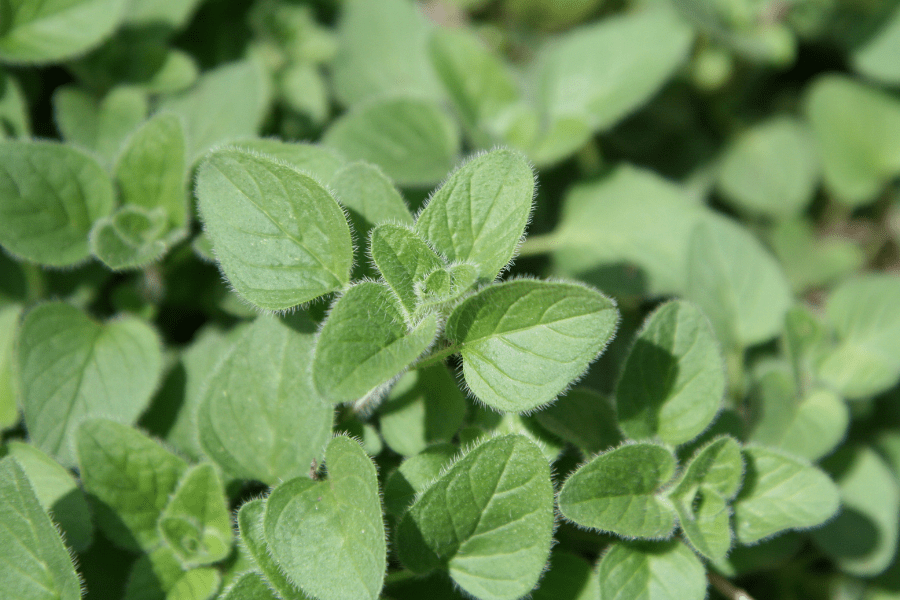
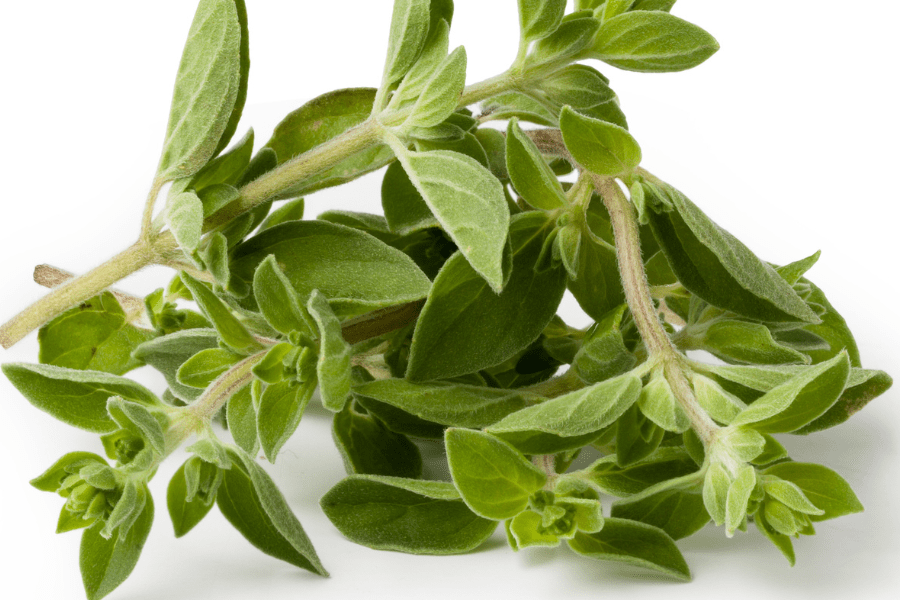
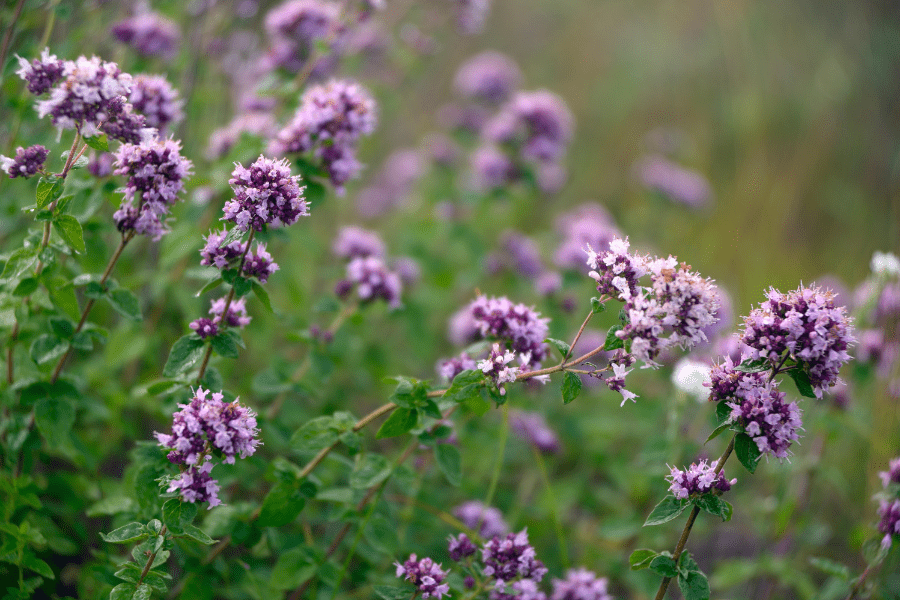
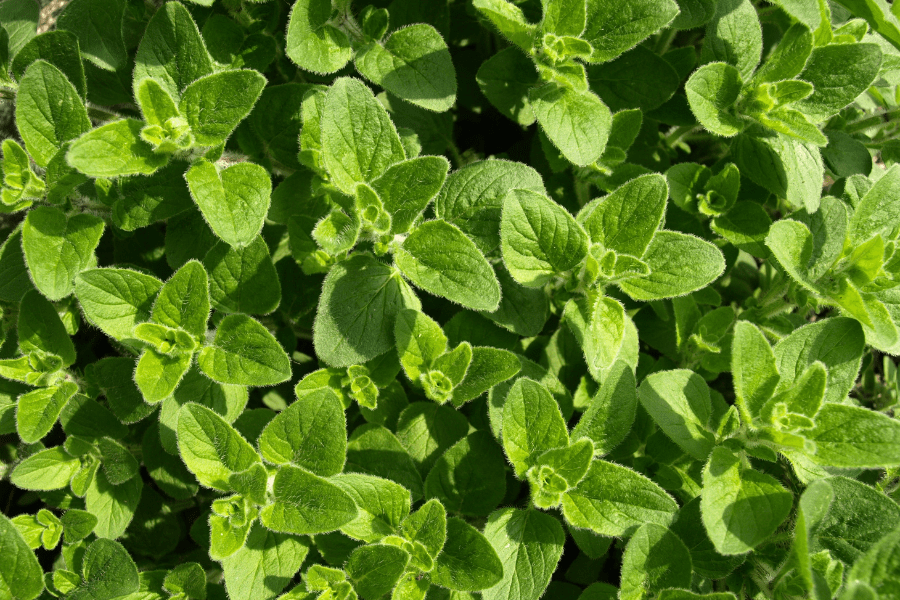
Oregano is a bushy, woody-based perennial 30 to 60 cm tall, with square, often reddish stems and soft, oval, opposite leaves. From July to September it carries loose, flat-topped clusters of small pink to purple flowers held in darker purple bracts. Crush a leaf and you smell the familiar warm, peppery scent; wild plants in northern France are milder than the sun-baked oreganos of Greece and Turkey, whose oil is richer in carvacrol. It loves sun, lime and poor, well-drained soil, and spreads slowly by creeping roots.
The Galenic Reading
A warm, pungent, aromatic herb is warming and drying, and aromatic herbs open, scatter and move. That is the work of oregano: it warms a cold stomach, breaks up wind, and loosens thick, cold phlegm in the chest. Culpeper placed it “under the dominion of Mercury,” the quick, airy planet of movement and communication,1 and he praised it in the plainest terms: “It strengthens the stomach and head much.”2
- Phlegmatic (cold and moist): an excellent match. Oregano warms and dries a damp, sluggish digestion and a catarrhal chest.
- Melancholic (cold and dry): welcome for its warmth and its lifting scent, but drying. Use it in oily, moist dishes, slow-cooked with olive oil, tomatoes and beans.
- Choleric (hot and dry): fine as a seasoning; go easy on strong teas and avoid the essential oil.
- Sanguine (hot and moist): useful in food for its drying, lightening action.
Oregano is a summer harvest and a winter physic. Gather and dry it in July, when the flowers open, and use it through the cold, damp months.
Uses
1. A Cold Stomach and Heavy Meals
This is oregano’s oldest and most everyday use. The peasant cooking of the Mediterranean puts it with beans, fatty meats and rich sauces, where its warmth and bitterness help a cold stomach cope with heavy food and ease wind and fullness afterwards. A cup of oregano tea after a large meal works on the same principle.
2. Winter Chests
Oregano is a warming expectorant. A hot tea or a steam made with the dried herb loosens cold, thick phlegm and makes a stuffy, catarrhal chest feel lighter, much as thyme, its close cousin, does. In Galenic terms it dries and warms what winter has made cold and wet.
3. An Antioxidant Kitchen Herb
Dried oregano is one of the richest sources of antioxidants in the ordinary kitchen. A Norwegian survey of herbs found that dried oregano, along with several other culinary herbs, contained more than 75 mmol of antioxidants per 100 g, far more than most fruits and vegetables.3 A teaspoon or two a day in cooking adds up.
4. What the Research Can and Cannot Say
Oregano oil’s main constituents, carvacrol and thymol, are strongly antimicrobial in laboratory tests, and oregano extracts calm inflammatory signalling in cell and animal studies. A 2017 review of this research was careful to add that clinical studies are still needed before oregano oil can be relied on for inflammation, and that safe doses have not been established.4 So I use oregano as a strong kitchen and tea herb, and I handle the essential oil with great respect.
Constituents
Oregano contains:5
- Volatile oil: carvacrol and thymol, with γ-terpinene and p-cymene; the proportions vary a great deal with the plant, the climate and the soil
- Smaller oil components: linalool, terpinen-4-ol, β-myrcene and β-caryophyllene
- Phenolic acids and flavonoids: including rosmarinic acid, which account for much of the antioxidant content
- Bitter principles, tannins and minerals
Preparations and Dosage
- In food: ½–2 teaspoons of dried oregano a day, or a small handful of fresh, cooked into beans, tomatoes, meat and bread. This is how I use it most.
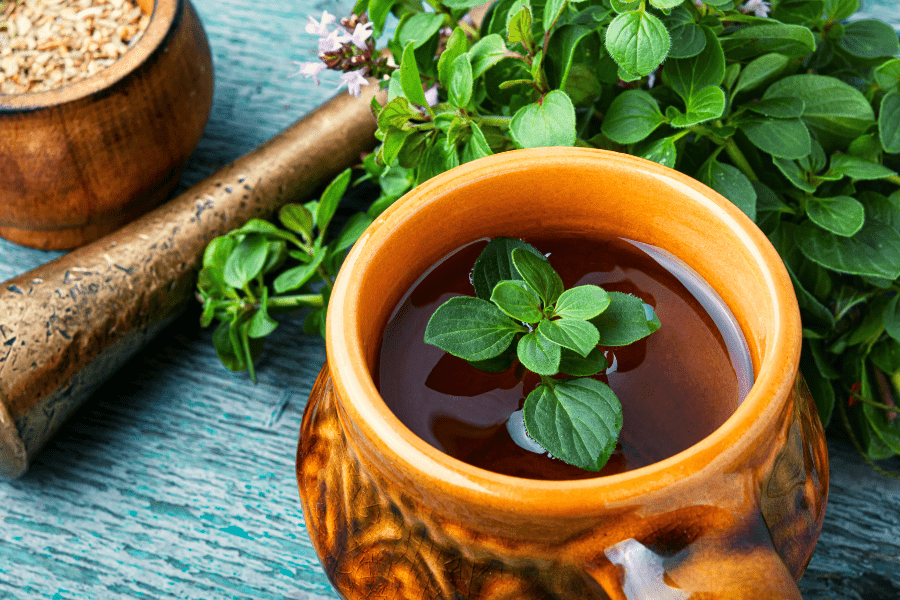
- Tea: 1 teaspoon of dried herb (or 2 of fresh) to a cup of just-boiled water. Cover and steep for 10 minutes, then strain. Up to three cups a day after meals or in a cold season; sweeten with honey.
- Steam: a handful of dried herb in a bowl of just-boiled water; lean over it with a towel over your head and breathe for a few minutes. Keep your eyes closed.
- Herb vinegar or oxymel: pack a jar loosely with dried oregano, cover with cider vinegar (or half vinegar, half honey) and leave for two weeks before straining. A spoonful in warm water in winter.
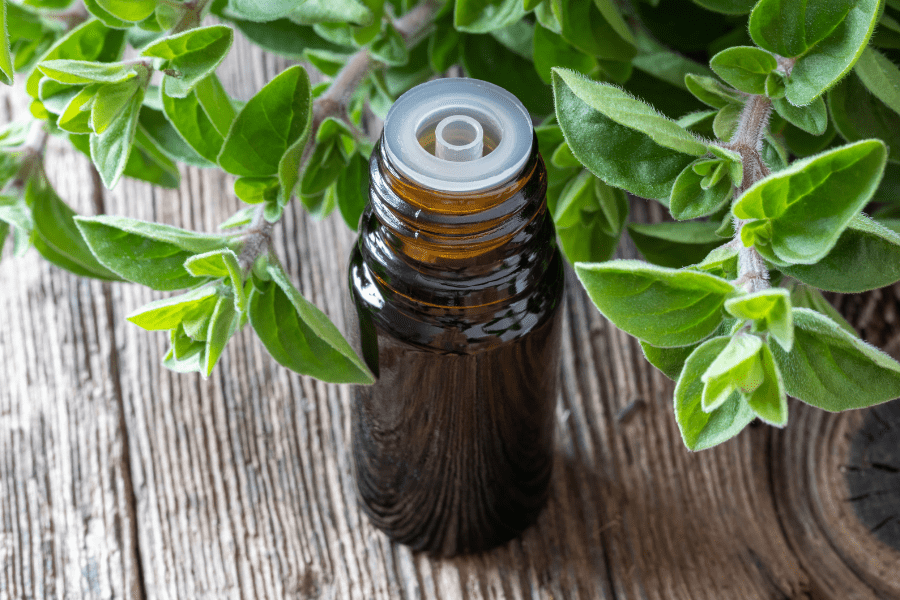
- Essential oil: strong and irritating. Never put it on the skin undiluted; keep it below 1% in a carrier oil.6 I do not take it by mouth without professional guidance.

Harvesting, Growing and Sustainability
Oregano is easy and long-lived. Give it full sun and poor, well-drained soil, ideally with some lime; rich soil and shade make it lush but weak in scent. Start it from divisions or cuttings rather than seed if you want a particular strain, and cut it back by half after flowering to keep it bushy.
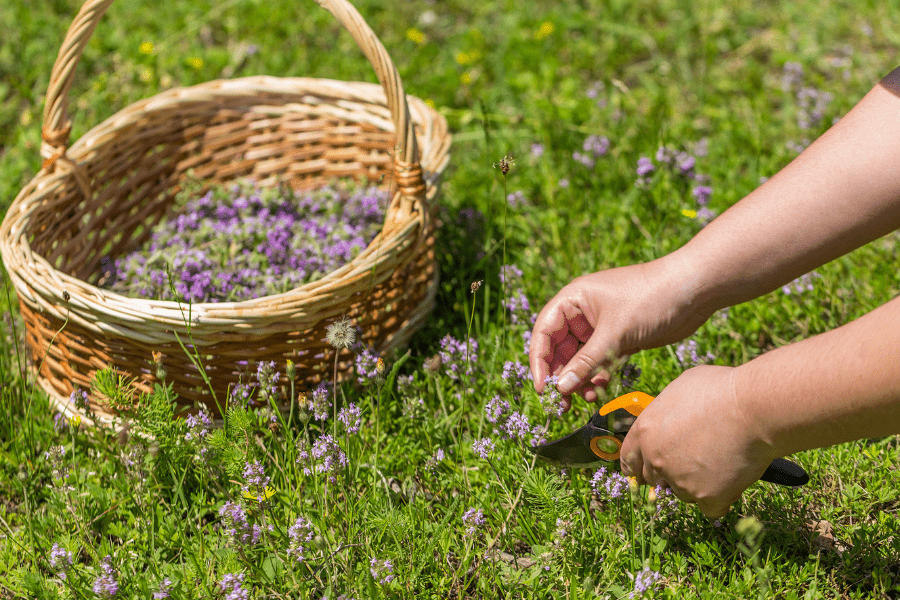
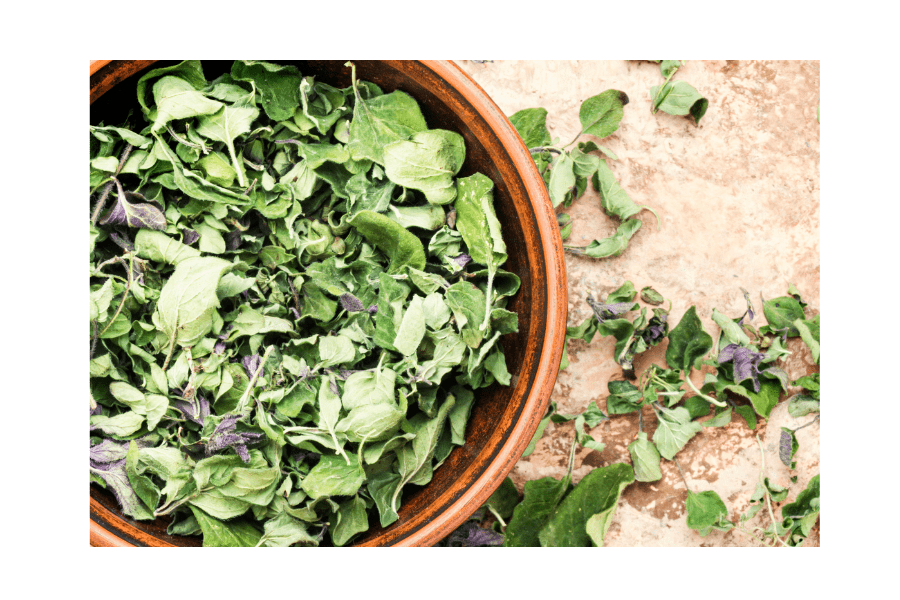
Harvest on a dry morning just as the flowers open, cutting the top third of the stems. Hang small bunches upside down in an airy, shady place, then strip the leaves and flowers and store them whole in a dark jar; crumble them only as you use them. Wild oregano is common across France and Europe and is not at risk, but leave plenty for the bees, who love it as much as we do.
Safety and Interactions
- Food amounts: oregano leaf in food is likely safe; mild stomach upset is possible with larger amounts.7
- The essential oil: it can irritate the skin at concentrations above 1%.8 Keep it away from the eyes and mucous membranes and out of reach of children.
- Pregnancy: keep to food amounts; medicinal amounts by mouth are possibly unsafe.9
- Mint-family allergy: people allergic to basil, mint, sage or other Lamiaceae may react to oregano.10
- Blood thinners and surgery: large doses might increase the risk of bleeding; stop them two weeks before surgery.11
- Diabetes medication: oregano might lower blood sugar, so monitor closely if you take medicinal amounts.12
Common Questions
Is oregano the same as marjoram?
They are close cousins in the same genus. Sweet marjoram (Origanum majorana) is softer, sweeter and less hardy; oregano, or wild marjoram, is sharper and more warming.
Fresh or dried?
Oregano is one of the few herbs that is stronger dried. Dried oregano also concentrates the antioxidants, so a jar of good dried oregano is no second best.
Should I take oregano oil capsules?
I don’t take them myself. The oil is very strong, the research is mostly in the laboratory, and safe doses haven’t been worked out. The herb in food and tea is gentler and well proven by long use.
Which constitution benefits most?
In Galenic terms, the cold, damp phlegmatic type, and anyone with a cold, sluggish stomach or a wet winter chest.
© 2024 Carolyn Smith-Kizer
If this work is useful to you, you can buy me a coffee — buymeacoffee.com/cskizer

Notes
- Nicholas Culpeper, The Complete Herbal, Project Gutenberg eBook 49513 (2015), s.v. “Wild Marjoram,” https://www.gutenberg.org/ebooks/49513. ↩
- Culpeper, Complete Herbal, s.v. “Wild Marjoram.” ↩
- Steinar Dragland et al., “Several Culinary and Medicinal Herbs Are Important Sources of Dietary Antioxidants,” Journal of Nutrition 133, no. 5 (2003): 1286–90, https://doi.org/10.1093/jn/133.5.1286. ↩
- Nayely Leyva-López et al., “Essential Oils of Oregano: Biological Activity beyond Their Antimicrobial Properties,” Molecules 22, no. 6 (2017): 989, https://doi.org/10.3390/molecules22060989. ↩
- Leyva-López et al., “Essential Oils of Oregano.” ↩
- MedlinePlus, “Oregano,” National Library of Medicine, last reviewed October 26, 2023, https://medlineplus.gov/druginfo/natural/644.html. ↩
- MedlinePlus, “Oregano.” ↩
- MedlinePlus, “Oregano.” ↩
- MedlinePlus, “Oregano.” ↩
- MedlinePlus, “Oregano.” ↩
- MedlinePlus, “Oregano.” ↩
- MedlinePlus, “Oregano.” ↩
Bibliography
Culpeper, Nicholas. The Complete Herbal. Project Gutenberg eBook 49513, 2015. https://www.gutenberg.org/ebooks/49513.
Dragland, Steinar, et al. “Several Culinary and Medicinal Herbs Are Important Sources of Dietary Antioxidants.” Journal of Nutrition 133, no. 5 (2003): 1286–90. https://doi.org/10.1093/jn/133.5.1286.
Leyva-López, Nayely, Erick P. Gutiérrez-Grijalva, Gabriela Vazquez-Olivo, and J. Basilio Heredia. “Essential Oils of Oregano: Biological Activity beyond Their Antimicrobial Properties.” Molecules 22, no. 6 (2017): 989. https://doi.org/10.3390/molecules22060989.
MedlinePlus. “Oregano.” National Library of Medicine. Last reviewed October 26, 2023. https://medlineplus.gov/druginfo/natural/644.html.