
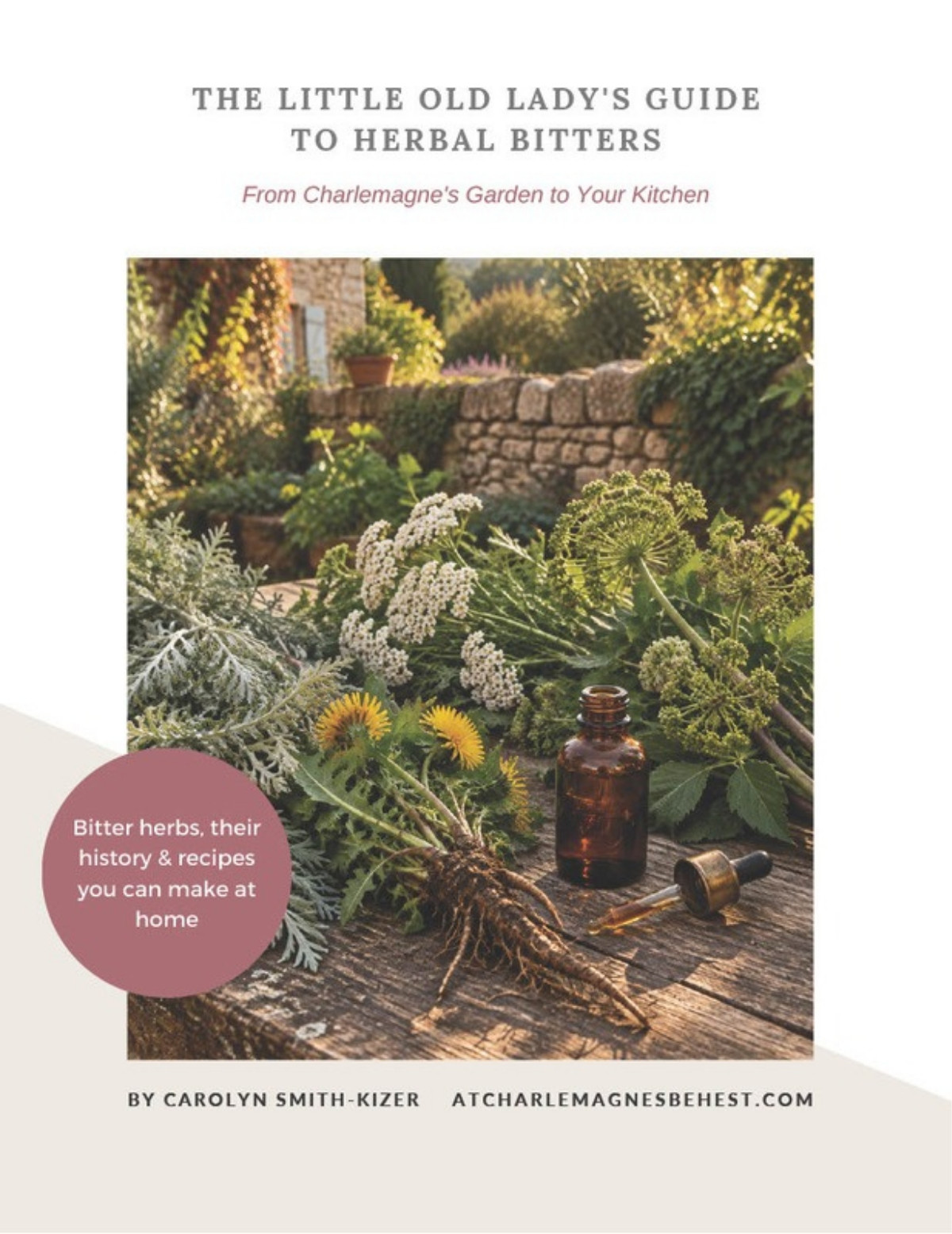
From Charlemagne’s Garden to Your Kitchen
Bitterness has nearly disappeared from the modern plate. For most of European history it was everywhere: in the salad of dandelion and chicory, in the glass of wormwood wine after a heavy meal, in the gentian and angelica that Charlemagne’s estates were required to grow. Galenic physicians classified bitter herbs. Medieval households depended on them. Then we sweetened everything and forgot.
This guide is my argument for bringing them back, and a practical handbook for doing it at home.
What’s Inside
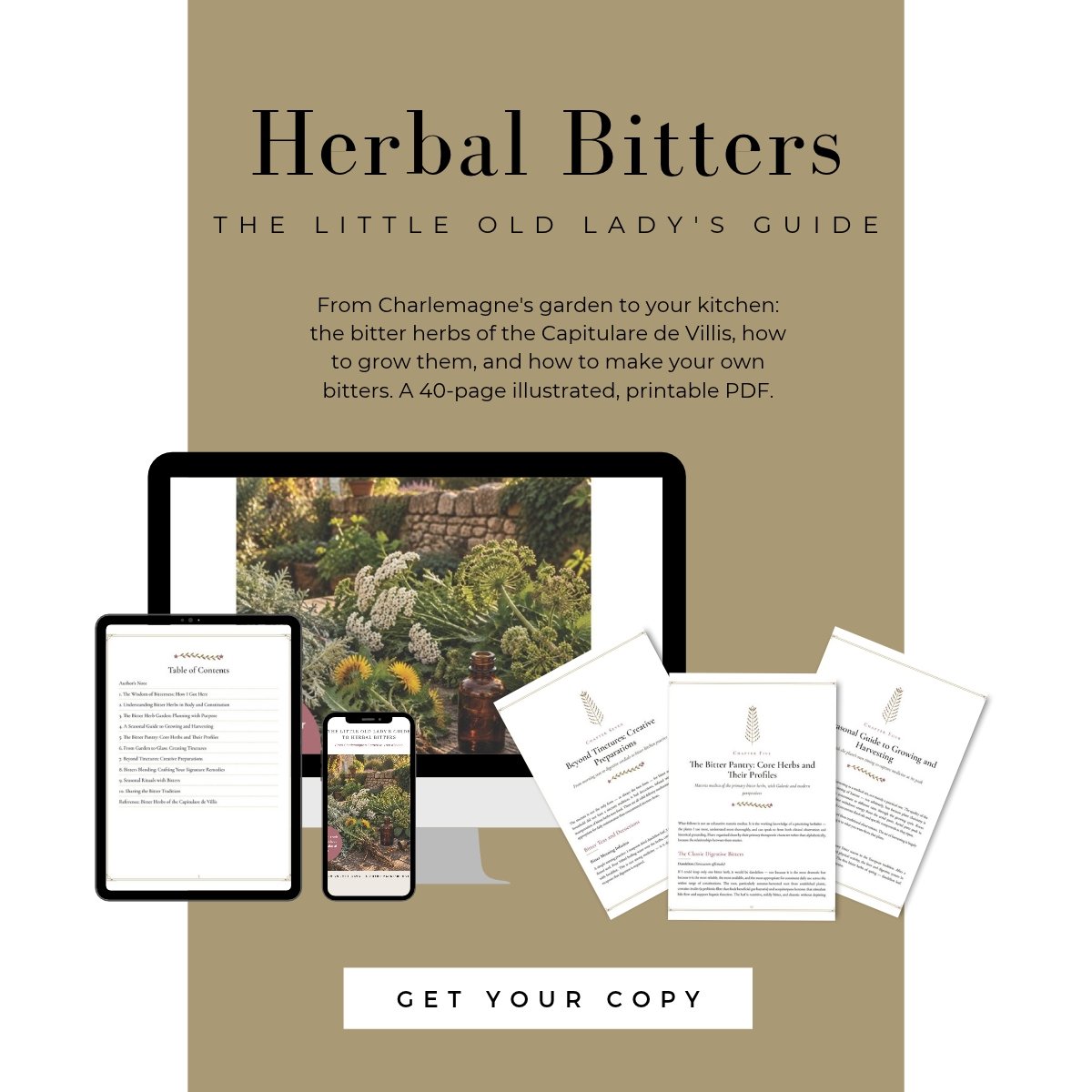
A 40-page illustrated, printable PDF in ten chapters, plus a reference table:
- The Wisdom of Bitterness — how a French Colonial reenactor came to bitter herbs, and why they matter
- Bitter Herbs in Body and Constitution — what the bitter taste does, read through both Galenic medicine and modern bitter-receptor research
- The Bitter Herb Garden — planning a garden that largely looks after itself
- A Seasonal Guide to Growing and Harvesting
- The Bitter Pantry — profiles of the core herbs I use most
- From Garden to Glass — making tinctures step by step
- Beyond Tinctures — teas, vinegars, wines and other preparations
- Bitters Blending — crafting your own signature formulas
- Seasonal Rituals with Bitters
- Sharing the Bitter Tradition
Reference table: the bitter and bitter-aromatic herbs of the Capitulare de Villis, with their Galenic qualities and traditional uses.
Who It’s For
- Home herbalists who want to understand bitters, not just buy a bottle
- Gardeners who want to grow their own bitter herbs and use them
- Anyone drawn to the old European household traditions of the stillroom and the kitchen garden
About the Author
Carolyn Smith-Kizer has about fifteen years in herbalism, rooted in the vitalist tradition. She holds an advanced certificate from the Herbal Academy and a vitalist herbalist certificate from the School of Evolutionary Herbalism, and is an associate member of the American Herbalists Guild. Before moving to France she spent more than twenty years as a French Colonial historical reenactor, where period herbal preparations were part of daily life. She lives in a stone townhouse in Clugnat, in the Creuse, where she is building a medicinal garden, and writes At Charlemagne’s Behest.
Want to Start with the Free Plant List?
My free 58-page Charlemagne’s Complete Plant List + Modern Growing Guide covers every plant in the Capitulare de Villis. This bitters guide takes the bitter herbs on that list and shows you what to do with them.
Questions
How do I get it? Checkout is handled securely by Lemon Squeezy. You receive the PDF by download link and email straight after payment. The charge will appear on your statement as LEMSQZY* CAROLYNSMITHK.
Can I print it? Yes. It is letter-sized and prints well on A4 too.
Is VAT included? Any VAT or sales tax due in your country is calculated at checkout.
This guide shares traditional knowledge and historical practice for educational purposes. It is not medical advice. Consult a qualified healthcare provider before using herbs if you are pregnant, nursing, taking medication or managing a health condition.